
Learn Triathlon
A clear, structured way to learn triathlon — what to focus on first, and how it all fits together. Self-paced and educational.
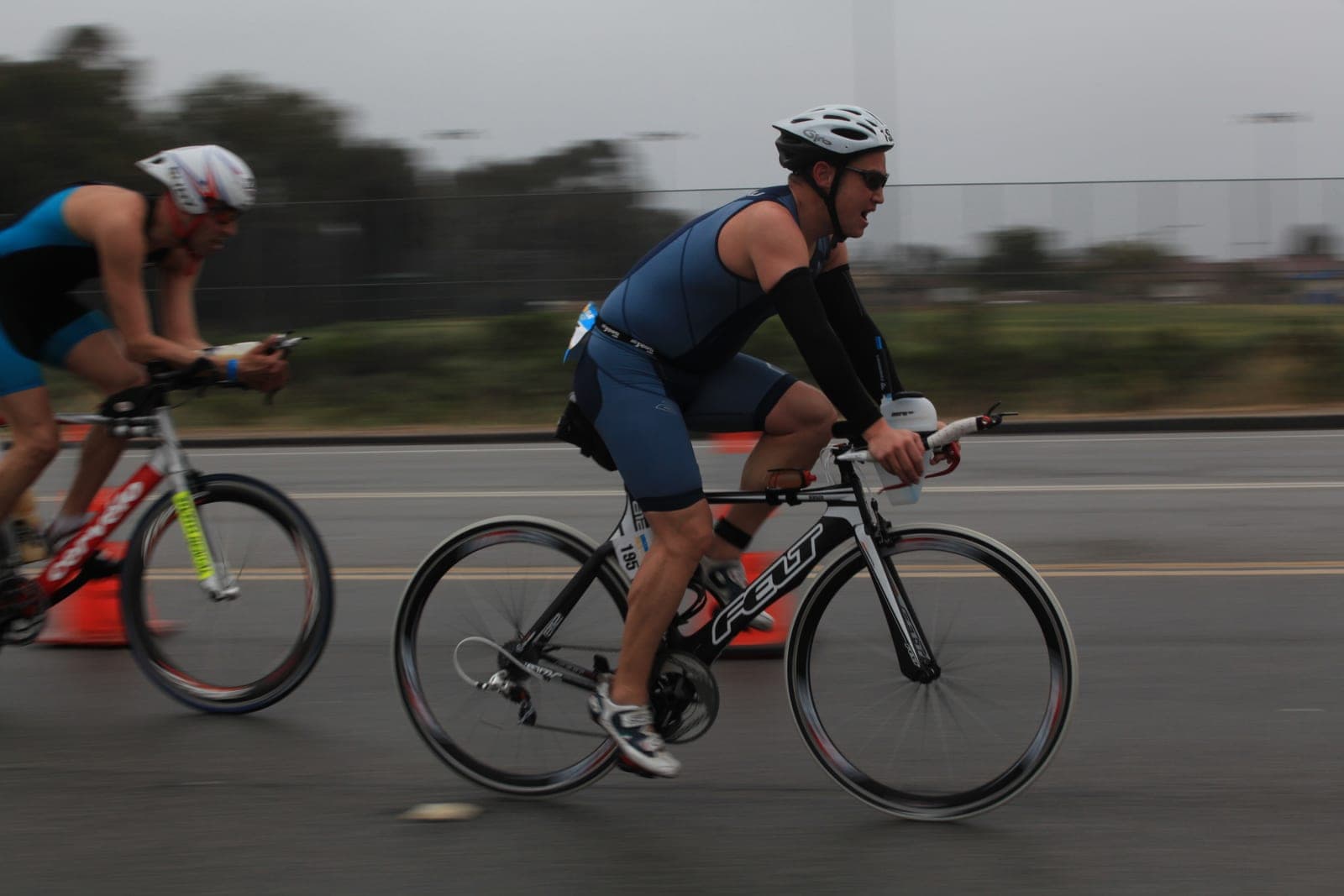

Triathlon combines three endurance disciplines — swimming, then cycling, then running — completed back-to-back in a single event. The changeovers between each leg, known as transitions, are part of the challenge, so a triathlon tests all-round fitness rather than a single skill.
This path walks through the sport in a sensible order — from understanding the game to training for it. Work through it at your own pace; every step links to a clear guide.
Get to know the game
Start with how the sport works — the basic rules and how it is scored. A few minutes here saves confusion later.
Milestone: You can explain the aim of the game, its basic rules and how it is scored.
What you’ll need
The essential equipment, and the kind of place you’ll play. Most sports need far less to get started than people expect.
Milestone: You know what equipment you need to start and the kind of place the sport is played.
Learn the core skills
The fundamental skills the sport is built on. These are what to practise first — everything else builds on them.
Milestone: You can name the core skills and know which ones to practise first.
Build your technique
How specific movements and shots are performed. Learn these once the basics feel comfortable, one at a time.
Milestone: You understand how the key techniques are performed and when they are used.
Understand tactics & strategy
How the game is actually played and thought about — the tactics and bigger-picture strategy that turn skills into a game.
Milestone: You can follow how the game is played tactically, not just physically.
Find your position or role
Where you fit in — the positions and roles players take on, and what each one does.
Milestone: You know the positions or roles and what each one is responsible for.
Train your body for it
The physical qualities the sport asks for, and ways to build them. Educational — not a personalised plan.
Milestone: You know which physical qualities the sport asks for and, in general terms, how they are built.
Keep getting better
How improvement actually happens — the practice principles and the science beneath them apply to every sport.
Milestone: You understand how improvement actually happens and where to go deeper.
Where the path leads next
Once the fundamentals feel comfortable, these are the natural next steps — all educational, all self-paced.
Try it for real
Learn more deeply
The wider picture
A structured guide, not a coaching programme
More sports to learn
Explore across the knowledge base
Follow the threads that connect Learn Triathlon to the rest of SocialSportHub.
Decision making
Disciplines
- Road CyclingRoad cycling covers riding and racing on paved roads, from mass-start races and time trials to multi-day stage events.
- Track CyclingTrack cycling is racing on a velodrome, an oval banked track, using fixed-gear bikes with no brakes across sprint and endurance events.
- Sprint DistanceSprint distance triathlon combines a short swim, bike, and run, making it a common entry point and a fast, higher-intensity racing format.
- SnatchThe snatch is one of the two Olympic weightlifting lifts, taking the barbell from the platform to overhead in one continuous movement.
- BMX RacingBMX racing is a short, intense sprint on a dirt track full of jumps and banked turns, with riders starting together from a gate.
Training plans
- Learn-to-Swim ProgressionA gentle example progression from getting comfortable in the water toward swimming short, continuous distances, built around relaxed, regular pool visits.
- Beginner Run WeekA simple example running week for newer runners, built around a couple of easy runs, one slightly longer effort and plenty of rest.
Glossary
- LaneOne of the parallel marked corridors that divides a track, pool or bowling alley so competitors race or play within an assigned strip.
- DraftingRiding, running or swimming closely behind another competitor to sit in their slipstream and save energy.
- Scrum-halfA rugby position that links the forwards and the backs, feeding the scrum and distributing the ball from the breakdown.
- TaperingTapering is the practice of reducing training in the period before a big event so you arrive feeling fresh.
- JerseyThe shirt or top worn by a player, typically in team colours with a number, and in cycling a marker of race leadership.
Beginner guides
- Your First Swimming Session: What to ExpectWhat a first swimming session at the pool actually feels like, how to prepare, and how to settle in without any pressure to swim lengths on day one.
- Your First Informal Game or KickaboutA relaxed kickabout, hit or pick-up game is a genuine way into a sport — you learn by playing, the courtesies are simple, and nobody expects you to be good yet.
- How to Use a Learning CurriculumA learning curriculum is a plain, ordered map of what to learn in a sport and in roughly what order — here is how to use one to steer your own practice and sessions without turning it into a deadline.
How this page is maintained
- Content type
- Learning path
- Provenance
- Tier A — evergreen educational
- Verified external sources
- 0
- Content updated
- 2026-09-12
Evergreen, first-party explanation — it makes no claim that needs an external source. How we handle sources and reviews.
Ready to start triathlon?
Follow the path, or jump straight into the full sport guide whenever you like.