
Overview
Landing is the terminal phase of any airborne movement, in which the body converts downward momentum into controlled deceleration at the instant of ground contact. As the foot or feet meet the surface, the ground pushes back with a reaction force that can multiply body weight several times over within a few hundredths of a second, and the musculoskeletal system meets this by lengthening under tension — an eccentric muscle action — so that the ankle, knee and hip flex in sequence to spread the impulse over a longer time and a longer range of motion. This 'triple flexion' recruits the calves, quadriceps, glutes and trunk as a coordinated kinetic chain that stores and dissipates energy, while the nervous system draws on proprioceptive feedback to keep the centre of mass tracking over the base of support. Landings are commonly described in mechanical terms rather than prescriptive ones: how much force is absorbed, how long the body takes to stabilise, and whether the load is shared across two limbs or managed on a single leg.
How a landing is expressed depends heavily on the sport surrounding it. A basketball player descending from a rebound or a volleyball hitter returning from a spike must absorb a near-vertical drop while already preparing the next action, whereas a long jumper meets the sand with the body deliberately positioned to carry momentum forward rather than to arrest it. Gymnasts and figure skaters prize a near-motionless finish, converting rotational and vertical energy into a held shape or a single gliding blade, while skiers and snowboarders touch down onto a moving, angled surface where contact continues into a slide. Netball layers in a rule-based dimension, since the footwork permitted after catching in the air constrains how a landing can unfold. Across all of these the underlying absorption mechanics are shared, but the orientation of the body, the number of contact limbs, and whether momentum is stopped or redirected vary widely.
What defines it
- Eccentric, deceleration-dominant action: muscles lengthen under tension to absorb impact rather than to generate movement, spreading ground reaction force across time.
- Sequential triple flexion of ankle, knee and hip lets the kinetic chain distribute load and lengthen the braking impulse.
- Control of the centre of mass over the base of support is central, with proprioceptive feedback stabilising the body after contact.
- Can be single-limb or double-limb, which changes how force is shared between the legs and how balance is maintained.
- Terminal by nature: it closes a flight phase and often blends straight into the next action, whether a re-jump, a sprint, or a held position.
How it differs from nearby movements
Movements that look similar but are not the same thing.
- Not the same as deceleration
- Deceleration slows horizontal momentum while the body remains in contact with the ground during locomotion, such as braking a sprint or checking a cut; landing specifically manages the impact of returning to the ground from an airborne or flight phase.
- Not the same as jump
- A jump is the propulsive take-off that projects the body into flight; a landing is the opposite, terminal event that receives the body back to the ground.
- Not the same as squat
- A squat is a controlled, cyclical strength pattern moving through flexion and extension under bodyweight or external load; a landing is a rapid, impact-driven eccentric absorption that resolves in a fraction of a second.
A note on this information
Exercises that train the landing
Movements built on this pattern — educational examples, not a prescription.
Jump squat
An explosive squat variation where you spring off the floor at the top of the movement.
Squat
A foundational lower-body movement where you bend at the hips and knees to lower down and stand back up.
Bulgarian split squat
A single-leg squat where the back foot is raised on a bench behind you.
Calf raise
A movement where you press up onto the balls of your feet to work the calves.
Sports skills that express it
The learnable skills of a sport that this movement underlies.
Jumping
The skill of leaping powerfully and with timing to reach or contest the ball in the air.
Rebounding
The basketball skill of gaining the ball after a missed shot — positioning and timing decide it far more often than pure jumping height.
Balance
The skill of keeping the body stable and controlled while still or moving.
Core stability
The skill of engaging the trunk muscles to keep the body strong and controlled through movement.
Footwork
The skill of moving efficiently around the playing area to be in position for each shot or action.
Sports techniques that use it
How the movement shows up in the specific techniques of a sport.
Volleyball Spike
A powerful attacking hit that drives the ball sharply downward over the net into the opponent's court, usually after an approach and jump.
Jump Shot
A basketball shot released at the top of a vertical jump, letting the shooter get the ball over a defender with a soft, arcing release.
Layup
A close-range basketball shot taken while moving toward the basket, laying the ball softly off the backboard or over the rim.
Running Form
The efficient posture and stride mechanics of distance running, keeping the body relaxed and the cadence smooth.
The science and how it’s learned
The concepts that explain this movement and help in learning it.
Learning & coaching
Sports that rely on it

Basketball
A fast, dynamic team sport of running, jumping and quick decisions on court.
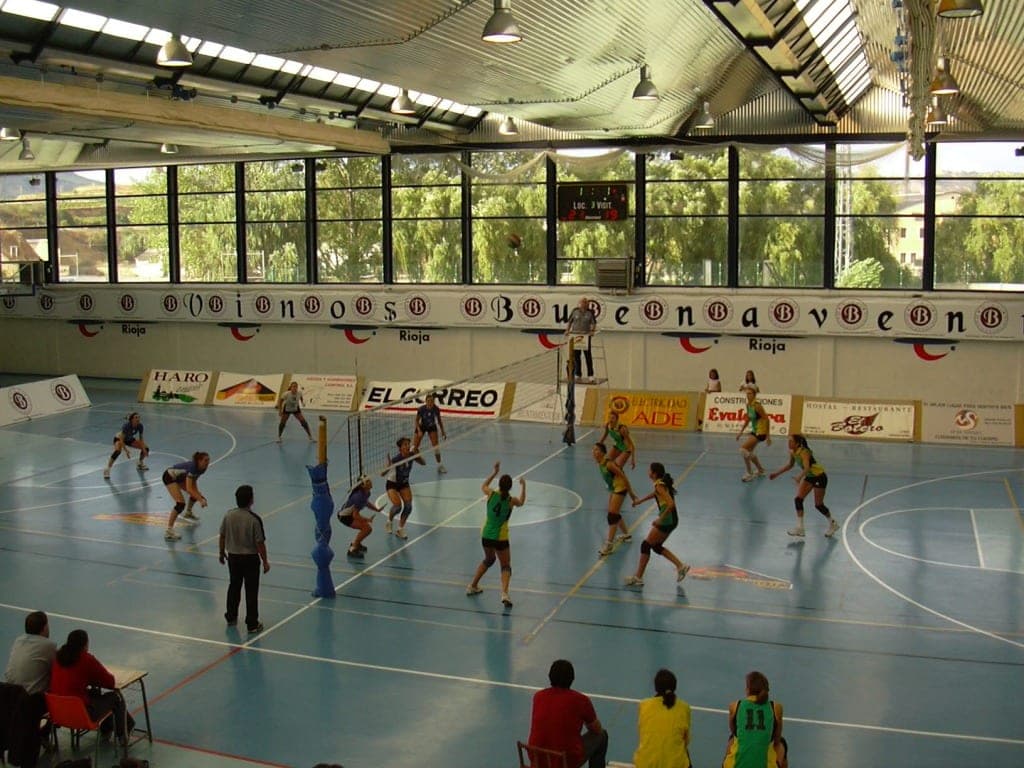
Volleyball
A non-contact team sport of rallies, jumps and teamwork — indoors or on the beach.
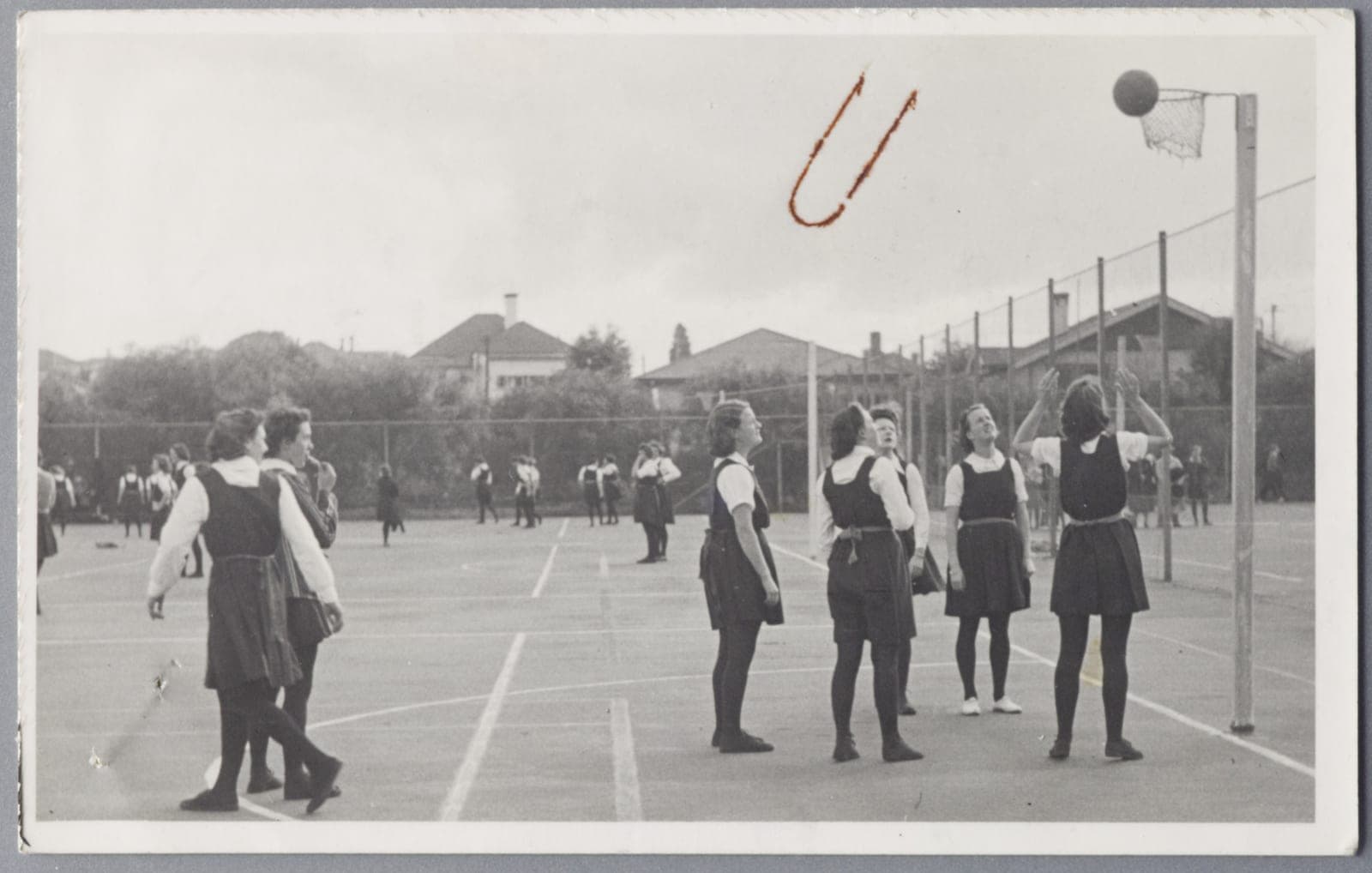
Netball
A non-contact, position-based team sport of quick passing and accurate shooting.
Figure Skating
An artistic ice sport combining glides, spins, jumps and footwork into flowing routines.
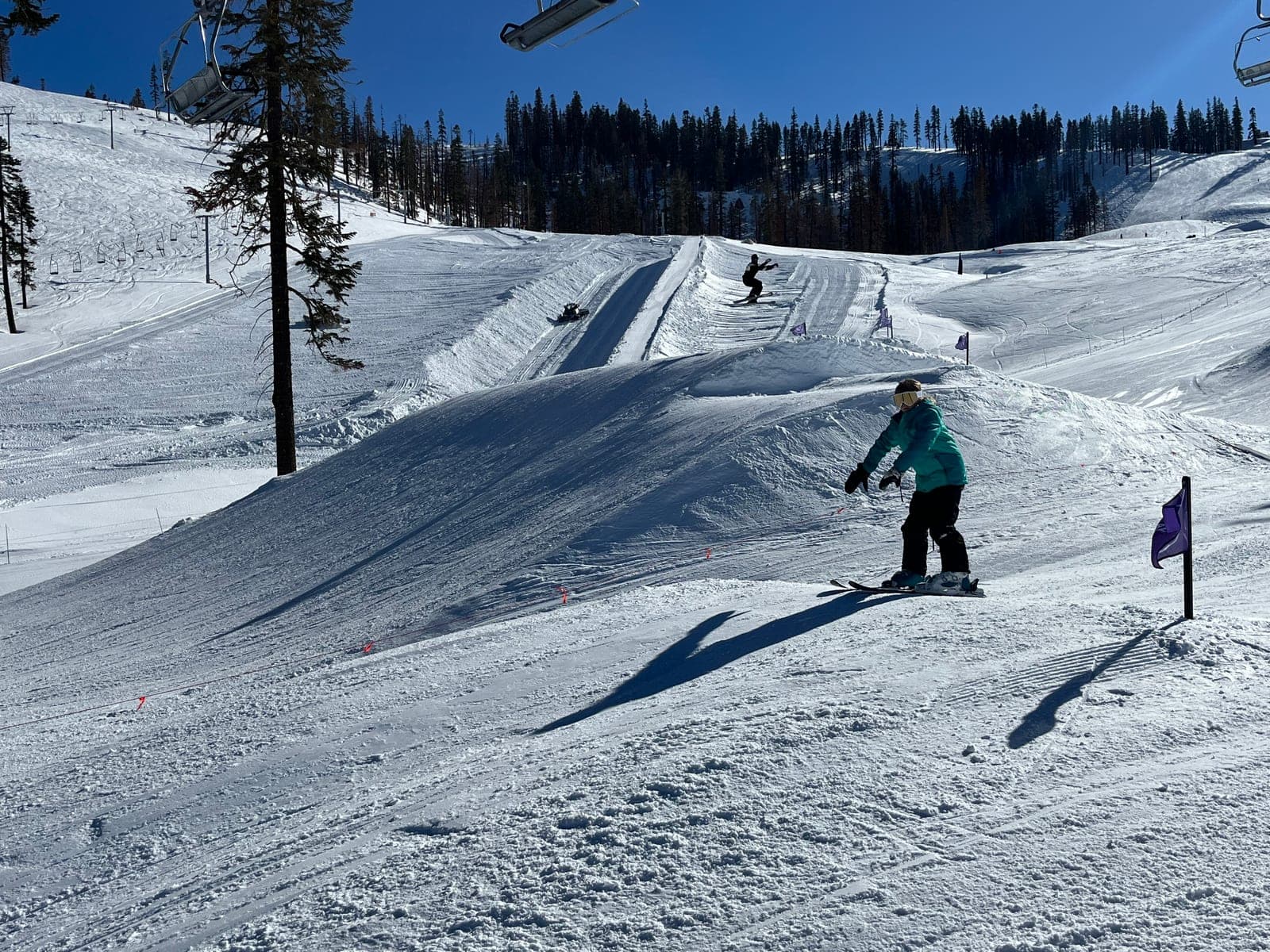
Snowboarding
A downhill snow sport where you ride a single board sideways down the mountain.

Alpine Skiing
A downhill snow sport where you glide and turn down groomed slopes on a pair of skis.
Compare landing with…
Movements it is often confused with — see exactly how they differ.
How it connects
The meaning-bearing relationships that place Landing in the wider knowledge graph — each one with the reason it exists.
Builds on
Understanding these first makes this one make sense.
Commonly confused with
Close enough to be mixed up — the distinction is worth knowing.
Explore across the knowledge base
Follow the threads that connect Landing to the rest of SocialSportHub.
Movement comparisons
- Deceleration vs LandingDeceleration vs Landing: how these two movements differ, what they share, and how to tell them apart — from mechanics to the sports that use them.
- Hop vs LandingHop vs Landing: how these two movements differ, what they share, and how to tell them apart — from mechanics to the sports that use them.
- Jump vs LandingJump vs Landing: how these two movements differ, what they share, and how to tell them apart — from mechanics to the sports that use them.
- Landing vs SquatLanding vs Squat: how these two movements differ, what they share, and how to tell them apart — from mechanics to the sports that use them.
- Hop vs JumpHop vs Jump: how these two movements differ, what they share, and how to tell them apart — from mechanics to the sports that use them.
Skills
- JumpingThe skill of leaping powerfully and with timing to reach or contest the ball in the air.
- ReboundingThe basketball skill of gaining the ball after a missed shot — positioning and timing decide it far more often than pure jumping height.
- BalanceThe skill of keeping the body stable and controlled while still or moving.
- Core stabilityThe skill of engaging the trunk muscles to keep the body strong and controlled through movement.
- FootworkThe skill of moving efficiently around the playing area to be in position for each shot or action.
Sports science
- BiomechanicsThe study of how the body produces and controls movement — the mechanics behind every technique in sport.
- Force and powerThe difference between how much force the body can produce and how quickly it can produce it — the mechanics behind strength and explosiveness.
- The kinetic chainThe idea that the body’s segments work as a linked chain, passing force from the ground up through the hips, trunk and limbs.
- ProprioceptionThe body’s internal sense of where its parts are and how they are moving — the awareness behind balance and coordinated movement.
- Motor controlHow the brain and nervous system organise the muscles to produce coordinated, controlled movement.
Training methods
- PlyometricsPlyometrics are jumping and bounding drills that train muscles to produce force quickly, developing power and springiness through explosive movement.
- Strength TrainingStrength training uses resistance — bodyweight, bands or weights — to challenge your muscles so they gradually adapt and get stronger over time.
Coaching concepts
- ProgressionBuilding skill and training load in gradual, manageable steps so each stage prepares the next, moving from simple to complex and easy to hard.
- Feedback and CueingFeedback from your senses, a coach, or video plus short instructional cues guide skill learning — including internal vs external focus of attention.
- Repetition QualityThe attention and intent behind each repetition matter more than raw volume — focused, well-executed reps build skill faster than mindless numbers.
Go deeper with Landing
Everywhere else on the platform that covers Landing — assembled from what actually references it, so nothing here is a dead end.
Take it away
Open data and the whole-platform view of this subject.
How this page is maintained
- Content type
- Movement pattern
- Provenance
- Tier A — evergreen educational
- Verified external sources
- 0
- Content updated
- 2026-07-13
Evergreen, first-party explanation — it makes no claim that needs an external source. How we handle sources and reviews.