
Layup
A close-range basketball shot taken while moving toward the basket, laying the ball softly off the backboard or over the rim.
Overview
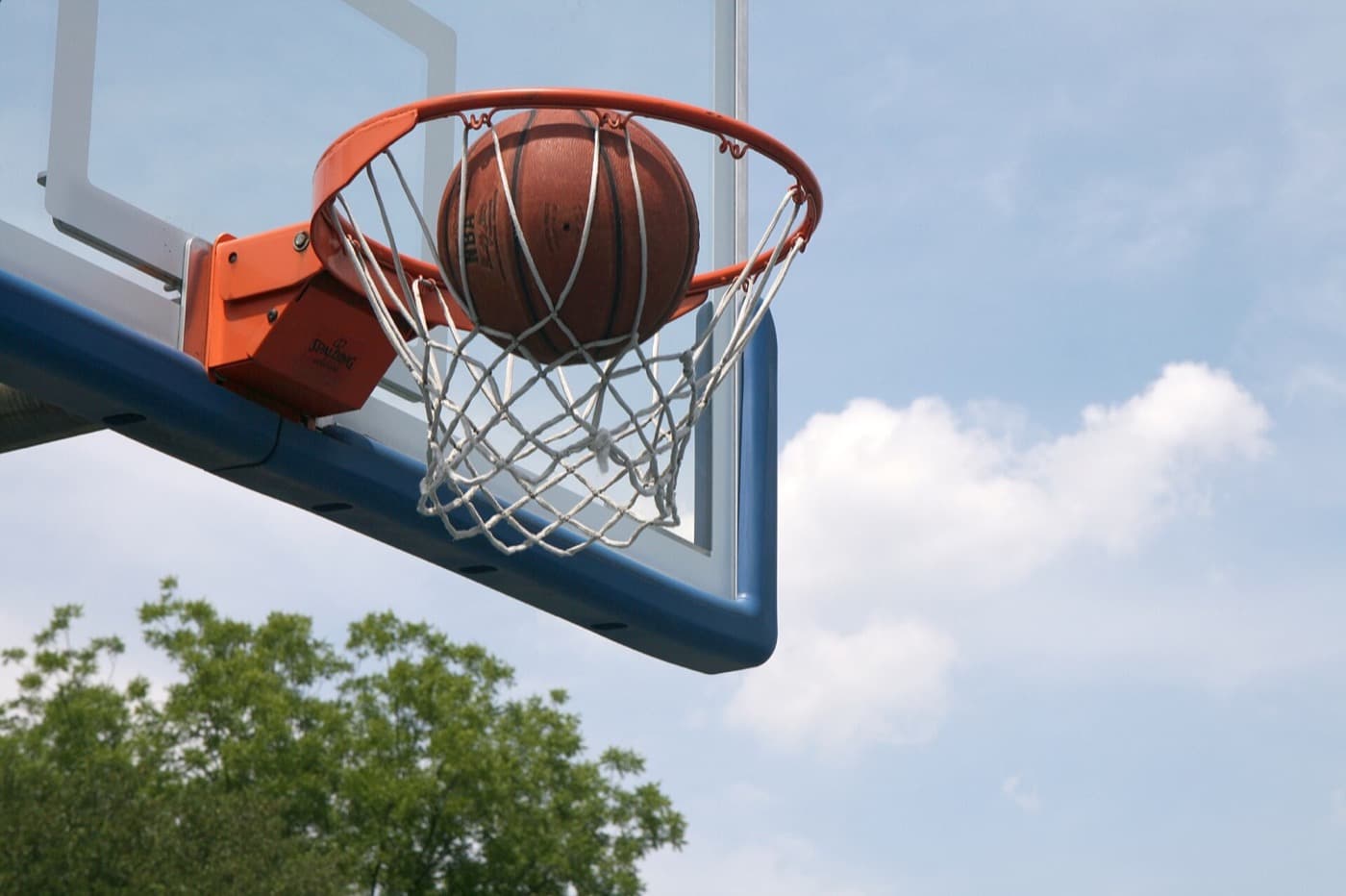
The layup is the highest-percentage shot in basketball, taken near the hoop off a dribble or a pass while in motion. The shooter gathers the ball, drives off the inside foot and lays it gently against the backboard or over the front of the rim.
Coordinating the footwork so the take-off foot is opposite the shooting hand is the key to a smooth layup.
How to do it
- 1Gather the ball as you approach the basket while dribbling or after a pass.
- 2Step with the inside foot and then jump off the foot opposite your shooting hand.
- 3Drive the shooting-side knee upward as you rise.
- 4Extend your arm and lay the ball softly off the backboard or over the rim.
- 5Land in balance ready to follow the shot.
Key points
- Take off from the foot opposite your shooting hand.
- Lift the knee on the shooting side for extra height and balance.
- Aim for the top corner of the backboard square when using the glass.
Where it’s used
Sports that use layup:
Related techniques
Jump Shot
A basketball shot released at the top of a vertical jump, letting the shooter get the ball over a defender with a soft, arcing release.
Chest Pass
A two-handed pass thrown directly from chest height in a straight line to a teammate, the most basic pass in basketball and netball.
Free Throw
An unguarded basketball shot taken from the free-throw line, relying on a calm, repeatable routine rather than power.
How it connects
The meaning-bearing relationships that place Layup in the wider knowledge graph — each one with the reason it exists.
Frequently learned together
Taught side by side in the same stage of a learning path.
- Jump ShotBoth are taught in the “Build your technique” stage of the Basketball learning path.
- Chest PassBoth are taught in the “Build your technique” stage of the Basketball learning path.
- Free ThrowBoth are taught in the “Build your technique” stage of the Basketball learning path.
- Crossover DribbleBoth are taught in the “Build your technique” stage of the Basketball learning path.
Explore across the knowledge base
Follow the threads that connect Layup to the rest of SocialSportHub.
Movement patterns
- JumpThe plyometric pattern of projecting the body off the ground through explosive triple extension and controlling the landing — the core expression of lower-body power.
- HopA single-leg spring that takes off from and lands on the same leg, using the stretch-shortening cycle to project the body vertically or horizontally.
- LandingThe controlled absorption of force at ground contact that ends an airborne phase, dissipating impact through eccentric triple flexion of the ankle, knee and hip.
Skills
- ShootingThe skill of striking or releasing the ball toward the goal or basket to score.
- FootworkThe skill of moving efficiently around the playing area to be in position for each shot or action.
- DribblingThe skill of moving with the ball under close control to beat opponents or keep possession.
- ChippingThe short lofted shot played from near the green to get the ball rolling toward the hole.
- BalanceThe skill of keeping the body stable and controlled while still or moving.
Go deeper with Layup
Everywhere else on the platform that covers Layup — assembled from what actually references it, so nothing here is a dead end.
Learn it
Structured courses and paths on the platform that cover this directly.
Take it away
Open data and the whole-platform view of this subject.
How this page is maintained
- Content type
- Technique
- Provenance
- Tier A — evergreen educational
- Verified external sources
- 0
- Content updated
- 2026-09-12
Evergreen, first-party explanation — it makes no claim that needs an external source. How we handle sources and reviews.