
Free Throw
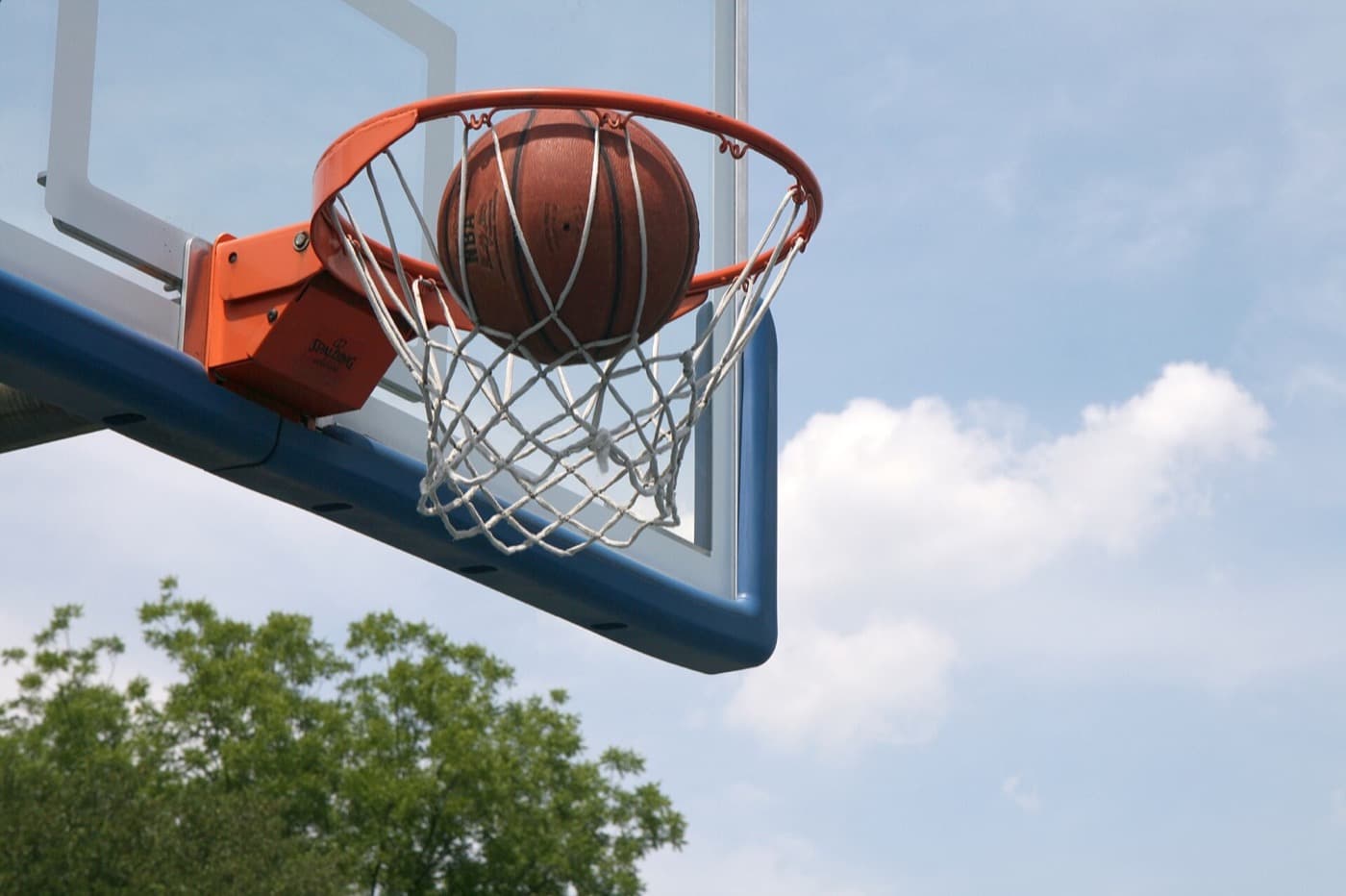
An unguarded basketball shot taken from the free-throw line, relying on a calm, repeatable routine rather than power.
Overview
A free throw is an uncontested shot awarded after certain fouls, taken from behind the free-throw line. With no defender, success comes from a consistent pre-shot routine and a smooth, balanced shooting motion.
Most players use the same setup every time — the same foot position, the same number of dribbles and the same release — to build reliable muscle memory.
How to do it
- 1Line your shooting-side foot up with the centre of the rim behind the line.
- 2Go through your usual routine, such as a set number of dribbles and a breath.
- 3Bend your knees and bring the ball into your shooting pocket.
- 4Rise smoothly and release toward the rim with a soft wrist flick.
- 5Hold the follow-through until the ball reaches the basket.
Key points
- A fixed pre-shot routine builds consistency under pressure.
- Balance and rhythm matter more than force.
- Follow through fully and hold the finish.
Where it’s used
Sports that use free throw:
Related techniques
Jump Shot
A basketball shot released at the top of a vertical jump, letting the shooter get the ball over a defender with a soft, arcing release.
Layup
A close-range basketball shot taken while moving toward the basket, laying the ball softly off the backboard or over the rim.
Chest Pass
A two-handed pass thrown directly from chest height in a straight line to a teammate, the most basic pass in basketball and netball.
How it connects
The meaning-bearing relationships that place Free Throw in the wider knowledge graph — each one with the reason it exists.
Frequently learned together
Taught side by side in the same stage of a learning path.
- Jump ShotBoth are taught in the “Build your technique” stage of the Basketball learning path.
- LayupBoth are taught in the “Build your technique” stage of the Basketball learning path.
- Chest PassBoth are taught in the “Build your technique” stage of the Basketball learning path.
- Crossover DribbleBoth are taught in the “Build your technique” stage of the Basketball learning path.
Explore across the knowledge base
Follow the threads that connect Free Throw to the rest of SocialSportHub.
Movement patterns
- PushPressing a load or the body away from the torso — horizontally or overhead — by extending the shoulders and elbows, developing the chest, shoulders and triceps.
- ThrowPropelling an object by releasing it from the hand, driven by a proximal-to-distal kinetic-chain sequence that summates speed from the legs through the trunk and arm to the release point.
Skills
- ShootingThe skill of striking or releasing the ball toward the goal or basket to score.
- ThrowingThe skill of propelling the ball accurately and with control using the arm.
- TraversingThe skill of moving across a snow slope rather than straight down it, holding speed steady.
- ReboundingThe basketball skill of gaining the ball after a missed shot — positioning and timing decide it far more often than pure jumping height.
- Aiming and alignmentThe skill of setting the body and the implement so the shot starts on the line you intend.
Equipment
- BasketballA large, inflated ball with a dimpled surface used to play basketball.
- Badminton racketA lightweight strung racket used to hit the shuttlecock in badminton, built for quick, whippy swings rather than heavy power.
- Hockey stickA curved-headed stick used to control, pass and shoot the ball or puck in hockey.
Facilities
- Basketball courtA rectangular hard-surfaced court with a raised hoop and backboard at each end where basketball is played.
- Tennis court geometryEvery measurement on a tennis court and the rule that governs them all — court and service-box dimensions, line widths, the centre mark, and why measurements are taken to the outside of the lines.
- Sports hallA large indoor hall with multi-sport line markings, used for court sports like basketball, volleyball and badminton.
Coaching concepts
- Deliberate PracticeFocused, effortful practice that targets a specific weakness with full attention and immediate feedback — not just repeating what you already do well.
- Repetition QualityThe attention and intent behind each repetition matter more than raw volume — focused, well-executed reps build skill faster than mindless numbers.
- Feedback and CueingFeedback from your senses, a coach, or video plus short instructional cues guide skill learning — including internal vs external focus of attention.
- Practice VariabilityVarying practice conditions — spacing, interleaving skills and changing situations — to build adaptable, durable skill, even when it feels harder day to day.
Go deeper with Free Throw
Everywhere else on the platform that covers Free Throw — assembled from what actually references it, so nothing here is a dead end.
Learn it
Structured courses and paths on the platform that cover this directly.
Take it away
Open data and the whole-platform view of this subject.
How this page is maintained
- Content type
- Technique
- Provenance
- Tier A — evergreen educational
- Verified external sources
- 0
- Content updated
- 2026-09-12
Evergreen, first-party explanation — it makes no claim that needs an external source. How we handle sources and reviews.