
Hockey stick
A curved-headed stick used to control, pass and shoot the ball or puck in hockey.
Overview
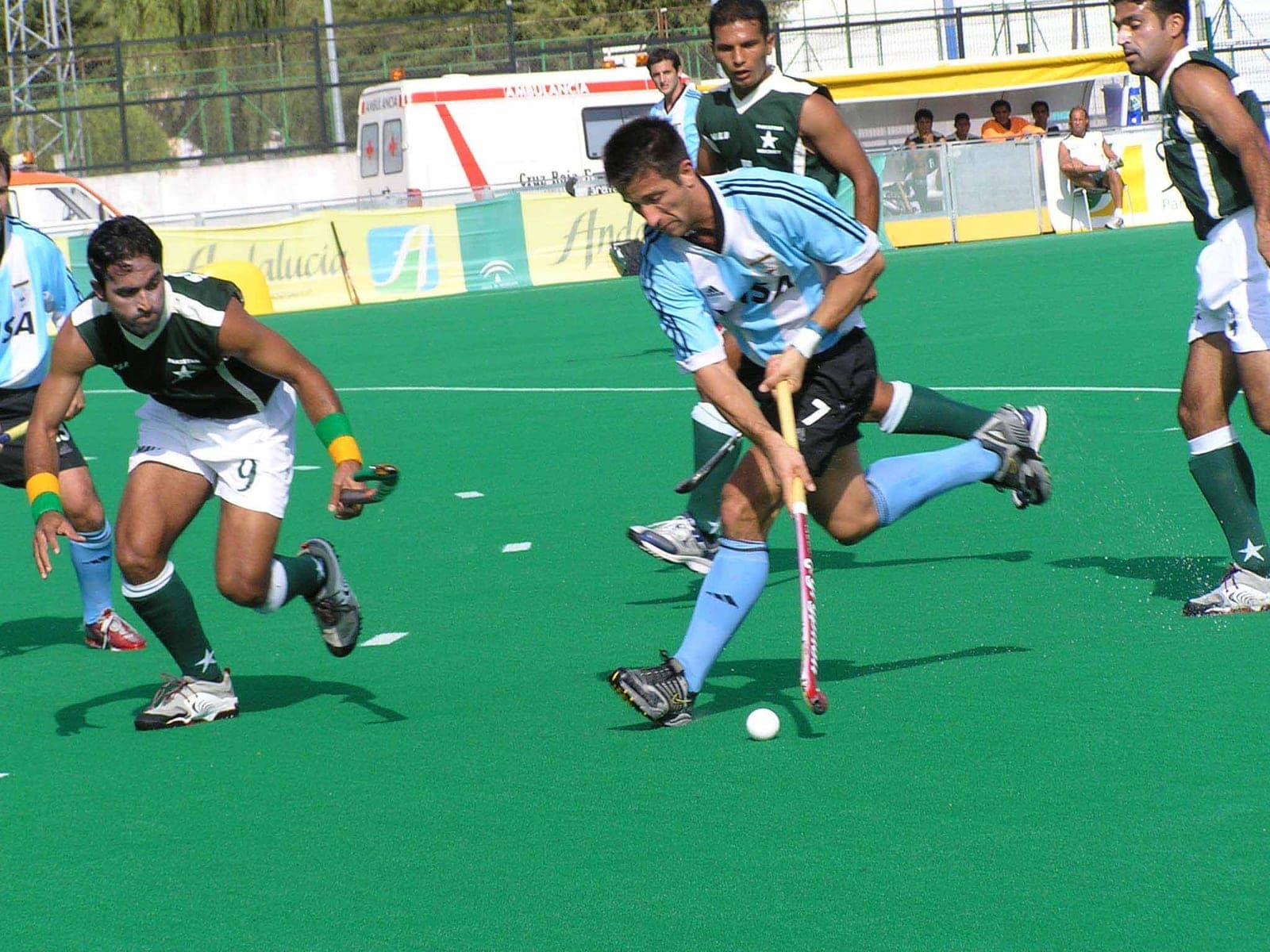
A hockey stick has a long shaft and a curved or angled head used to move, pass and shoot. In field hockey the stick has a flat side used to strike the ball, while in ice hockey the blade is used to handle and shoot the puck.
Although field hockey and ice hockey sticks differ in shape and materials, both share the same core purpose: giving the player close control of the ball or puck along the surface of play.
Good to know
- Field hockey sticks strike with the flat side only.
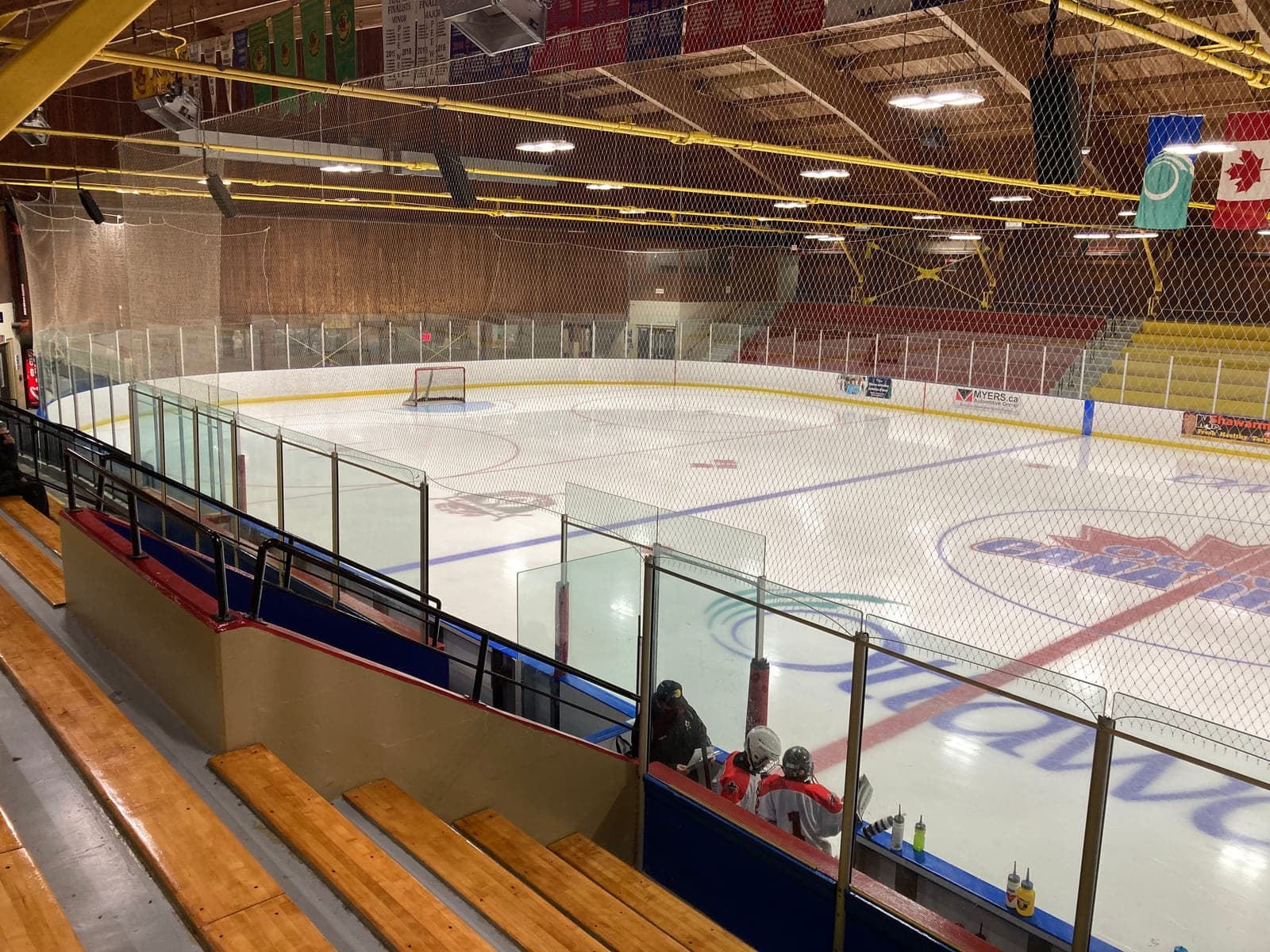
- Ice hockey uses a bladed stick to handle the puck.
- The shape differs between the two sports.
Where it’s used
Sports that use hockey stick:

Related equipment
Shin guards
Protective pads worn over the shins in football and other field sports.
The goal and the crease
The net a hockey team defends and the protected area in front of it — the exact goal dimensions, what the crease area includes, and why goaltender contact so often disallows a goal.
The puck
The vulcanised rubber disc ice hockey is played with — its exact diameter, thickness and weight under IIHF rules, and the limits on what may be printed on it.
How it connects
The meaning-bearing relationships that place Hockey stick in the wider knowledge graph — each one with the reason it exists.
Used with
Turns up alongside this across the same sports.
Explore across the knowledge base
Follow the threads that connect Hockey stick to the rest of SocialSportHub.
Techniques
- Ice hockey shootingThe four shots hockey is scored with — wrist shot, snap shot, slap shot and backhand — how each trades power against release time, and why the stick is bent on purpose.
- StickhandlingHow a hockey player carries and protects the puck at speed — why the hands work independently of the feet, the role of soft hands, and how body position beats stick skill.
- HeaderA technique for controlling or striking the ball with the forehead in football, used to pass, shoot or clear the ball in the air.
- Jump ShotA basketball shot released at the top of a vertical jump, letting the shooter get the ball over a defender with a soft, arcing release.
- Free ThrowAn unguarded basketball shot taken from the free-throw line, relying on a calm, repeatable routine rather than power.
Playing surfaces
- Artificial turfSynthetic grass, often filled with sand or rubber, that gives a firm, even, all-weather surface. It plays faster and truer than worn natural grass.
- IceA prepared, frozen sheet kept hard and smooth; its extremely low friction lets skaters, pucks and stones glide with very little resistance.
Knowledge Atlas
Tactics
- The penalty killHow a team defends a player short — the box and diamond formations, why killers ice the puck legally, and what a short-handed team is actually trying to protect.
- The forecheckHow a hockey team attacks in the opposition's defensive zone without the puck — the 1-2-2, 2-1-2 and trap approaches, and what each one risks to win the puck back.
- Neutral-zone play and the breakoutThe 15 metres between the blue lines where most hockey possession is decided — how a breakout moves the puck out of the defensive zone, and why zone entries are so contested.
- Territory versus possessionRugby union's central strategic trade — when to keep the ball and when to kick it away — and why the 22-metre line makes field position worth more than possession in some parts of the field.
Go deeper with Hockey stick
Everywhere else on the platform that covers Hockey stick — assembled from what actually references it, so nothing here is a dead end.
See it
Diagrams and step-through visualisations drawn for this subject.
Take it away
Open data and the whole-platform view of this subject.
How this page is maintained
- Content type
- Equipment
- Provenance
- Tier A — evergreen educational
- Verified external sources
- 0
- Content updated
- 2026-09-12
Evergreen, first-party explanation — it makes no claim that needs an external source. How we handle sources and reviews.