
Swimming pool
A water-filled basin, divided into lanes for competition, used for swimming and other aquatic sports.
Overview
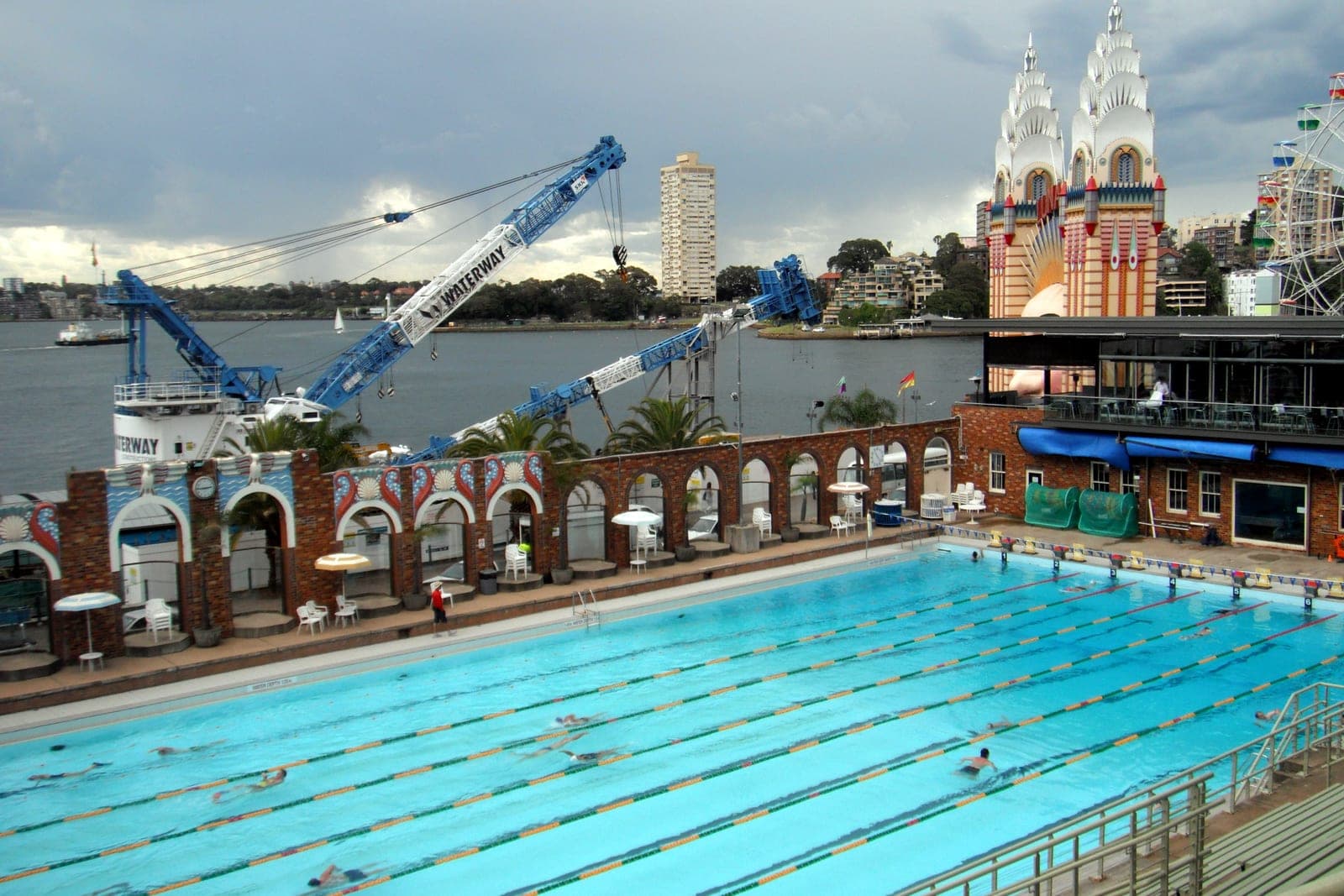
A swimming pool is a constructed basin filled with water, used for swimming, training and a range of aquatic sports. Competition pools are divided into lanes by floating ropes and come in standard long-course and short-course lengths.
Pools may be indoor or outdoor and vary in depth depending on their use — diving and water polo need deeper water than lane swimming.
Good to know
- Long-course pools are 50 metres long; short-course pools are 25 metres.
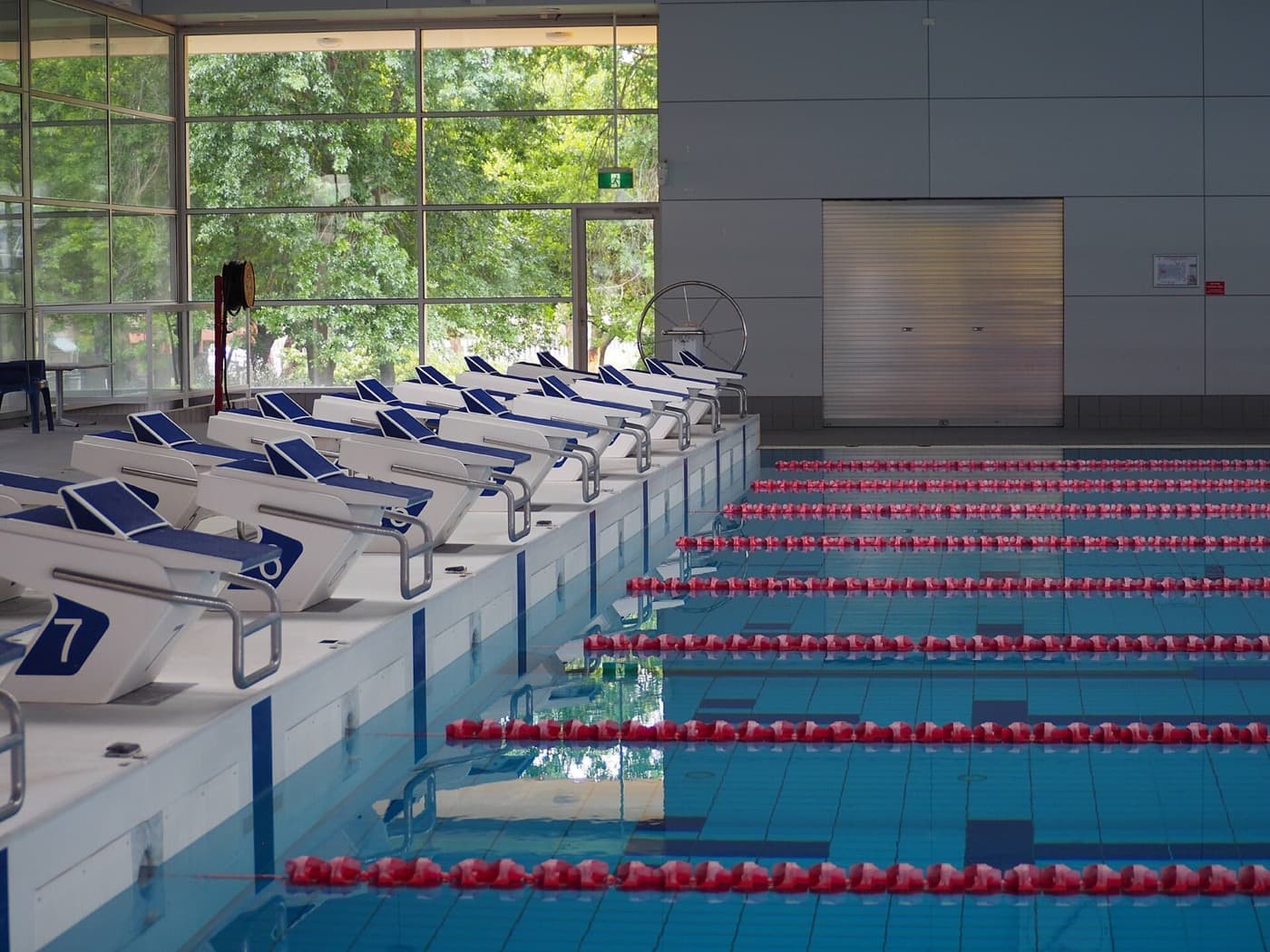
- Floating lane ropes separate swimmers and help calm the wash between lanes.
- Starting blocks at one end are used for racing dives in most events except backstroke.
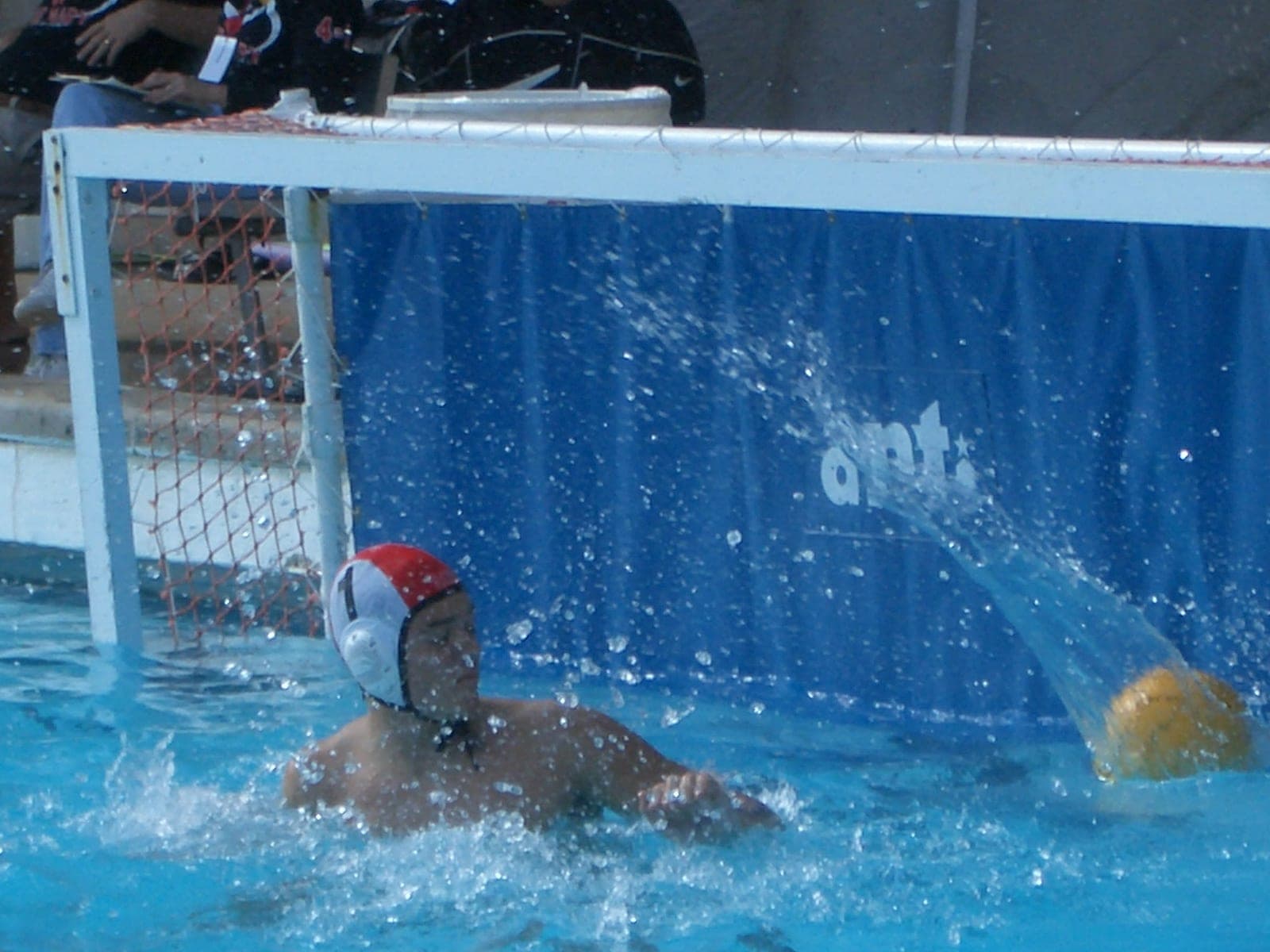
- Depth varies by pool, with deeper water needed for diving and water polo.
Where it’s used
Sports that use swimming pool:

How it connects
The meaning-bearing relationships that place Swimming pool in the wider knowledge graph — each one with the reason it exists.
Frequently learned together
Taught side by side in the same stage of a learning path.
Explore across the knowledge base
Follow the threads that connect Swimming pool to the rest of SocialSportHub.
Equipment
- Swimming gogglesSealed eyewear that lets swimmers see clearly and keep water out of the eyes.
- Swim finsFoot blades that increase propulsion when swimming, snorkelling or diving.
- Golf clubA shafted club with a specialised head used to strike the ball around a golf course.
- Ski polesPaired lightweight poles used for timing, balance and pushing along on flat ground.
- Tennis racquetA strung frame with a handle, used to hit the ball in tennis. Head size, weight and balance vary to suit different playing styles.
Techniques
- Freestyle StrokeThe fastest swimming stroke, using alternating overhead arm pulls, a flutter kick and rhythmic side breathing.
- BreaststrokeA swimming stroke with a simultaneous arm sweep, a whip-like frog kick and a glide, performed on the front.
- BackstrokeThe only competitive stroke swum on the back, using alternating overhead arm pulls and a steady flutter kick.
- Flip TurnA fast turn in freestyle where the swimmer somersaults at the wall, pushes off on their back and rotates to continue swimming.
- The push and the chopTable tennis's backspin strokes — the short push that stops an opponent attacking, the long push that changes the rally, and the chop that defends from distance.
Disciplines
- FreestyleFreestyle is the fastest swimming stroke, swum face-down with an alternating arm pull and flutter kick — the stroke most people picture when they think of swimming.
- BackstrokeBackstroke is swum face-up with an alternating arm pull and flutter kick — the one competitive stroke where you breathe freely because your face stays out of the water.
- BreaststrokeBreaststroke uses a simultaneous, symmetric arm sweep and a whip-like frog kick, with a distinct glide between strokes — technical, rhythmic and the slowest of the four strokes.
- ButterflyButterfly is swum with a simultaneous over-water arm recovery and an undulating dolphin kick — the most physically demanding stroke, built on rhythm and core-driven body movement.
- Individual medleyThe individual medley (IM) combines all four strokes in a set order — butterfly, backstroke, breaststroke, then freestyle — testing all-round swimming across a single event.
Adaptive sports
- Accessibility in sportHow sport removes barriers — physical, sensory, social and informational — so that disabled people can take part on equal terms.
- Sports for Blind and Visually Impaired AthletesSports adapted with sound, touch and guiding support so that athletes who are blind or have low vision can take part and compete.
- Inclusive facilitiesSports venues designed or adapted so that disabled and non-disabled people can arrive, take part and feel welcome on equal terms.
Learning paths
- Learn SwimmingA structured, educational learning path for swimming — from the rules to skills, techniques, tactics and training.
- Learn Water PoloA structured, educational learning path for water polo — from the rules to skills, techniques, tactics and training.
- Learn Open-Water SwimmingA structured, educational learning path for open-water swimming — from the rules to skills, techniques, tactics and training.
Go deeper with Swimming pool
Everywhere else on the platform that covers Swimming pool — assembled from what actually references it, so nothing here is a dead end.
Learn it
Structured courses and paths on the platform that cover this directly.
How this page is maintained
- Content type
- Facility
- Provenance
- Tier A — evergreen educational
- Verified external sources
- 0
- Content updated
- 2026-09-12
Evergreen, first-party explanation — it makes no claim that needs an external source. How we handle sources and reviews.