
Overview
A cut is a high-intensity, single-step redirection in which the athlete plants a foot to one side of the centre of mass and applies a large, brief ground reaction force to swing momentum sharply onto a new line. Two broad variants exist: the sidestep cut, where the athlete plants on the leg opposite the intended direction and pushes the body away from that foot, and the crossover cut, where the plant is made with the near leg and the body is pulled across it. In both, the plant foot is placed wide of the centre of mass, the trunk leans toward the new direction, and the hip, knee and ankle flex to absorb momentum and then extend to propel it — a compressed stretch-shortening action over a single ground contact. Because the redirection is concentrated in one plant rather than spread across several steps, the lateral and braking forces are high, and foot-to-ground friction is what allows that force to be expressed without the foot sliding. The sharper the angle and the faster the approach, the larger the impulse the single plant must handle.
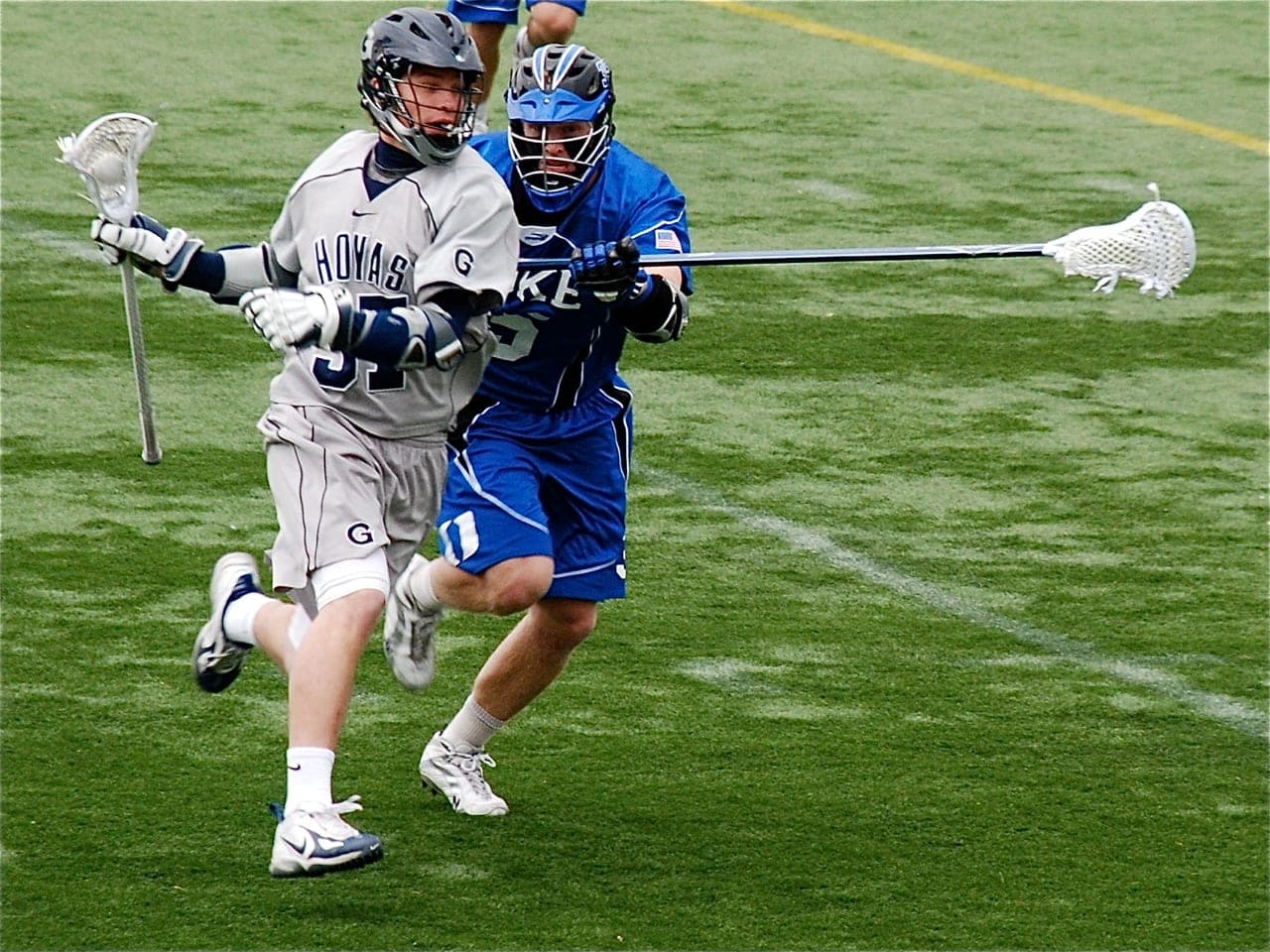
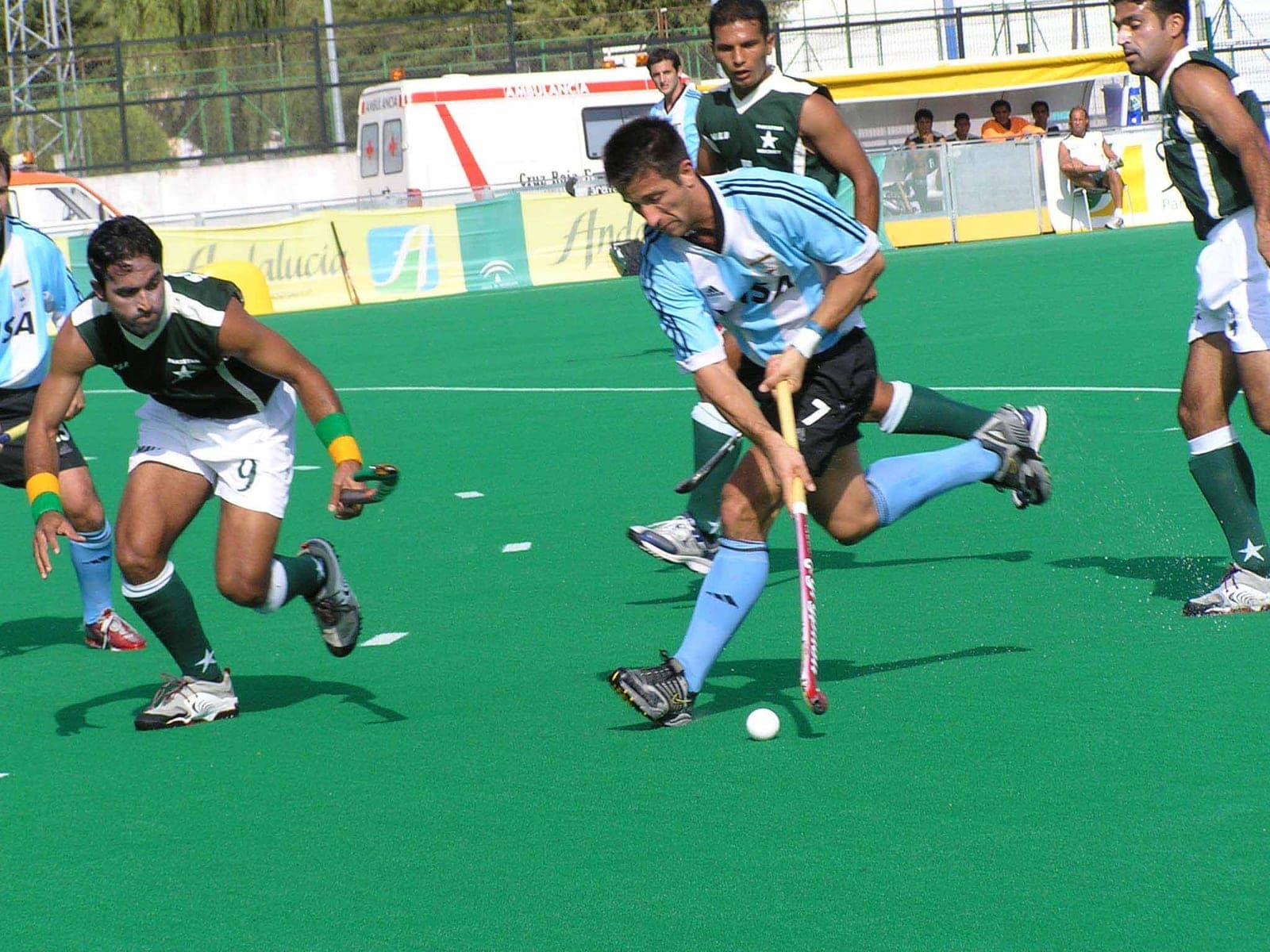
The cut's expression differs across sports and is not a single identical action, though the plant-and-drive mechanics are shared. In rugby, football and American football it is the evasive sidestep or jink used to beat a defender, and it is frequently reactive — shaped in the moment by where the opponent commits their weight, which makes it an open skill. In basketball, cutting is a sharp move to shake a marker or attack the basket, timed to a teammate and the defence. In field hockey, netball and lacrosse it threads sharp changes through congested space, sometimes while controlling an implement or ball at the same time. Some cuts are instead pre-planned, such as a scripted route in American football run without reading a defender, so the same mechanical action can sit anywhere on the spectrum from reactive evasion to rehearsed pattern. What stays constant is the sharpness: the redirection happens over one decisive plant rather than being eased through a curve.
What defines it
- Single decisive plant: the redirection is concentrated in one wide foot contact placed lateral to the centre of mass, not spread across multiple steps.
- Sidestep versus crossover variants: pushing away from a far-side plant foot, or pulling the body across a near-side plant, produce different force directions and body orientations.
- High lateral and braking forces over a brief ground contact, expressed through foot-to-ground friction, which rises sharply with steeper angles and faster approach speeds.
- A compressed stretch-shortening action: the plant leg's joints flex to absorb momentum and rapidly extend to redirect it, driving the body onto the new line.
- Frequently reactive: many cuts are triggered by an opponent's position, adding a perceptual-decision layer on top of the mechanical redirection.
How it differs from nearby movements
Movements that look similar but are not the same thing.
- Not the same as change-of-direction
- A cut is a specific, sharp, single-plant redirection. Change of direction is the broad category it belongs to, which also covers gradual and multi-step redirections that would not be called a cut.
- Not the same as a gradual curve
- A cut concentrates the whole redirection into one hard plant, changing heading almost instantly. A curved or arced run distributes the turn continuously across many steps with no single braking plant, trading sharpness for retained speed.
- Not the same as pivot
- A pivot rotates the body around a stationary planted foot and stays in place. A cut carries momentum through the plant and out into travel along a new line.
A note on this information
Exercises that train the cut
Movements built on this pattern — educational examples, not a prescription.
Jump squat
An explosive squat variation where you spring off the floor at the top of the movement.
Bulgarian split squat
A single-leg squat where the back foot is raised on a bench behind you.
Lunge
A single-leg movement where you step forward and bend both knees to lower your body.
Side plank
A core hold on one forearm and the side of the foot that targets the muscles along your side.
Mountain climber
A dynamic exercise where you drive your knees toward your chest one at a time from a plank.
Sports skills that express it
The learnable skills of a sport that this movement underlies.
Footwork
The skill of moving efficiently around the playing area to be in position for each shot or action.
Dribbling
The skill of moving with the ball under close control to beat opponents or keep possession.
Sprinting
The skill of running or riding at maximum controlled speed over a short distance.
Balance
The skill of keeping the body stable and controlled while still or moving.
Marking
The defensive skill of staying close to an opponent to limit their space and options.
Sports techniques that use it
How the movement shows up in the specific techniques of a sport.
Crossover Dribble
A basketball dribbling move that switches the ball quickly from one hand to the other to change direction and get past a defender.
Running Form
The efficient posture and stride mechanics of distance running, keeping the body relaxed and the cadence smooth.
Sprint Start
The explosive start of a sprint from a set, crouched position, driving forward low before gradually rising to full stride.
The science and how it’s learned
The concepts that explain this movement and help in learning it.
Sports that rely on it
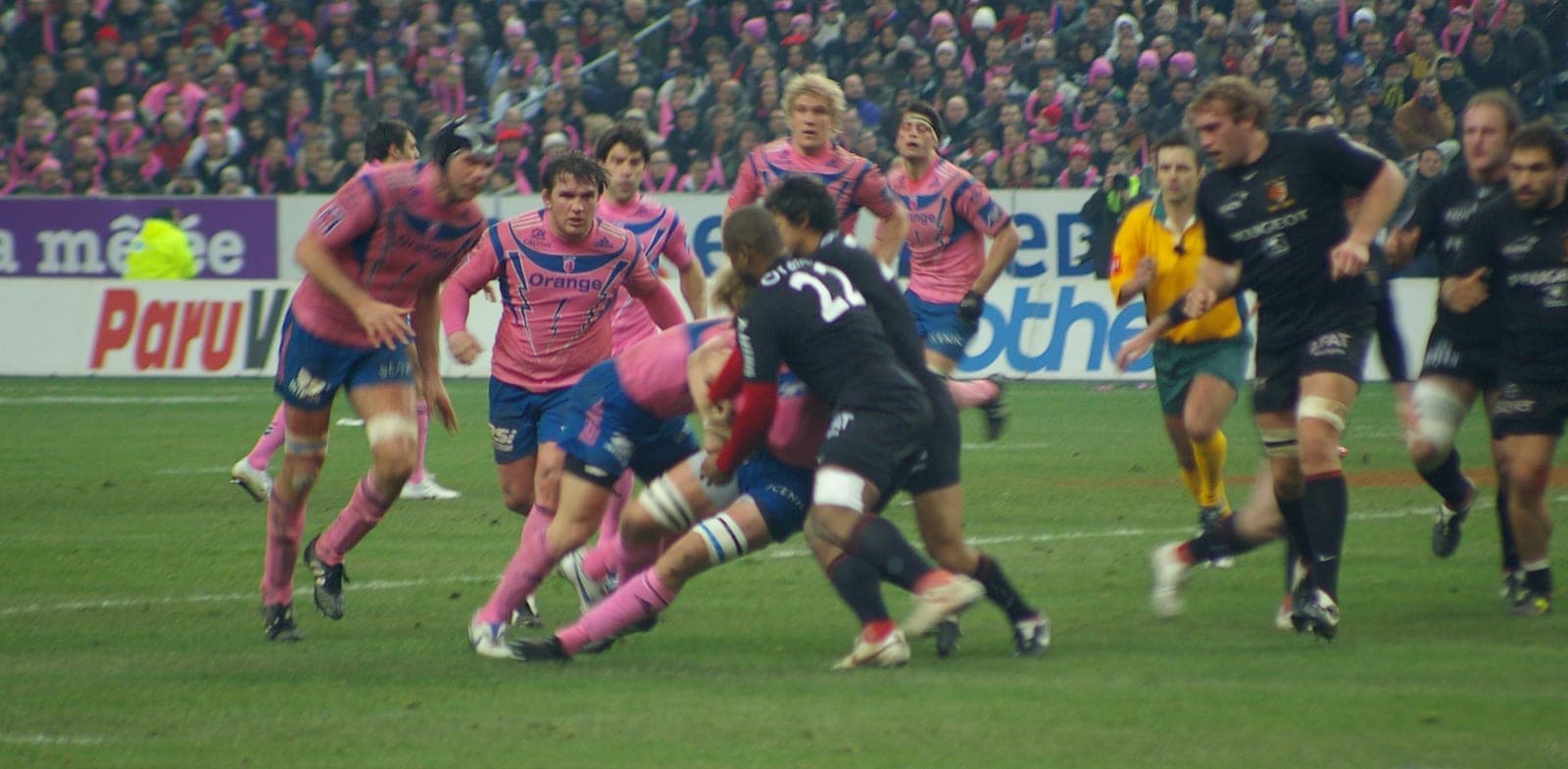
Rugby
A physical team sport of carrying, passing and kicking an oval ball toward the opposing line.
American Football
A strategic, position-based team sport of set plays, sprinting and coordinated teamwork on a marked field.
Football
The world’s most popular team sport — endless running, teamwork and community in one game.
Basketball
A fast, dynamic team sport of running, jumping and quick decisions on court.
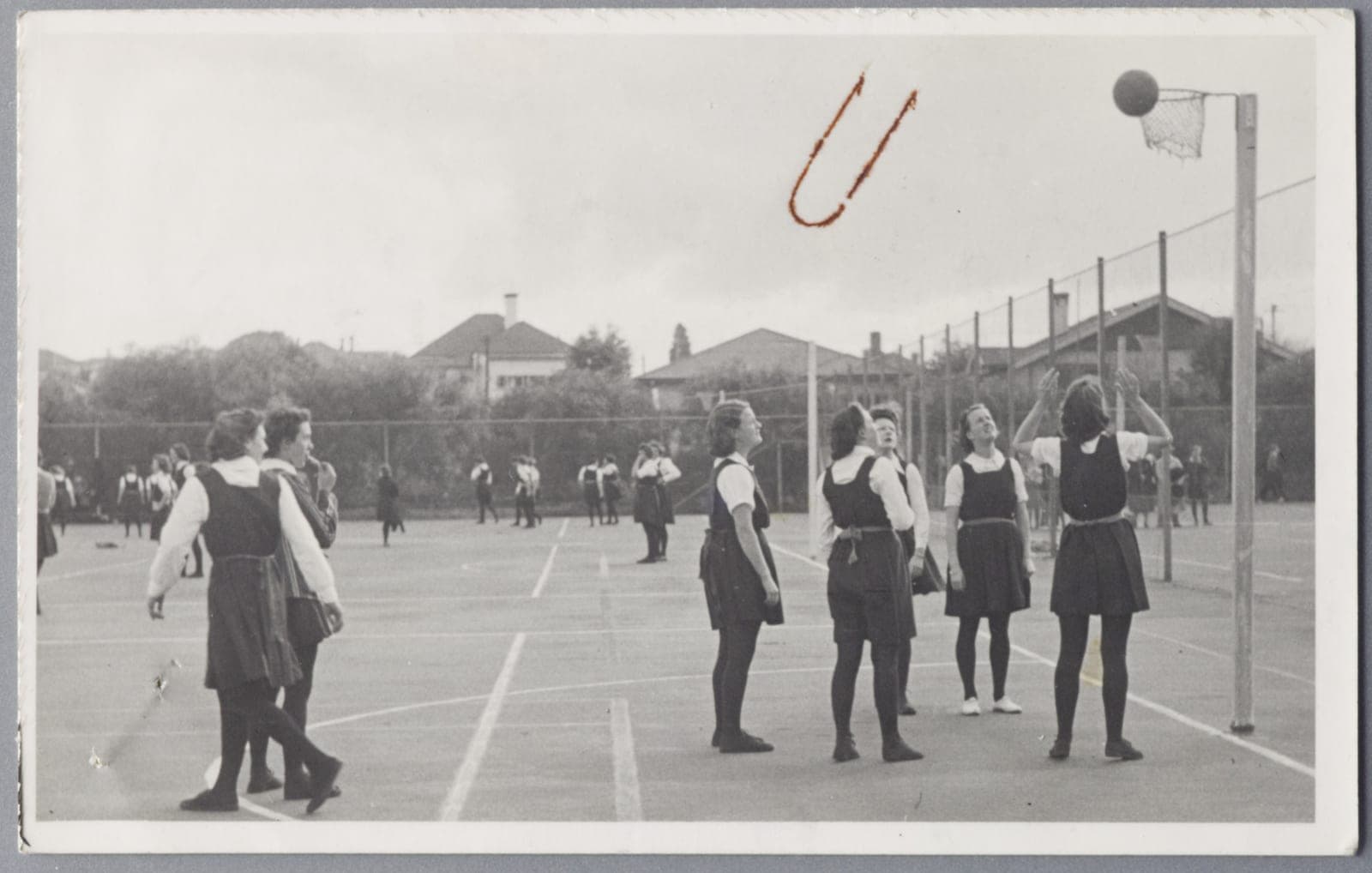
Netball
A non-contact, position-based team sport of quick passing and accurate shooting.
Lacrosse
A fast, stick-and-ball team sport of catching, cradling and shooting a small ball toward a goal.
Field Hockey
An outdoor team sport that uses curved sticks to move a ball, built on agility and teamwork.
Compare cut with…
Movements it is often confused with — see exactly how they differ.
How it connects
The meaning-bearing relationships that place Cut in the wider knowledge graph — each one with the reason it exists.
Builds on
Understanding these first makes this one make sense.
Commonly confused with
Close enough to be mixed up — the distinction is worth knowing.
Explore across the knowledge base
Follow the threads that connect Cut to the rest of SocialSportHub.
Movement comparisons
- Change of Direction vs CutChange of Direction vs Cut: how these two movements differ, what they share, and how to tell them apart — from mechanics to the sports that use them.
- Cut vs PivotCut vs Pivot: how these two movements differ, what they share, and how to tell them apart — from mechanics to the sports that use them.
Skills
- FootworkThe skill of moving efficiently around the playing area to be in position for each shot or action.
- DribblingThe skill of moving with the ball under close control to beat opponents or keep possession.
- SprintingThe skill of running or riding at maximum controlled speed over a short distance.
- BalanceThe skill of keeping the body stable and controlled while still or moving.
- MarkingThe defensive skill of staying close to an opponent to limit their space and options.
Sports science
- BiomechanicsThe study of how the body produces and controls movement — the mechanics behind every technique in sport.
- Force and powerThe difference between how much force the body can produce and how quickly it can produce it — the mechanics behind strength and explosiveness.
- Reaction timeThe short delay between a signal and the start of the movement made in response to it.
- ProprioceptionThe body’s internal sense of where its parts are and how they are moving — the awareness behind balance and coordinated movement.
- The kinetic chainThe idea that the body’s segments work as a linked chain, passing force from the ground up through the hips, trunk and limbs.
Training methods
- PlyometricsPlyometrics are jumping and bounding drills that train muscles to produce force quickly, developing power and springiness through explosive movement.
- High-Intensity Interval Training (HIIT)High-intensity interval training, or HIIT, packs short, hard efforts against brief recoveries into a compact session, making it a time-efficient way to train.
Coaching concepts
- Decision-Making PracticeTraining athletes to read cues and choose the right action under pressure — coupling perception to action, not just rehearsing physical technique in isolation.
- Constraints-Led PracticeA coaching approach that adjusts the task, environment or rules so a desired movement or decision emerges in practice, rather than being explicitly instructed.
- Small-Sided GamesPractising in scaled-down versions of a sport — fewer players, smaller area — so skills and decisions happen more often in a game-like setting.
- Practice VariabilityVarying practice conditions — spacing, interleaving skills and changing situations — to build adaptable, durable skill, even when it feels harder day to day.
Go deeper with Cut
Everywhere else on the platform that covers Cut — assembled from what actually references it, so nothing here is a dead end.
Take it away
Open data and the whole-platform view of this subject.
How this page is maintained
- Content type
- Movement pattern
- Provenance
- Tier A — evergreen educational
- Verified external sources
- 0
- Content updated
- 2026-07-13
Evergreen, first-party explanation — it makes no claim that needs an external source. How we handle sources and reviews.