
Mobility Training
Mobility training works on moving your joints actively through their full range, combining control and flexibility so movement feels free and easy.
Overview
Mobility training is about how well you can move your joints actively through their full range with control. It overlaps with flexibility but adds strength and coordination within that range — it is not just how far a joint can go, but how well you can move it there under your own power.
Sessions often involve slow, deliberate movements that take a joint through circles and controlled ranges — think gentle hip circles, shoulder rotations or a slow, controlled squat. The aim is smoother, freer movement in everyday life and in sport, where restricted joints can make positions awkward.
It is generally low-key and can be done almost anywhere, often on a mat, which makes it easy to add to a warm-up or a quiet day. Beginners work within a comfortable range and let it extend naturally over time rather than forcing anything.
Key points
- Mobility is about moving joints actively through their range with control.
- It differs from flexibility by adding strength and coordination in the range.
- Slow, deliberate movements like joint circles are typical.
- The payoff is freer, smoother movement in daily life and sport.
- It fits neatly into a warm-up or a quiet day and needs little kit.
A note on training information
Where it’s used
Sports this relates to:
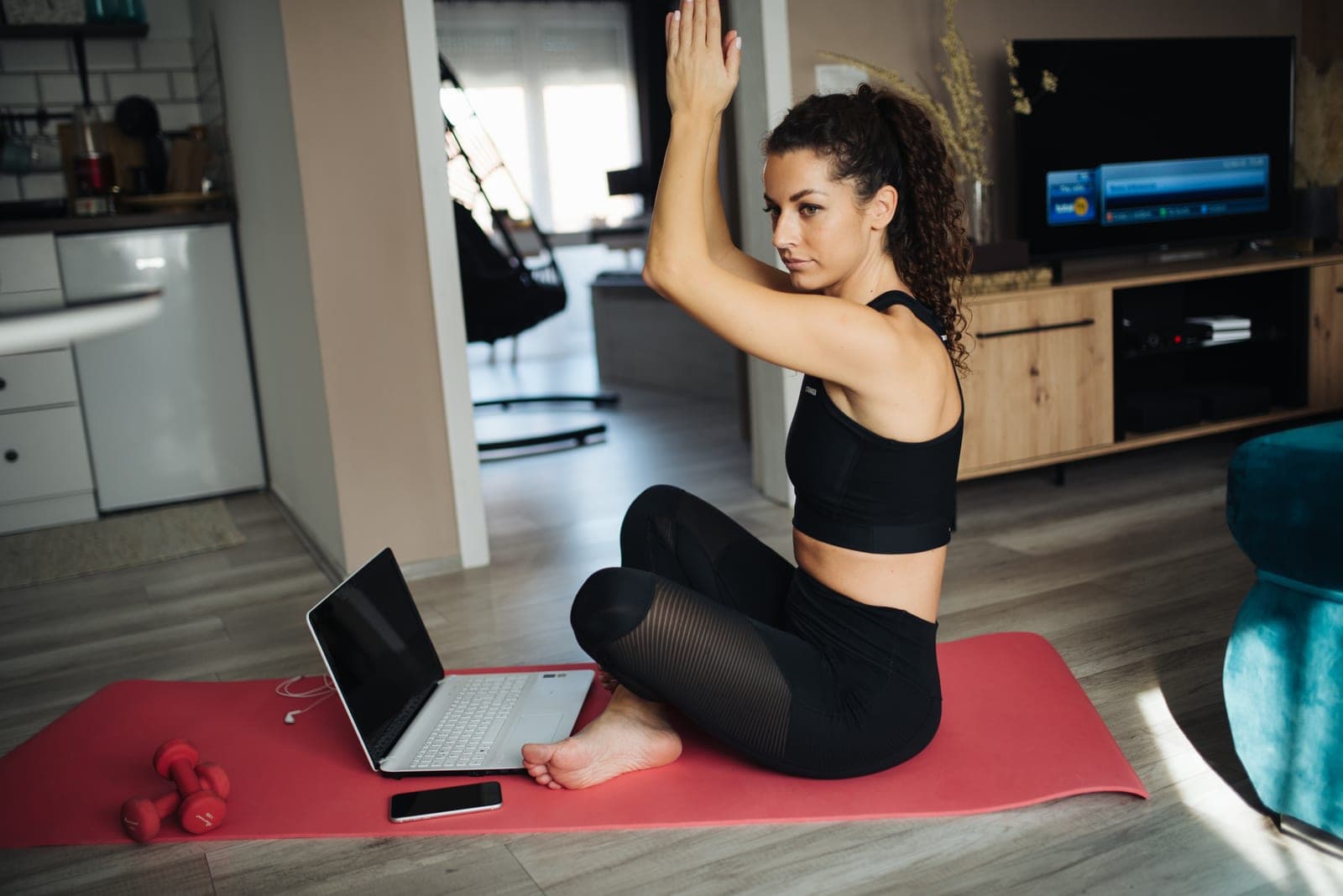
Yoga
A mind-body practice that links postures, breathing and focus to build flexibility, strength and calm.
Pilates
A low-impact mind-body method that builds core strength, control and posture through precise, controlled movement.
Functional Fitness
Varied, whole-body training built around everyday movement patterns like squatting, lifting and carrying.

Fitness
Strength and general fitness training — the foundation that supports every other sport.
Weightlifting
A technical strength sport built around lifting a loaded barbell overhead with speed and control.
Related training methods
Interval Training
Interval training alternates short bursts of harder effort with easier recovery periods, letting you accumulate more quality work than a single continuous push.
Steady-State Cardio
Steady-state cardio means holding one comfortable, continuous pace for the whole session, building an aerobic base without the peaks of interval work.
Circuit Training
Circuit training moves you through a series of stations back to back with little rest, blending strength and cardio into one time-efficient session.
How it connects
The meaning-bearing relationships that place Mobility Training in the wider knowledge graph — each one with the reason it exists.
Frequently learned together
Taught side by side in the same stage of a learning path.
- Flexibility TrainingBoth are taught in the “Train your body for it” stage of the Yoga learning path.
- Active Recovery SessionsBoth are taught in the “Train your body for it” stage of the Yoga learning path.
- Understanding rest and recoveryBoth are taught in the “Train your body for it” stage of the Yoga learning path.
- FlexibilityBoth are taught in the “Train your body for it” stage of the Yoga learning path.
- BalanceBoth are taught in the “Train your body for it” stage of the Yoga learning path.
Explore across the knowledge base
Follow the threads that connect Mobility Training to the rest of SocialSportHub.
Barriers
Learning paths
Go deeper with Mobility Training
Everywhere else on the platform that covers Mobility Training — assembled from what actually references it, so nothing here is a dead end.
Learn it
Structured courses and paths on the platform that cover this directly.
How this page is maintained
- Content type
- Training method
- Provenance
- Tier A — evergreen educational
- Verified external sources
- 0
- Content updated
- 2026-07-06
Evergreen, first-party explanation — it makes no claim that needs an external source. How we handle sources and reviews.