
Wing (handball)
The handball wing plays wide on the left or right of the attack, using speed to finish fast breaks and shoot from tight angles near the sideline.
Overview
The wings (left wing and right wing) start at the outer edges of the attack. They stretch the defence with width, race to finish counter-attacks, and shoot from difficult angles close to the touchline.
Speed and agility are central to the role, as wings are often the first to break forward on fast attacks and must convert chances from narrow shooting angles.
Responsibilities
- Plays wide to stretch the opposition defence.
- Sprints to finish fast breaks and counter-attacks.
- Shoots from tight angles near the sideline.
- Provides width and an outlet in attack.
- Helps cover defensively when possession is lost.
Where it’s used
Sports that use wing (handball):
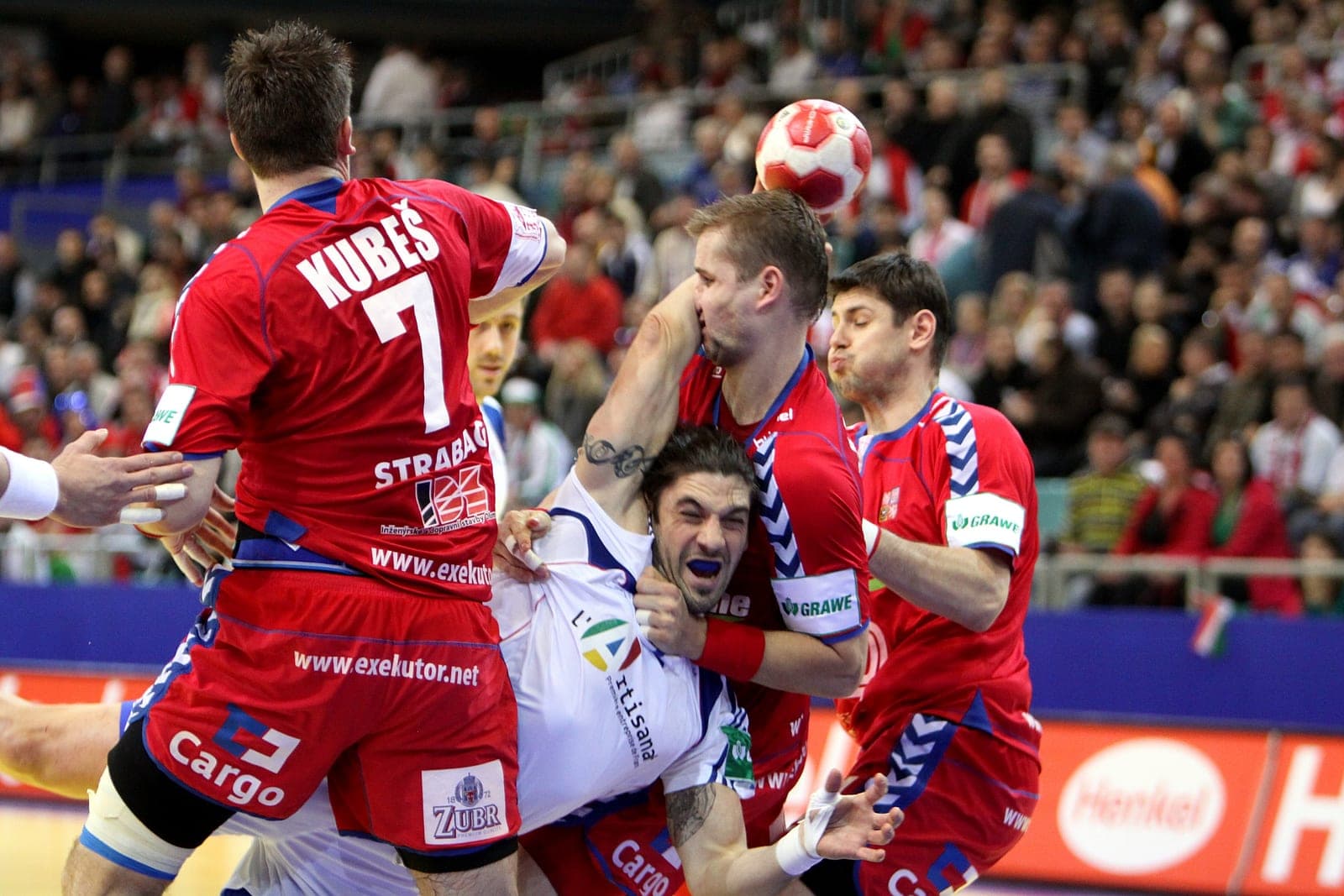
How it connects
The meaning-bearing relationships that place Wing (handball) in the wider knowledge graph — each one with the reason it exists.
Frequently learned together
Taught side by side in the same stage of a learning path.
- PivotBoth are taught in the “Find your position or role” stage of the Handball learning path.
- PlaymakerBoth are taught in the “Find your position or role” stage of the Handball learning path.
- FinisherBoth are taught in the “Find your position or role” stage of the Handball learning path.
- CaptainBoth are taught in the “Find your position or role” stage of the Handball learning path.
- All-RounderBoth are taught in the “Find your position or role” stage of the Handball learning path.
Explore across the knowledge base
Follow the threads that connect Wing (handball) to the rest of SocialSportHub.
Player roles
- PlaymakerThe playmaker is a team's creative hub — the player who orchestrates attacks, controls the tempo and distributes the ball so teammates can score.
- FinisherA finisher is the attacking outlet in a team sport whose main job is converting chances into points — the striker, goal shooter or go-to scorer.
- CaptainThe captain is a team's on-field leader who communicates, makes in-game decisions and sets standards — a role any player can hold, not a fixed position.
- All-RounderAn all-rounder is a versatile player who contributes across attack and defence rather than specialising in a single phase, position, or skill.
Tactics
- Fast breakPushing the ball up court at speed after a turnover or rebound to score before the defence sets up.
- Counter-attackWinning the ball and moving forward at speed to attack before the opponent can reorganise their defence.
- Placement and tempo in table tennisWhy where and when you hit the ball beats how hard — the playing elbow, the wide angles, and how taking the ball earlier removes an opponent's time without adding any power.
- Serve and volleyAn attacking tennis tactic where the server follows their serve to the net to finish the point with a volley.
- Wing playAttacking down the flanks and crossing the ball into the box to stretch the defence and create chances.
Skills
Go deeper with Wing (handball)
Everywhere else on the platform that covers Wing (handball) — assembled from what actually references it, so nothing here is a dead end.
Learn it
Structured courses and paths on the platform that cover this directly.
How this page is maintained
- Content type
- Position
- Provenance
- Tier A — evergreen educational
- Verified external sources
- 0
- Content updated
- 2026-09-12
Evergreen, first-party explanation — it makes no claim that needs an external source. How we handle sources and reviews.