
Padel Bandeja
A controlled overhead shot in padel, hit with slice and moderate pace to keep the player at the net without over-committing.
Overview
The bandeja is padel's signature defensive overhead. Rather than a full-power smash, it is played as a paced, sliced shot that lands deep, keeping the opponents pinned back while the pair holds the net.
It is struck out to the side of the body with a flat, brushing swing that produces slice and control instead of maximum speed.
How to do it
- 1Turn sideways and point your non-hitting hand toward the ball.
- 2Take the racquet up and back to about shoulder height.
- 3Swing across and through the ball with an open face to add slice.
- 4Make contact out in front and to the side of your head.
- 5Follow through toward your target and recover to the net.
Key points
- Priority is placement and control, not raw power.
- Contact is out to the side at roughly shoulder-to-head height.
- The slice keeps the ball low after the bounce off the back glass.
Where it’s used
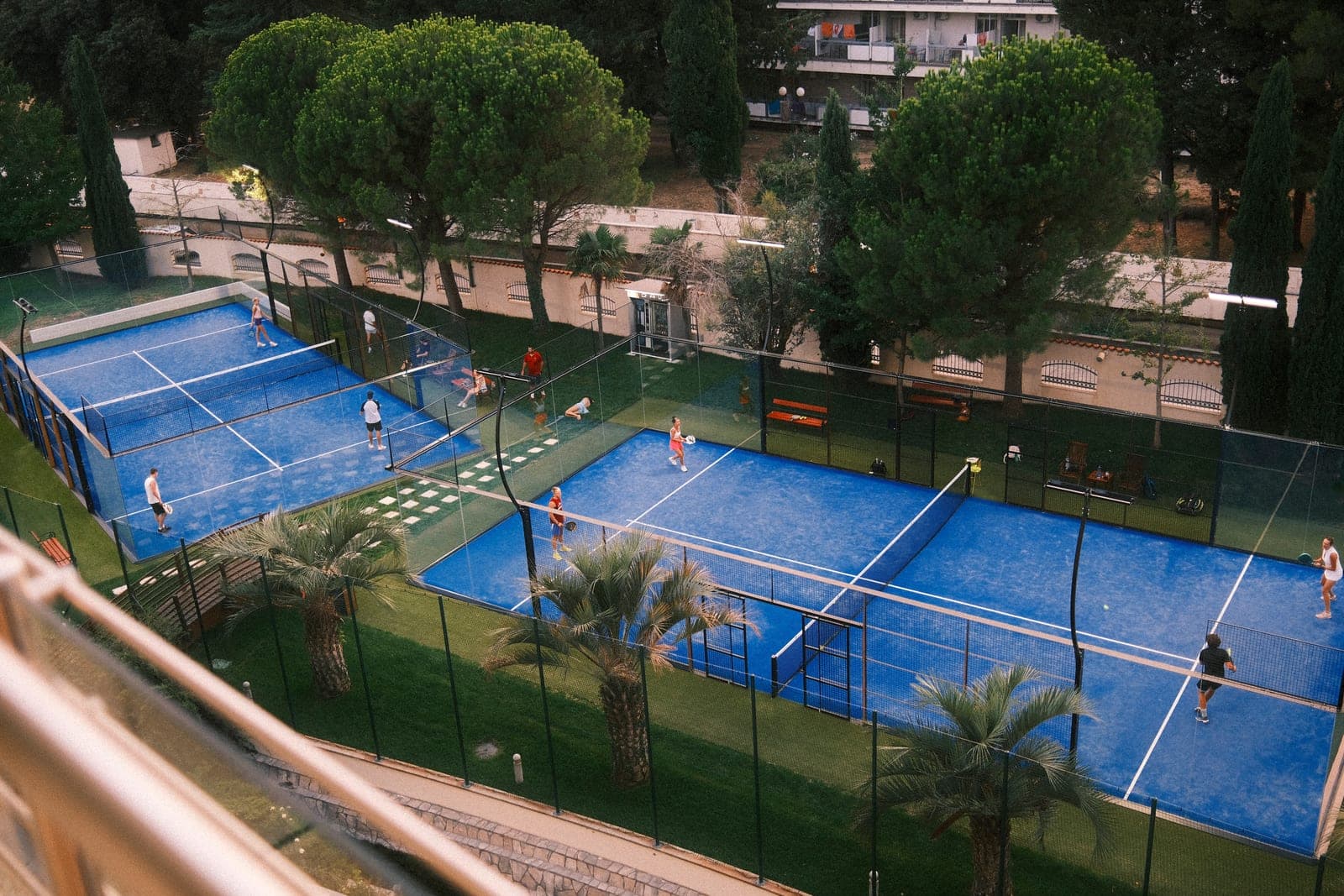
Sports that use padel bandeja:
Related techniques
Topspin Forehand
A forehand groundstroke hit with a low-to-high swing that puts forward spin on the ball so it dips and kicks up on landing.
Volley
A shot played near the net by blocking the ball out of the air before it bounces, using a short, firm punch rather than a full swing.
Playing the walls in padel
The skill that separates padel from every other racket sport — reading a rebound off glass, positioning behind the bounce rather than at it, and using your own back wall to attack.
How it connects
The meaning-bearing relationships that place Padel Bandeja in the wider knowledge graph — each one with the reason it exists.
Frequently learned together
Taught side by side in the same stage of a learning path.
- Topspin ForehandBoth are taught in the “Build your technique” stage of the Padel learning path.
- VolleyBoth are taught in the “Build your technique” stage of the Padel learning path.
- Playing the walls in padelBoth are taught in the “Build your technique” stage of the Padel learning path.
- The bandeja and the víboraBoth are taught in the “Build your technique” stage of the Padel learning path.
Explore across the knowledge base
Follow the threads that connect Padel Bandeja to the rest of SocialSportHub.
Movement patterns
- StrikeA ballistic, whole-body hitting action that channels ground-generated force through a proximal-to-distal kinetic chain to deliver momentum to a target via the hand, an implement or a body part at the moment of contact.
- RotationRotating the trunk to generate and transfer power through the body's kinetic chain, plus anti-rotation — resisting unwanted twist to keep the trunk stable.
- BackpedalControlled backward locomotion performed while facing forward, staying low and pushing off the balls of the feet in short strides to stay reactive and keep play in view.
Skills
- Net playThe skill of controlling points close to the net with volleys and touch shots.
- SprintingThe skill of running or riding at maximum controlled speed over a short distance.
- Core stabilityThe skill of engaging the trunk muscles to keep the body strong and controlled through movement.
- DiggingThe volleyball skill of controlling a hard-driven ball low to keep it in play.
- DrivingThe skill of hitting a long tee shot that sets up the rest of the hole from a playable position.
Tactics
- Net playControlling the point from close to the net with volleys, smashes and touch shots to cut down an opponent’s time.
- Crosscourt and down the lineThe geometry that makes crosscourt the default tennis shot — the net is lower in the middle and the court is longer on the diagonal — and when down the line is worth its extra risk.
- Approaching the netHow a point is moved forward — which balls justify an approach, why the approach is hit down the line, and the transition volley that has to be played from no-man's land.
- Doubles formationHow a pair positions itself on court — one up, one back, or both at the net — to control space in doubles.
- Pacing strategyPlanning how to distribute effort across a race so energy lasts the full distance without fading.
Equipment
- Padel racketA solid, stringless racket perforated with holes, used to play padel. The lack of strings gives padel its distinctive shorter, flatter shots.
- The padel netThe net that divides a padel court — its two different heights, the maximum post height, the white strip that tops it, and why the posts sit at the lateral limits.
Facilities
Go deeper with Padel Bandeja
Everywhere else on the platform that covers Padel Bandeja — assembled from what actually references it, so nothing here is a dead end.
Learn it
Structured courses and paths on the platform that cover this directly.
Take it away
Open data and the whole-platform view of this subject.
How this page is maintained
- Content type
- Technique
- Provenance
- Tier A — evergreen educational
- Verified external sources
- 0
- Content updated
- 2026-09-12
Evergreen, first-party explanation — it makes no claim that needs an external source. How we handle sources and reviews.