
The bandeja and the víbora
Padel's two signature overheads — the controlled bandeja that holds the net, and the sliced víbora that attacks from it — and why a full smash is usually the wrong choice.
Overview
Padel has two overhead strokes that exist nowhere else, and both are answers to the same problem: a lob that is too deep to smash but too high to volley. Hitting it flat and hard would send it into the back glass and straight back out to the opponents.
The bandeja and the víbora both solve this by trading power for control and spin, allowing the player to stay at the net rather than retreating.
The bandeja
The bandeja — Spanish for "tray" — is a defensive overhead played with a flat, sideways swing path and slice, struck out to the side of the body rather than above the head. The name describes the motion: the racket travels across as though carrying a tray.
Its purpose is not to win the point. It is to keep the opponents at the back of the court while the player maintains net position, which in padel is worth more than any single winner.
The víbora
The víbora — "viper" — is struck with a similar preparation but with more wrist and a brushing, side-spinning contact, hit harder and angled so the ball kicks sideways off the side wall.
It is the attacking version of the same stroke family. Where the bandeja holds a position, the víbora tries to produce an error or an unplayable rebound, and it is the harder of the two to control.
Why not just smash
A flat smash hit hard into a padel court frequently rebounds off the back glass with enough pace to come straight back to the opponents. The enclosure gives the ball somewhere to go, which means power alone does not end a point.
The full smash is still used — particularly the ones aimed to send the ball out of the court entirely where that wins the point — but it is a specific choice rather than the default answer to a lob. Choosing between bandeja, víbora and smash is one of the real tactical skills of the sport.
How to do it
- 1Turn sideways early and move back under the ball with small steps.
- 2Keep the racket up and the contact point out to the side, not directly overhead.
- 3For a bandeja, swing flat and across with slice, aiming deep and controlled.
- 4For a víbora, add wrist and brush across the ball to generate side spin.
- 5Aim to keep the opponents pinned at the back rather than to hit a winner.
- 6Recover to the net immediately — the whole purpose is to hold that position.
Key points
- Both strokes answer a lob that is too deep to smash and too high to volley.
- The bandeja is a control shot that preserves net position.
- The víbora adds side spin and attacks off the side wall.
- Contact is out to the side of the body, not directly overhead.
- A flat smash often rebounds off the back glass straight back into play.
Where it’s used
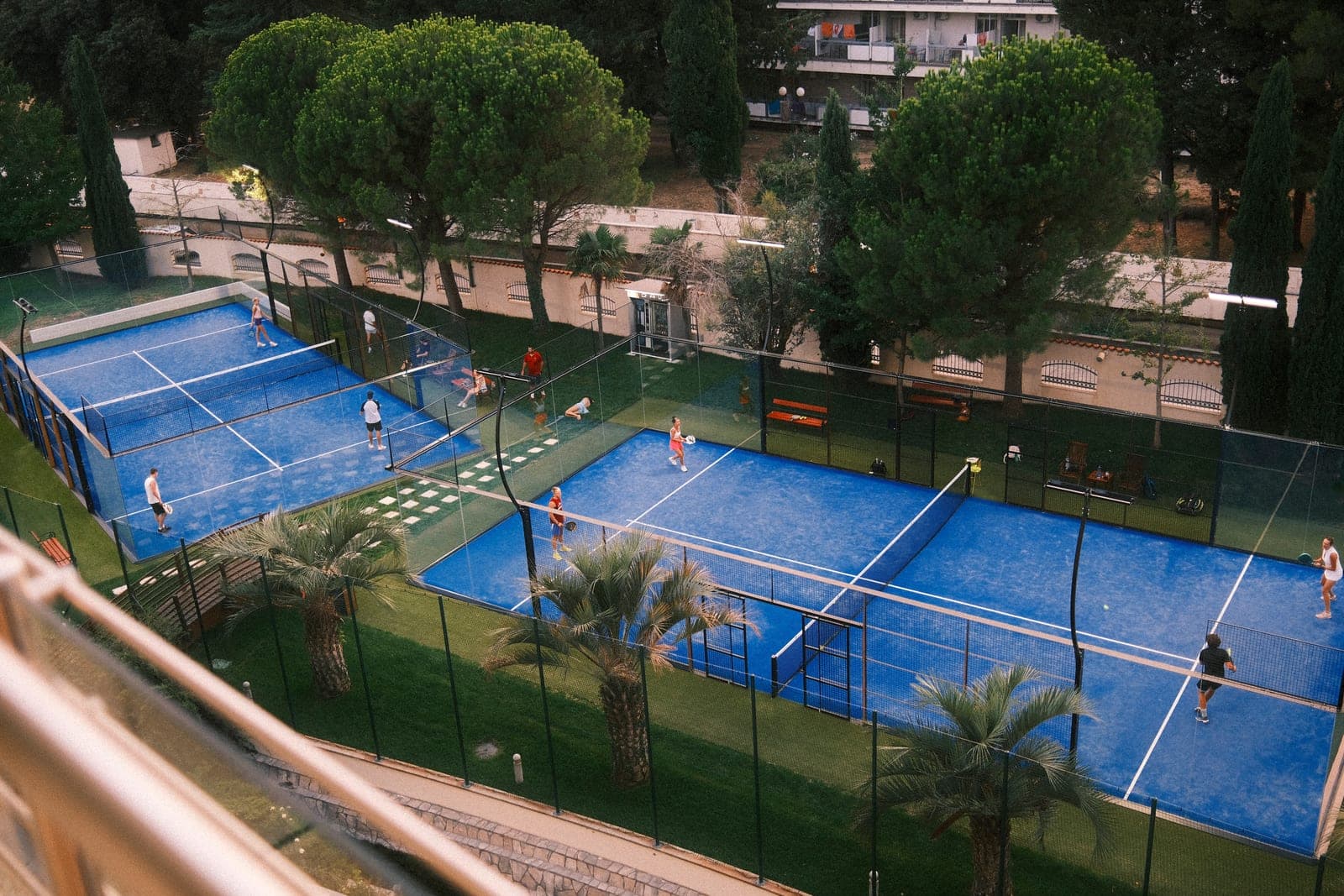
Sports that use the bandeja and the víbora:
Related techniques
Topspin Forehand
A forehand groundstroke hit with a low-to-high swing that puts forward spin on the ball so it dips and kicks up on landing.
Volley
A shot played near the net by blocking the ball out of the air before it bounces, using a short, firm punch rather than a full swing.
Padel Bandeja
A controlled overhead shot in padel, hit with slice and moderate pace to keep the player at the net without over-committing.
Sources
The rules, dimensions and specifications on this page were read from these documents.
- Rules of Padel — International Padel Federation (FIP), application review 01.01.2026, The Court — Enclosures (read 2026-09-12)
How it connects
The meaning-bearing relationships that place The bandeja and the víbora in the wider knowledge graph — each one with the reason it exists.
Prerequisite of
These need this one first.
Alternative to
Comparable enough that people choose between them.
Frequently learned together
Taught side by side in the same stage of a learning path.
- Topspin ForehandBoth are taught in the “Build your technique” stage of the Padel learning path.
- VolleyBoth are taught in the “Build your technique” stage of the Padel learning path.
- Padel BandejaBoth are taught in the “Build your technique” stage of the Padel learning path.
- Playing the walls in padelBoth are taught in the “Build your technique” stage of the Padel learning path.
Supports
Helps the training or recovery side of these.
Explore across the knowledge base
Follow the threads that connect The bandeja and the víbora to the rest of SocialSportHub.
Tactics
- Net position and the lobThe tactical core of padel — why the pair at the net wins most points, why the lob is the main weapon for taking that position, and how the walls make the exchange repeatable.
- Point constructionHow tennis points are built rather than won — the neutral, attacking and defensive positions, what each one permits, and why most errors come from playing the wrong shot for the position.
- Doubles formationHow a pair positions itself on court — one up, one back, or both at the net — to control space in doubles.
Equipment
- The padel racketWhat the FIP rules fix about a padel racket — the maximum length, width and thickness, the mandatory cord, and the perforation limits that define the hitting surface.
- The padel netThe net that divides a padel court — its two different heights, the maximum post height, the white strip that tops it, and why the posts sit at the lateral limits.
- The tennis net, posts and singles sticksThe net's two heights and the hardware that holds them — post height and position, the singles sticks that convert a doubles net, and the strap and band that finish it.
Learning paths
Positions
Disciplines
Go deeper with The bandeja and the víbora
Everywhere else on the platform that covers The bandeja and the víbora — assembled from what actually references it, so nothing here is a dead end.
Learn it
Structured courses and paths on the platform that cover this directly.
Take it away
Open data and the whole-platform view of this subject.
How this page is maintained
- Content type
- Technique
- Provenance
- Tier A — evergreen educational
- Verified external sources
- 0
- Content updated
- 2026-09-01
Evergreen, first-party explanation — it makes no claim that needs an external source. How we handle sources and reviews.