
Parallel Turn
A turn in which both skis stay parallel throughout, steered together rather than wedged apart.
Overview
In a parallel turn the skis stay side by side and roughly the same distance apart for the whole turn. Instead of braking with a wedge, the skier releases the edges to let the skis run flat, steers both feet in the new direction, and then rolls on to the new edges to shape the turn.
It is the step that makes skiing feel fluid: turns can be linked one into the next, the ride is smoother, and speed is managed by turn shape rather than by constant braking.
How to do it
- 1Ski across the slope with your weight on the downhill ski and both skis parallel.
- 2Flatten the skis to release the edges, letting them come round toward the fall line.
- 3Steer both feet together in the direction you want to travel.
- 4Roll on to the new edges and let your weight settle on to the new outside ski.
- 5Shape the turn across the slope until your speed settles, then start the next one.
Key points
- The turn begins by releasing the edges, not by pushing the tails out.
- Both feet steer together, so the skis stay parallel through the arc.
- Weight settles on to the outside ski as the turn develops.
- Linking turns smoothly matters more than making any single one perfect.
Where it’s used
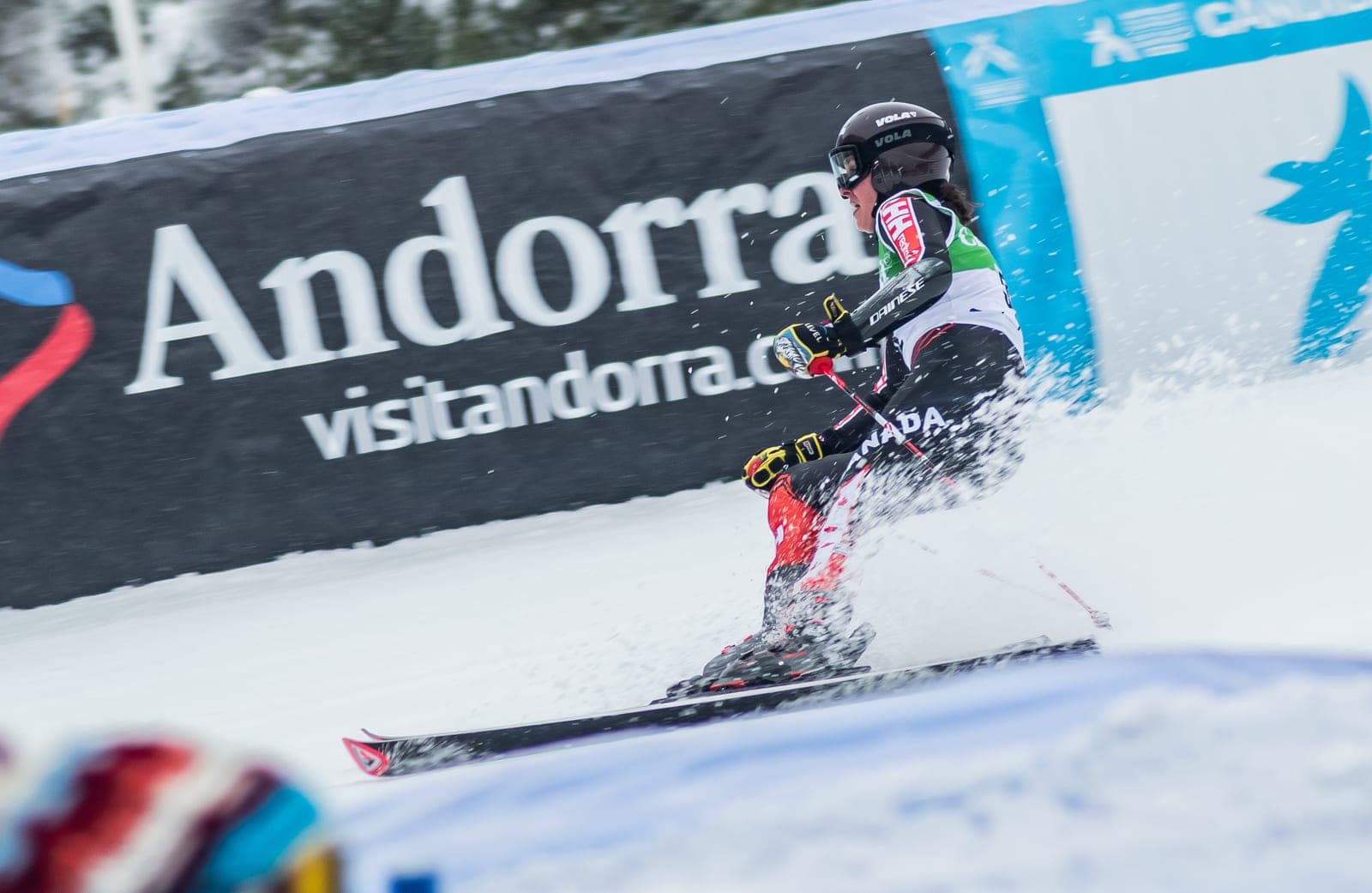
Sports that use parallel turn:
How it connects
The meaning-bearing relationships that place Parallel Turn in the wider knowledge graph — each one with the reason it exists.
Frequently learned together
Taught side by side in the same stage of a learning path.
Explore across the knowledge base
Follow the threads that connect Parallel Turn to the rest of SocialSportHub.
Equipment
Skills
- EdgingThe skill of tilting a ski or board so its edge grips the snow and controls the turn.
- TraversingThe skill of moving across a snow slope rather than straight down it, holding speed steady.
- Speed control on snowThe skill of managing how fast you travel down a slope, mainly by shaping turns rather than braking.
- Returning serveThe skill of reading and playing back an opponent’s serve to stay in the rally.
Disciplines
- ClassicClassic is the original cross-country technique, with skis kept parallel in set tracks and a striding kick-and-glide motion.
- Skate (Freestyle)Skate skiing pushes off angled skis in a V pattern, like ice skating, on firm groomed snow — the faster of the two main techniques.
- CombinedAlpine combined blends a speed run with a slalom run, adding the times together so the result rewards all-around skiers across both ends of the spectrum.
- Super-GSuper-G, or super giant slalom, is a speed discipline with gates set farther apart than giant slalom, blending high speed with sweeping turns.
- SprintSprint is a short-course race format decided over an individual qualifier and knockout heats, skied in either classic or skate technique.
Practice & sessions
- Open-play sessionA turn-up-and-play session of informal, often social games — less structured than practice, focused on playing rather than drilling.
- Partner practicePractising with one other person — feeding, rallying and drilling together so you both get repetition, a live target and instant feedback.
Go deeper with Parallel Turn
Everywhere else on the platform that covers Parallel Turn — assembled from what actually references it, so nothing here is a dead end.
Learn it
Structured courses and paths on the platform that cover this directly.
Take it away
Open data and the whole-platform view of this subject.
How this page is maintained
- Content type
- Technique
- Provenance
- Tier A — evergreen educational
- Verified external sources
- 0
- Content updated
- 2026-09-12
Evergreen, first-party explanation — it makes no claim that needs an external source. How we handle sources and reviews.