
Serve-receive formation
How a volleyball team arranges its passers to receive the serve and set up a clean first attack.
Overview
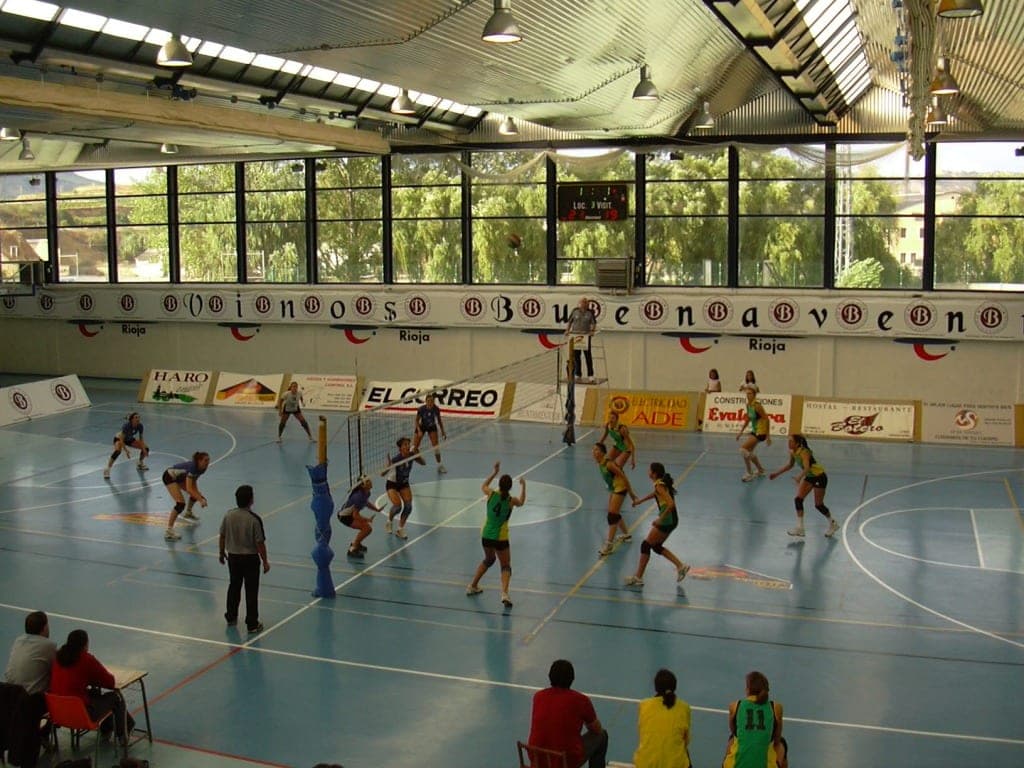
The serve-receive formation is the shape a team takes to pass the opponent’s serve accurately to the setter, giving the attack the best chance of running smoothly.
Fewer designated passers can free attackers to prepare their approach, while more passers add coverage against a tough serve. The formation balances passing reliability with getting hitters into position quickly.
Key points
- Designated passers are positioned to cover the areas the serve can target.
- The aim is a clean pass to the setter so the offence has all options open.
- Using fewer passers frees attackers to start their approach earlier.
- The libero often takes the most serve-receive responsibility in the back row.
- Players avoid overlapping to stay legal within the rotation at the moment of serve.
Where it’s used
Sports that use serve-receive formation:
How it connects
The meaning-bearing relationships that place Serve-receive formation in the wider knowledge graph — each one with the reason it exists.
Frequently learned together
Taught side by side in the same stage of a learning path.
- Court coverage and rotationBoth are taught in the “Understand tactics & strategy” stage of the Volleyball learning path.
- Playing the percentagesBoth are taught in the “Understand tactics & strategy” stage of the Volleyball learning path.
- Exploiting MatchupsBoth are taught in the “Understand tactics & strategy” stage of the Volleyball learning path.
- Specialisation vs VersatilityBoth are taught in the “Understand tactics & strategy” stage of the Volleyball learning path.
- Building momentumBoth are taught in the “Understand tactics & strategy” stage of the Volleyball learning path.
Explore across the knowledge base
Follow the threads that connect Serve-receive formation to the rest of SocialSportHub.
Strategies
- Playing the percentagesFavouring the higher-probability, lower-risk option most of the time to cut out unforced errors, while recognising when a calculated risk is worth taking.
- Exploiting MatchupsSteering play toward the pairings where you hold an advantage while shielding the pairings where an opponent could hurt you.
- Specialisation vs VersatilitySpecialisation versus versatility is the team-building and development trade-off between narrow role experts and adaptable all-rounders who cover several jobs.
- Building momentumMomentum is the sense that a contest is flowing one side's way — building it means stacking positive plays while working to interrupt an opponent's run.
- Set-Piece StrategyThe deliberate plan for turning dead-ball restarts — corners, free-kicks, throw-ins, serves — into chances to score or to defend.
Rules
- Volleyball rotationThe rule that players rotate one position clockwise each time their team wins back the serve.
- The scrumRugby union's eight-player set piece — the 3-4-1 formation, the referee's crouch-bind-set sequence, where the scrum-half must stand, the throw-in requirements, and how a scrum ends.
- The legal table tennis serveThe most-broken rule in table tennis, set out exactly — the open palm, the 16 cm toss, the no-hiding requirement, and what happens the first time an umpire is unsure.
Positions
- Outside hitterThe outside hitter attacks from the left side of the net and is often a volleyball team’s main scoring option.
- LiberoThe libero is a defensive volleyball specialist who wears a contrasting shirt, plays only in the back row, and cannot attack the ball above the height of the net.
- SetterThe setter is volleyball’s playmaker, taking the team’s second contact and delivering accurate sets for hitters to attack.
Sports communication
- Shared terminologyA common vocabulary — agreed words, calls and play names — so a single word means the same thing to everyone on the team.
- Pre-match communicationThe talking a team or individual does before play — plan, roles, key cues and a shared focus — to start on the same page.
- Signalling availabilityShowing a teammate you are open and ready to receive — often through movement, body position or a gesture rather than a shout.
Go deeper with Serve-receive formation
Everywhere else on the platform that covers Serve-receive formation — assembled from what actually references it, so nothing here is a dead end.
Learn it
Structured courses and paths on the platform that cover this directly.
How this page is maintained
- Content type
- Tactic
- Provenance
- Tier A — evergreen educational
- Verified external sources
- 0
- Content updated
- 2026-09-12
Evergreen, first-party explanation — it makes no claim that needs an external source. How we handle sources and reviews.