
Volleyball rotation
The rule that players rotate one position clockwise each time their team wins back the serve.
Overview
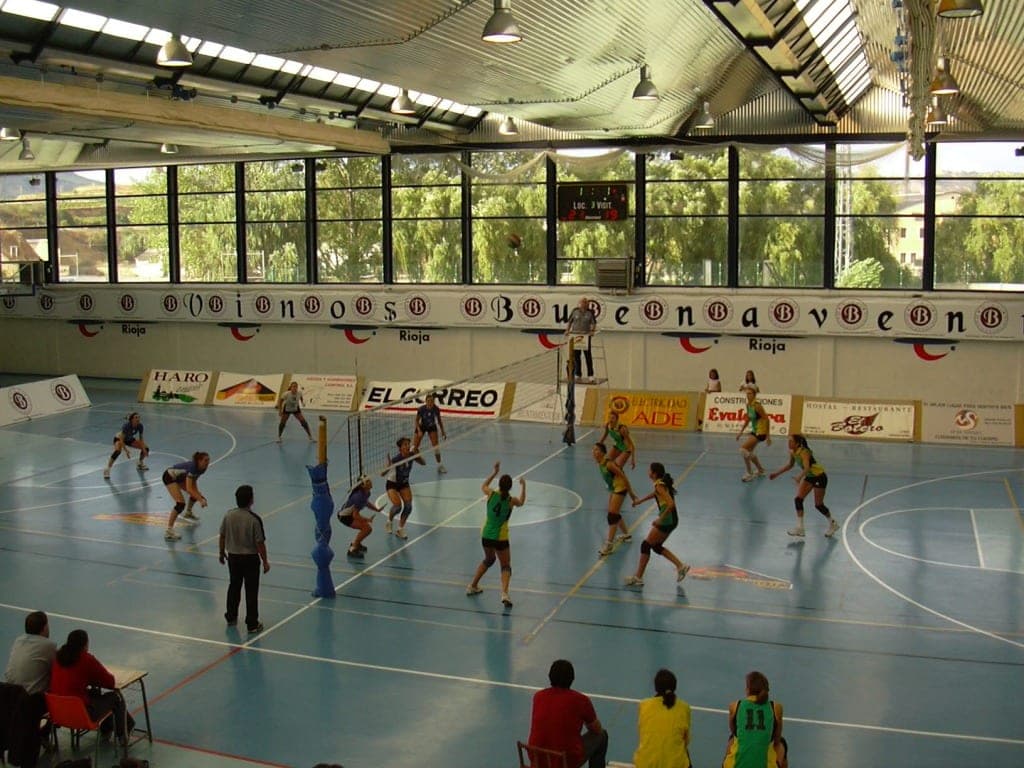
Volleyball teams line up in six positions, three at the front and three at the back. Each time a team wins the right to serve after the opponents had served, every player rotates one spot clockwise, so all players take a turn serving and playing in each area.
Players must keep their correct rotational order at the moment of the serve; being out of position is a fault. Once the ball is served, players may move around the court freely into their specialist roles.
Key points
- Players rotate one position clockwise when their team regains the serve.
- Rotational order must be correct at the moment of each serve.
- Being out of position at the serve is a fault.
- After the serve, players may switch into their specialist positions.
Where it’s used
Sports that use volleyball rotation:
Related rules
Out of bounds
The rule that a ball or player leaving the marked playing area is out of play and possession is decided at the boundary.
Tennis serving rules
The rules governing how a tennis point begins, including where the server stands and where the serve must land.
Three-hit rule
The volleyball rule that a team may contact the ball at most three times before it must cross the net.
How it connects
The meaning-bearing relationships that place Volleyball rotation in the wider knowledge graph — each one with the reason it exists.
Frequently learned together
Taught side by side in the same stage of a learning path.
- Out of boundsBoth are taught in the “Get to know the game” stage of the Volleyball learning path.
- Three-hit ruleBoth are taught in the “Get to know the game” stage of the Volleyball learning path.
- Touching the netBoth are taught in the “Get to know the game” stage of the Volleyball learning path.
- Ball-handling faultsBoth are taught in the “Get to know the game” stage of the Volleyball learning path.
- Volleyball scoringBoth are taught in the “Get to know the game” stage of the Volleyball learning path.
Explore across the knowledge base
Follow the threads that connect Volleyball rotation to the rest of SocialSportHub.
Tactics
- Court coverage and rotationVolleyball positioning where players rotate through positions and cover the court as one coordinated unit.
- Serve-receive formationHow a volleyball team arranges its passers to receive the serve and set up a clean first attack.
- Point constructionHow tennis points are built rather than won — the neutral, attacking and defensive positions, what each one permits, and why most errors come from playing the wrong shot for the position.
- Doubles formationHow a pair positions itself on court — one up, one back, or both at the net — to control space in doubles.
- Serve and volleyAn attacking tennis tactic where the server follows their serve to the net to finish the point with a volley.
Positions
- SetterThe setter is volleyball’s playmaker, taking the team’s second contact and delivering accurate sets for hitters to attack.
- LiberoThe libero is a defensive volleyball specialist who wears a contrasting shirt, plays only in the back row, and cannot attack the ball above the height of the net.
- Rugby union backsThe seven players who attack the space the forwards create — scrum-half, fly-half, centres, wings and fullback — what each does in attack and defence, and how the line is organised.
- Rugby union forwardsThe eight players who contest the set piece — front row, locks and back row — what each unit does at scrum, lineout and breakdown, and why the roles are so specialised.
- Ice hockey positionsThe six players on the ice and what each does — centre, two wings, two defence and the goaltender — plus why hockey substitutes in lines rather than individually.
Go deeper with Volleyball rotation
Everywhere else on the platform that covers Volleyball rotation — assembled from what actually references it, so nothing here is a dead end.
Learn it
Structured courses and paths on the platform that cover this directly.
Take it away
Open data and the whole-platform view of this subject.
How this page is maintained
- Content type
- Rule
- Provenance
- Tier A — evergreen educational
- Verified external sources
- 0
- Content updated
- 2026-09-12
Evergreen, first-party explanation — it makes no claim that needs an external source. How we handle sources and reviews.