
Set-piece play
Rehearsed routines from a dead-ball situation such as a corner, free kick or throw-in used to create chances.
Overview
Set-piece play covers the planned routines a team uses when the game restarts from a fixed position — corners, free kicks, throw-ins and similar dead-ball moments — to manufacture a scoring opportunity.
Because the ball is stationary and players can take up chosen positions, set pieces let a team rehearse runs, blocks and delivery in advance. They account for a meaningful share of goals and can decide tight matches.
Key points
- The ball is dead, so players can set up in pre-planned positions before the restart.
- Delivery into a dangerous area is paired with timed runs and decoy movements.
- Teams choose between man-to-man or zonal marking to defend the routine.
- Height and timing on the header are key for both attackers and defenders.
- Well-drilled set pieces convert a stoppage into a genuine goal-scoring chance.
Where it’s used
Sports that use set-piece play:

Football
The world’s most popular team sport — endless running, teamwork and community in one game.
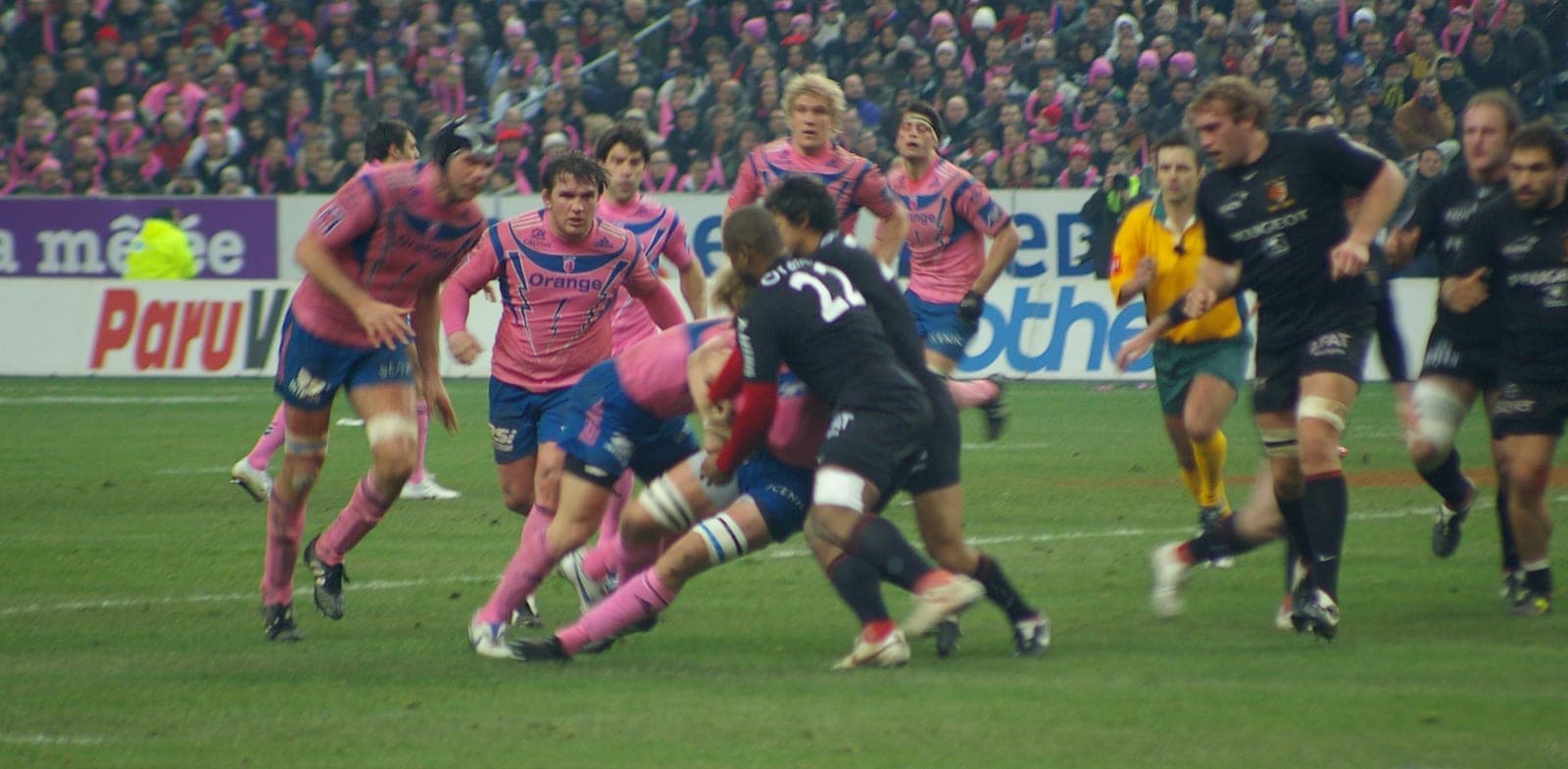
Rugby
A physical team sport of carrying, passing and kicking an oval ball toward the opposing line.
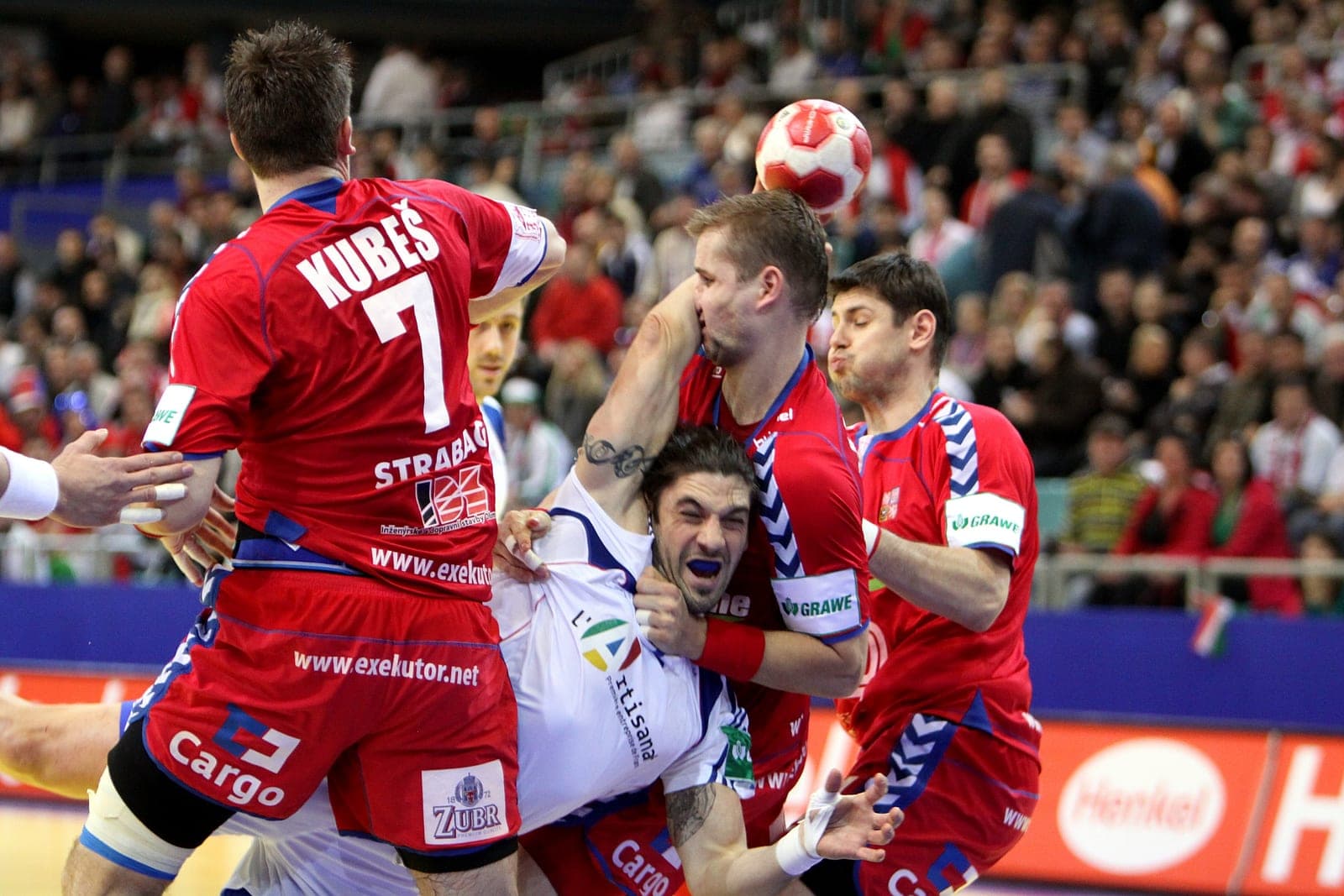
Handball
A fast indoor team sport of passing, jumping and throwing to score with the hands.
Related tactics
High press
A football tactic where a team hunts the ball high up the pitch to win it back close to the opponent’s goal.
Possession play
A patient football style that keeps the ball through short passing to control the game and tire opponents.
Counter-attack
Winning the ball and moving forward at speed to attack before the opponent can reorganise their defence.
How it connects
The meaning-bearing relationships that place Set-piece play in the wider knowledge graph — each one with the reason it exists.
Frequently learned together
Taught side by side in the same stage of a learning path.
- High pressBoth are taught in the “Understand tactics & strategy” stage of the Football learning path.
- Possession playBoth are taught in the “Understand tactics & strategy” stage of the Football learning path.
- Counter-attackBoth are taught in the “Understand tactics & strategy” stage of the Football learning path.
- Offside trapBoth are taught in the “Understand tactics & strategy” stage of the Football learning path.
- Wing playBoth are taught in the “Understand tactics & strategy” stage of the Football learning path.
Explore across the knowledge base
Follow the threads that connect Set-piece play to the rest of SocialSportHub.
Strategies
- Game managementAdapting how a team or athlete plays to the scoreline and time remaining — protecting a lead, chasing a result or seeing out the closing stages.
- Exploiting MatchupsSteering play toward the pairings where you hold an advantage while shielding the pairings where an opponent could hurt you.
- Building momentumMomentum is the sense that a contest is flowing one side's way — building it means stacking positive plays while working to interrupt an opponent's run.
- Set-Piece StrategyThe deliberate plan for turning dead-ball restarts — corners, free-kicks, throw-ins, serves — into chances to score or to defend.
Rules
- Direct and indirect free kicksThe two types of free kick awarded in football to restart play after a foul or other stoppage.
- Throw-inThe method of restarting football when the ball fully crosses a side line, taken by throwing it back into play.
- The scrumRugby union's eight-player set piece — the 3-4-1 formation, the referee's crouch-bind-set sequence, where the scrum-half must stand, the throw-in requirements, and how a scrum ends.
Techniques
Positions
- Scrum-halfThe scrum-half is rugby’s link between forwards and backs, feeding the scrum and delivering quick, accurate passes to launch attacks.
- Fly-halfThe fly-half is rugby’s chief decision-maker and tactical kicker, directing the backline and controlling how the team attacks.
- HookerThe hooker is a front-row forward in rugby who wins the ball in the scrum and typically throws the ball into the line-out.
- WingerA winger is an attacking player who operates in the wide areas of the pitch, using pace and dribbling to beat defenders and create chances.
Learning paths
- Learn FootballA structured, educational learning path for football — from the rules to skills, techniques, tactics and training.
- Learn RugbyA structured, educational learning path for rugby — from the rules to skills, techniques, tactics and training.
- Learn HandballA structured, educational learning path for handball — from the rules to skills, techniques, tactics and training.
Go deeper with Set-piece play
Everywhere else on the platform that covers Set-piece play — assembled from what actually references it, so nothing here is a dead end.
Learn it
Structured courses and paths on the platform that cover this directly.
How this page is maintained
- Content type
- Tactic
- Provenance
- Tier A — evergreen educational
- Verified external sources
- 0
- Content updated
- 2026-09-12
Evergreen, first-party explanation — it makes no claim that needs an external source. How we handle sources and reviews.