
Offside
A rule that prevents an attacker from gaining an advantage by being positioned too close to the opponents' goal ahead of the ball and the last defenders.
Overview
Offside stops attacking players from simply waiting near the goal for a pass. In football, a player is in an offside position if they are nearer to the opponents' goal line than both the ball and the second-to-last defender at the moment a teammate plays the ball to them.
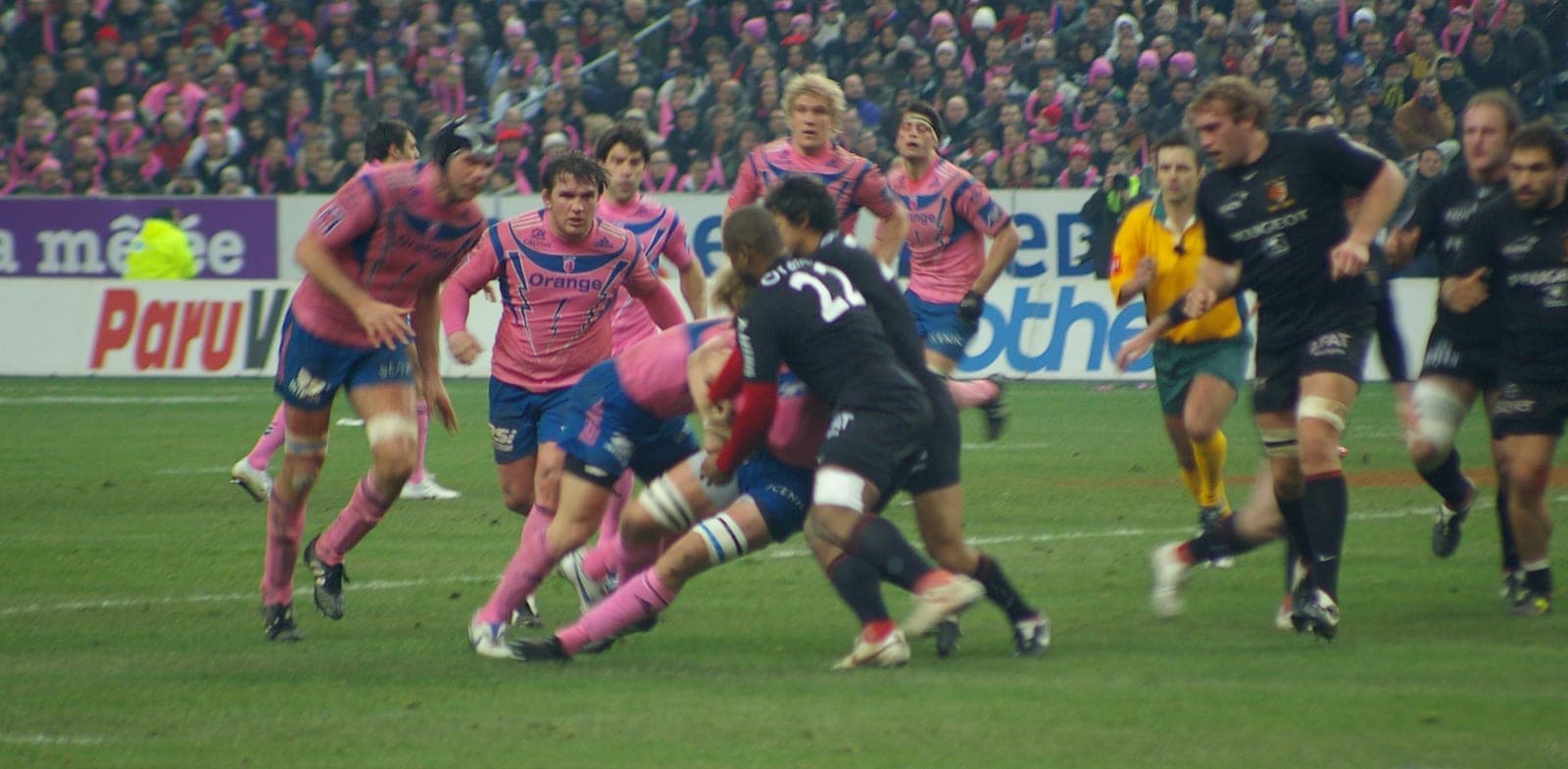
Being in an offside position is not an offence in itself — it only matters when the player becomes involved in active play. Rugby also uses its own offside concept to keep attackers from camping behind the defence.
Key points
- A player level with the last defender or the ball is not offside.
- Offside is judged when the ball is played, not when it is received.
- A player cannot be offside directly from a throw-in, corner or goal kick.
- The offence is only called if the player is involved in active play, such as touching the ball or interfering with an opponent.
Where it’s used
Sports that use offside:

Related rules
Handball offence
A foul in football committed when an outfield player deliberately handles or controls the ball with the hand or arm.
Direct and indirect free kicks
The two types of free kick awarded in football to restart play after a foul or other stoppage.
Penalty kick award
A one-on-one kick against the goalkeeper awarded when a defending player commits a direct-free-kick foul inside their own penalty area.
How it connects
The meaning-bearing relationships that place Offside in the wider knowledge graph — each one with the reason it exists.
Frequently learned together
Taught side by side in the same stage of a learning path.
- Handball offenceBoth are taught in the “Get to know the game” stage of the Football learning path.
- Direct and indirect free kicksBoth are taught in the “Get to know the game” stage of the Football learning path.
- Penalty kick awardBoth are taught in the “Get to know the game” stage of the Football learning path.
- Yellow and red cardsBoth are taught in the “Get to know the game” stage of the Football learning path.
- Throw-inBoth are taught in the “Get to know the game” stage of the Football learning path.
Explore across the knowledge base
Follow the threads that connect Offside to the rest of SocialSportHub.
Player roles
- SweeperA covering defender who plays behind the main defensive line, free of a fixed marking job, to read danger and clean up attacks that slip past teammates.
- Last line of defenceThe final barrier between an attack and a score — the goalkeeper, sweeper or last-ditch defender whose job is to stop what the rest of the team has let through.
Officiating
- RefereeThe primary on-field official who enforces the rules, controls play, penalises fouls, awards restarts, and blows the whistle to start and stop a match.
- Line JudgeA boundary-line official who calls whether the ball or player is in or out and flags foot faults, working under the head referee across many sports.
- Video ReviewVideo review lets officials re-examine footage of a contested moment to confirm or overturn a close call — a goal, a line, a foul — an aid used across many sports.
- Penalty SignalA standardized hand or flag signal an official uses to announce a foul, penalty, or restart so players, teammates, and spectators can read the call.
- AdvantageIn many sports, officials let play continue after a foul when stopping would help the offender, so the fouled team keeps the advantage it has gained.
Tactics
- Offside trapA defensive football tactic where the back line steps up together to leave an attacker offside.
- High pressA football tactic where a team hunts the ball high up the pitch to win it back close to the opponent’s goal.
- Possession playA patient football style that keeps the ball through short passing to control the game and tire opponents.
- DraftingRiding, running or swimming close behind another competitor to save energy in their slipstream.
Positions
- StrikerA striker is the main attacking player in football, positioned furthest forward with the primary job of scoring goals.
- PivotThe pivot is a handball attacker who plays close to the opposition defence, setting screens and looking for chances near the goal area.
- GoalkeeperThe goalkeeper is the last line of defence in football and the only player allowed to handle the ball inside their own penalty area.
- WingerA winger is an attacking player who operates in the wide areas of the pitch, using pace and dribbling to beat defenders and create chances.
- Goal attackThe goal attack is a versatile netball attacker who both feeds the shooter and scores goals, moving through the centre and attacking thirds.
Learning paths
Go deeper with Offside
Everywhere else on the platform that covers Offside — assembled from what actually references it, so nothing here is a dead end.
Learn it
Structured courses and paths on the platform that cover this directly.
Take it away
Open data and the whole-platform view of this subject.
How this page is maintained
- Content type
- Rule
- Provenance
- Tier A — evergreen educational
- Verified external sources
- 0
- Content updated
- 2026-09-12
Evergreen, first-party explanation — it makes no claim that needs an external source. How we handle sources and reviews.