
Direct and indirect free kicks
The two types of free kick awarded in football to restart play after a foul or other stoppage.
Overview
A direct free kick can be scored straight into the goal without touching another player, and is awarded for more serious fouls such as kicking, tripping or handball. An indirect free kick must touch a second player before a goal counts, and is given for lesser offences like offside or dangerous play.
Opponents must retreat a set distance from the ball until it is in play. Referees can signal an indirect free kick by holding an arm raised until the ball has been touched by another player.
Key points
- Direct free kicks are given for the more serious fouls and handball.
- Indirect free kicks are given for technical offences such as offside.
- Defenders must stay a required distance from the ball until it is kicked.
- The ball must be stationary and is in play once it is kicked and moves.
Where it’s used
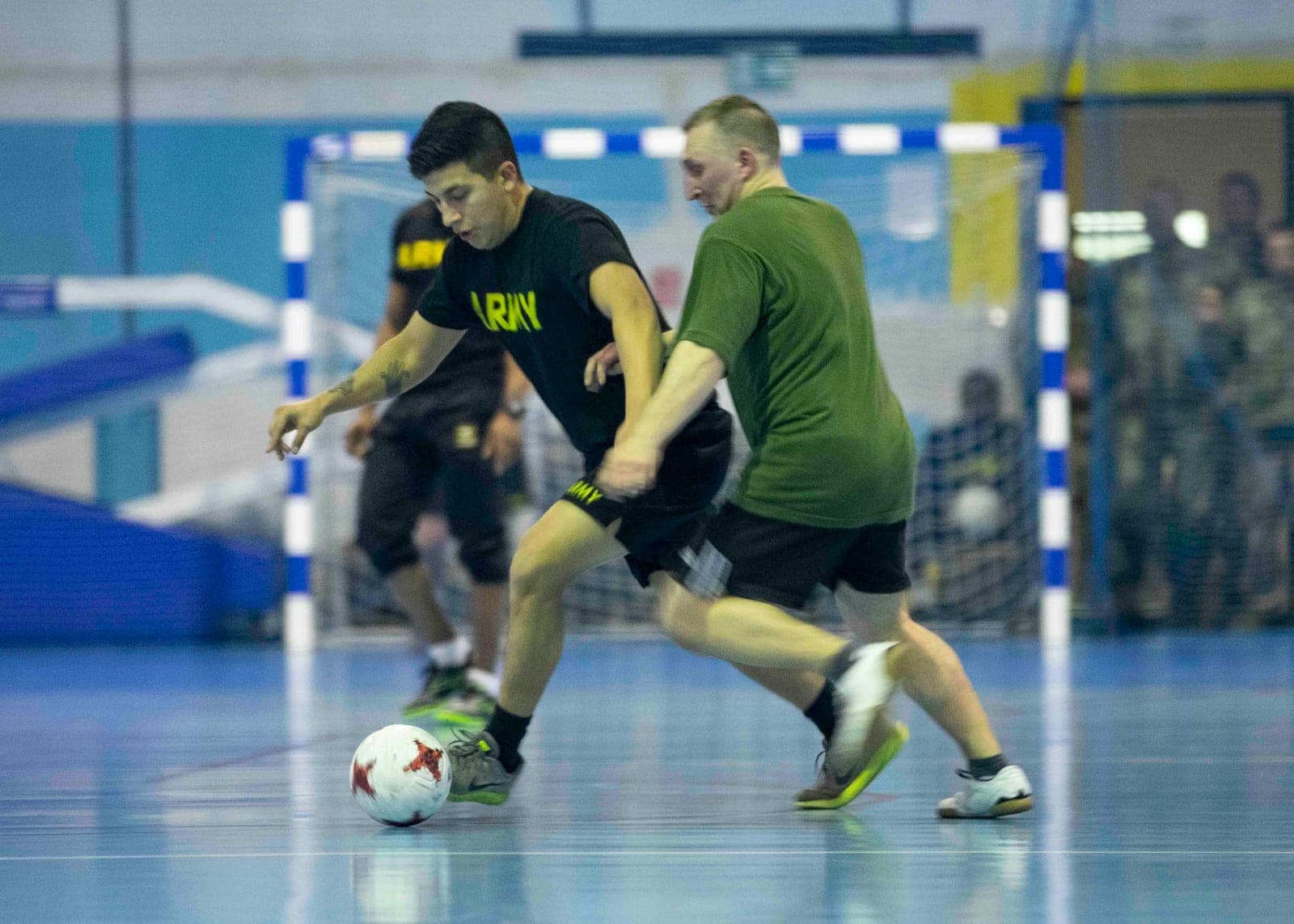
Sports that use direct and indirect free kicks:

Related rules
Offside
A rule that prevents an attacker from gaining an advantage by being positioned too close to the opponents' goal ahead of the ball and the last defenders.
Handball offence
A foul in football committed when an outfield player deliberately handles or controls the ball with the hand or arm.
Penalty kick award
A one-on-one kick against the goalkeeper awarded when a defending player commits a direct-free-kick foul inside their own penalty area.
How it connects
The meaning-bearing relationships that place Direct and indirect free kicks in the wider knowledge graph — each one with the reason it exists.
Frequently learned together
Taught side by side in the same stage of a learning path.
- OffsideBoth are taught in the “Get to know the game” stage of the Football learning path.
- Handball offenceBoth are taught in the “Get to know the game” stage of the Football learning path.
- Penalty kick awardBoth are taught in the “Get to know the game” stage of the Football learning path.
- Yellow and red cardsBoth are taught in the “Get to know the game” stage of the Football learning path.
- Throw-inBoth are taught in the “Get to know the game” stage of the Football learning path.
Explore across the knowledge base
Follow the threads that connect Direct and indirect free kicks to the rest of SocialSportHub.
Officiating
- RefereeThe primary on-field official who enforces the rules, controls play, penalises fouls, awards restarts, and blows the whistle to start and stop a match.
- Foul callA foul call is an official's ruling that a player broke a rule of contact or conduct, triggering a penalty such as a free kick, free throw or penalty.
- Penalty SignalA standardized hand or flag signal an official uses to announce a foul, penalty, or restart so players, teammates, and spectators can read the call.
- AdvantageIn many sports, officials let play continue after a foul when stopping would help the offender, so the fouled team keeps the advantage it has gained.
Go deeper with Direct and indirect free kicks
Everywhere else on the platform that covers Direct and indirect free kicks — assembled from what actually references it, so nothing here is a dead end.
Learn it
Structured courses and paths on the platform that cover this directly.
Take it away
Open data and the whole-platform view of this subject.
How this page is maintained
- Content type
- Rule
- Provenance
- Tier A — evergreen educational
- Verified external sources
- 0
- Content updated
- 2026-09-12
Evergreen, first-party explanation — it makes no claim that needs an external source. How we handle sources and reviews.