
Tackling
The skill of legally challenging an opponent to win the ball or stop their progress.
Overview
Tackling is the defensive skill of dispossessing an opponent or halting their advance within the rules. In football it means winning the ball with the feet; in rugby and similar sports it means legally bringing the ball carrier to a stop.
Timing and positioning are everything: a well-judged tackle wins possession cleanly, while a mistimed one can concede a foul or leave a defender out of position.
Key points
- Timing is central — committing too early lets an attacker slip past.
- Staying on your feet as long as possible keeps you in the game if the tackle misses.
- Winning the ball cleanly avoids conceding a foul or free kick.
- Good body position and angle help steer an attacker away from danger.
- Each sport sets clear limits on what is a fair challenge and what is a foul.
Where it’s used
Sports that use tackling:
Football
The world’s most popular team sport — endless running, teamwork and community in one game.
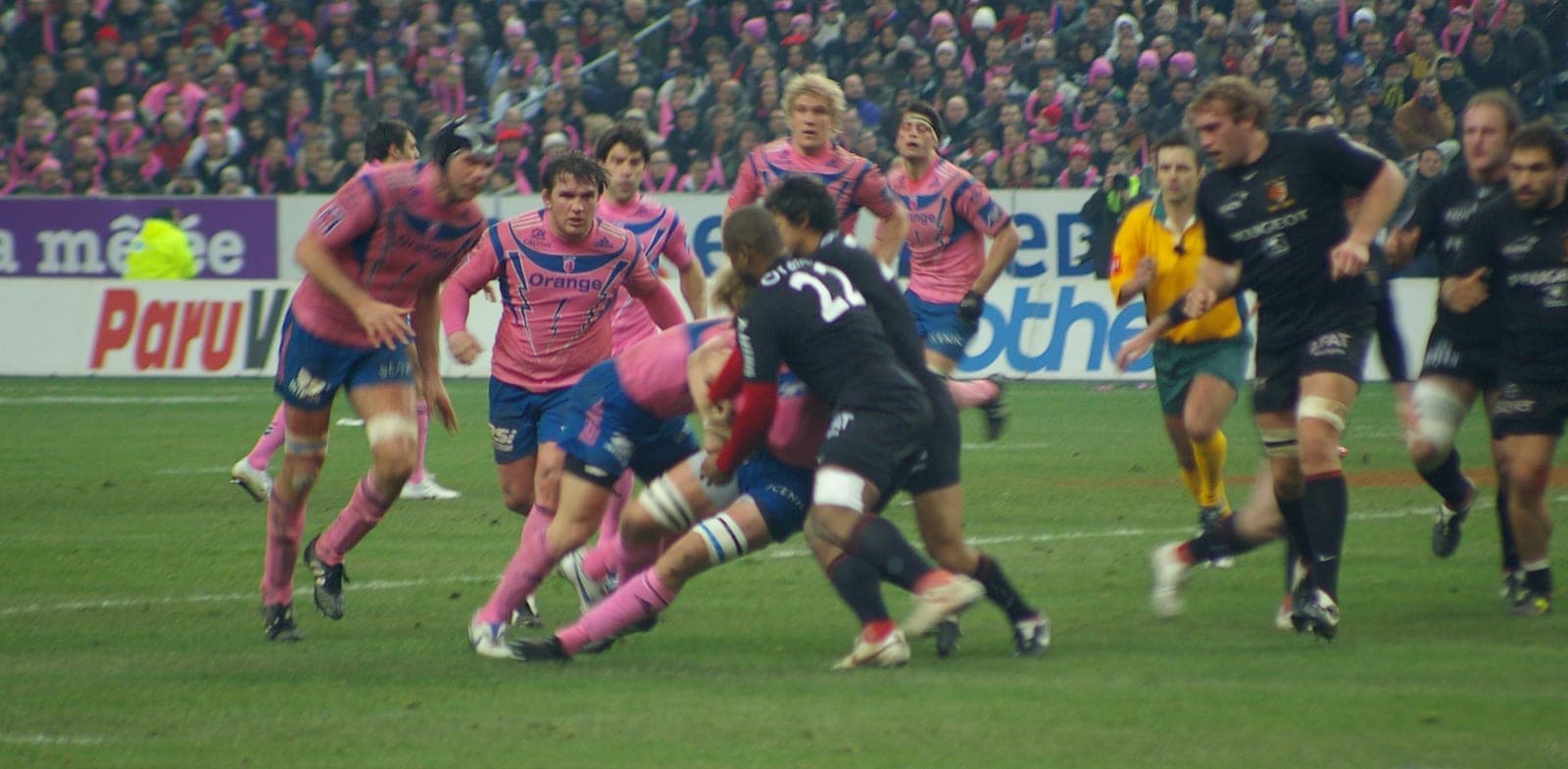
Rugby
A physical team sport of carrying, passing and kicking an oval ball toward the opposing line.
American Football
A strategic, position-based team sport of set plays, sprinting and coordinated teamwork on a marked field.
Related skills
How it connects
The meaning-bearing relationships that place Tackling in the wider knowledge graph — each one with the reason it exists.
Progresses to
The next step in a curated learning order.
Progresses from
The step that comes before this one in a curated learning order.
Frequently learned together
Taught side by side in the same stage of a learning path.
- PassingBoth are taught in the “Learn the core skills” stage of the Football learning path.
- ShootingBoth are taught in the “Learn the core skills” stage of the Football learning path.
- DribblingBoth are taught in the “Learn the core skills” stage of the Football learning path.
- Ball controlBoth are taught in the “Learn the core skills” stage of the Football learning path.
- MarkingBoth are taught in the “Learn the core skills” stage of the Football learning path.
Part of
The wider grouping this belongs to.
Explore across the knowledge base
Follow the threads that connect Tackling to the rest of SocialSportHub.
Skills Academy
Strategies
- Zone vs Man MarkingTwo defensive systems compared: zonal marking guards areas of the field, while man-to-man marking assigns each defender a specific opponent to track.
- Building momentumMomentum is the sense that a contest is flowing one side's way — building it means stacking positive plays while working to interrupt an opponent's run.
Player roles
- All-RounderAn all-rounder is a versatile player who contributes across attack and defence rather than specialising in a single phase, position, or skill.
- AnchorThe anchor is a cross-sport holding role: a steadying, defensive-minded player who shields the back line, screens danger and gives teammates a reliable base.
- Last line of defenceThe final barrier between an attack and a score — the goalkeeper, sweeper or last-ditch defender whose job is to stop what the rest of the team has let through.
- Ball-winnerA ball-winner is the player tasked with regaining possession through pressing, tackling and interceptions — a team's tireless defensive workhorse.
Movement patterns
- DecelerationThe athletic pattern of actively braking and absorbing momentum to slow or stop under control, producing eccentric forces that oppose the direction of travel.
- SlideA slide is a controlled, low-friction skid of the body or foot along a surface, used to brake, extend reach, or hold a line, where managed friction and a lowered centre of gravity govern the movement.
Positions
- Defensive midfielderA defensive midfielder sits in front of the defence, breaking up opposition attacks and shielding the back line.
- HookerThe hooker is a front-row forward in rugby who wins the ball in the scrum and typically throws the ball into the line-out.
- Centre-backA centre-back is a central defender in football whose main job is to stop opposing attackers and clear the ball from dangerous areas.
- GoalkeeperThe goalkeeper is the last line of defence in football and the only player allowed to handle the ball inside their own penalty area.
Go deeper with Tackling
Everywhere else on the platform that covers Tackling — assembled from what actually references it, so nothing here is a dead end.
Learn it
Structured courses and paths on the platform that cover this directly.
How this page is maintained
- Content type
- Skill
- Provenance
- Tier A — evergreen educational
- Verified external sources
- 0
- Content updated
- 2026-09-12
Evergreen, first-party explanation — it makes no claim that needs an external source. How we handle sources and reviews.