
Tennis ball
A hollow rubber ball covered in felt used in tennis and related racquet sports.

Overview
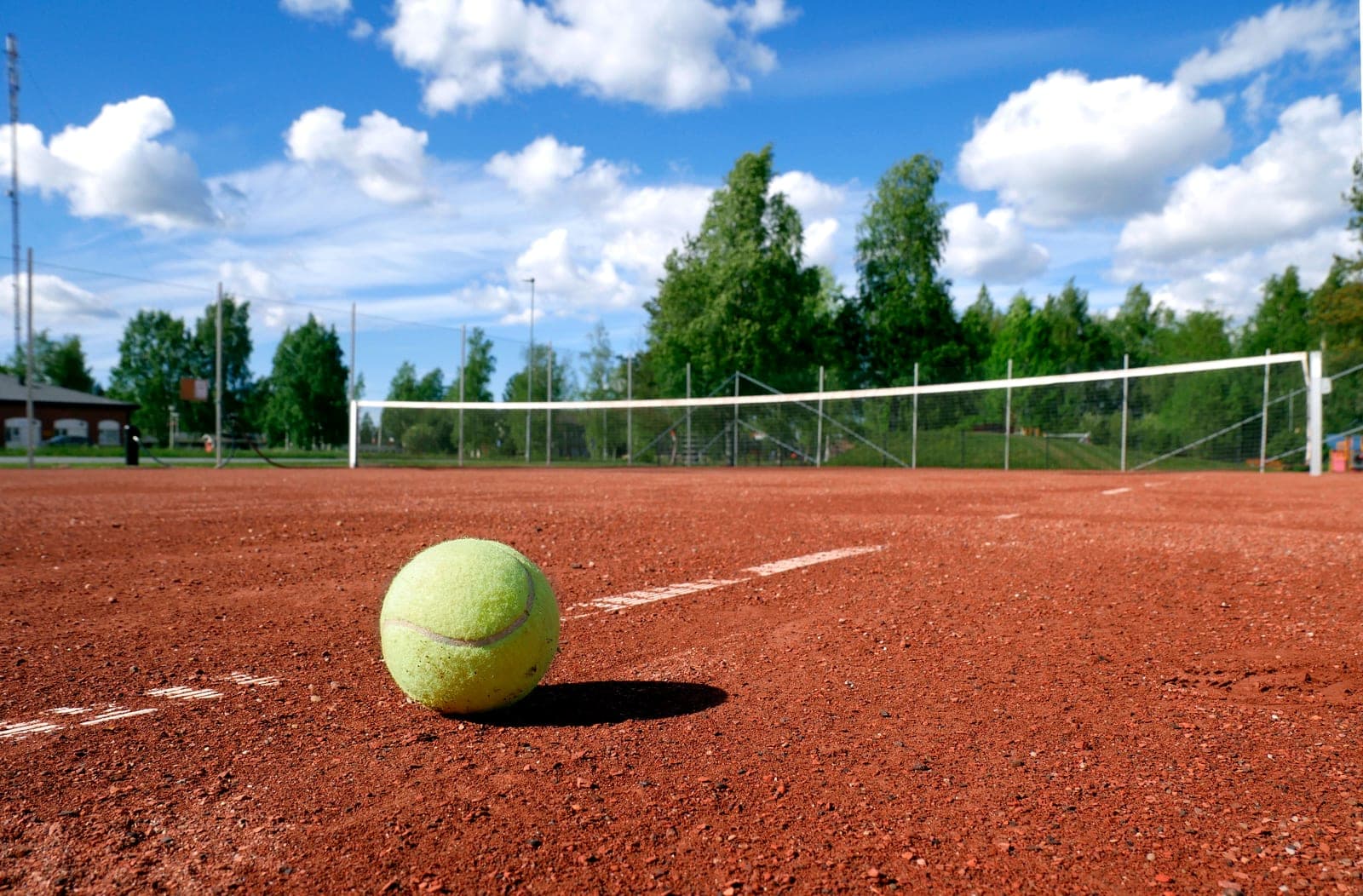
A tennis ball is a hollow rubber core covered in a fuzzy felt cloth. The felt affects how the ball moves through the air and grips the strings, while the pressurised core gives it a lively, consistent bounce.
The same style of felt-covered ball is used across several racquet sports, and balls gradually lose bounce as the internal pressure escapes with use.
Good to know
- The felt cover influences flight and grip on the strings.
- Pressurised balls slowly lose bounce over time.
- A bright colour helps visibility on court.
Where it’s used
Sports that use tennis ball:
Tennis
A singles or doubles racquet sport that blends agility, strategy and stamina on court.
POP Tennis
A friendly, easy-to-learn racquet sport on a smaller court with solid paddles and a lower net.
Beach Tennis
A sociable sand-court paddle sport played with solid paddles and a soft ball that is volleyed without a bounce.
Related equipment
Tennis racquet
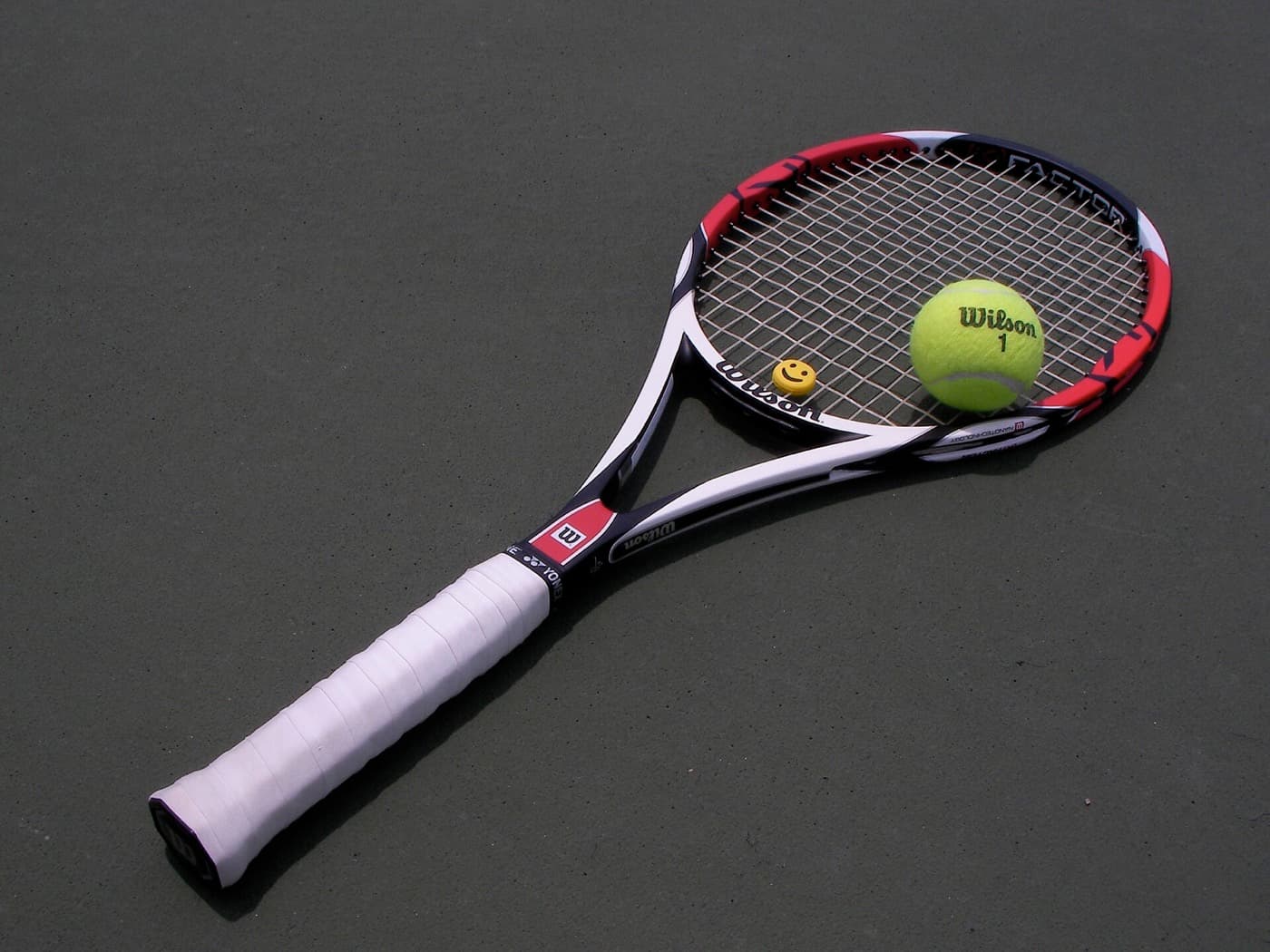
A strung frame with a handle, used to hit the ball in tennis. Head size, weight and balance vary to suit different playing styles.
Sports bag
A roomy bag for carrying kit, footwear and gear to and from training, usually with a separate compartment for wet or muddy items.
The tennis net, posts and singles sticks
The net's two heights and the hardware that holds them — post height and position, the singles sticks that convert a doubles net, and the strap and band that finish it.
How it connects
The meaning-bearing relationships that place Tennis ball in the wider knowledge graph — each one with the reason it exists.
Broader than
A wider grouping that contains these.
Frequently learned together
Taught side by side in the same stage of a learning path.
- Tennis racquetBoth are taught in the “What you’ll need” stage of the Tennis learning path.
- Sports bagBoth are taught in the “What you’ll need” stage of the Tennis learning path.
- The tennis net, posts and singles sticksBoth are taught in the “What you’ll need” stage of the Tennis learning path.
- Tennis ball types and specificationsBoth are taught in the “What you’ll need” stage of the Tennis learning path.
- What the Rules regulate about a tennis racketBoth are taught in the “What you’ll need” stage of the Tennis learning path.
Explore across the knowledge base
Follow the threads that connect Tennis ball to the rest of SocialSportHub.
Playing surfaces
- Hard courtA rigid acrylic, concrete or asphalt court that gives a true, consistent, medium-paced bounce — the standard multi-use outdoor surface.
- ClayA soft, granular racquet-sport surface of crushed brick, stone or shale that slows the ball, gives a high bounce and lets players slide into shots.
- Artificial turfSynthetic grass, often filled with sand or rubber, that gives a firm, even, all-weather surface. It plays faster and truer than worn natural grass.
Techniques
- Topspin ForehandA forehand groundstroke hit with a low-to-high swing that puts forward spin on the ball so it dips and kicks up on landing.
- One-Handed BackhandA backhand groundstroke struck with a single hand on the grip, driving through the ball with a full extension of the hitting arm.
- Tennis ServeThe overhead stroke that starts every point, hit from behind the baseline into the diagonally opposite service box.
- VolleyA shot played near the net by blocking the ball out of the air before it bounces, using a short, firm punch rather than a full swing.
- Rugby union passingHow a rugby pass is actually made — the sideways swing that replaces a throw, why every pass must travel backwards, and what separates a spiral pass from a pop.
Learning paths
Sports communication
- Player-to-coach communicationHow a player shares information back to a coach — questions, how something felt, or a heads-up about availability — so coaching becomes a two-way exchange.
- Calling for the ballLetting a teammate know you are open and want the pass — usually a short, clear call made at the right moment.
Go deeper with Tennis ball
Everywhere else on the platform that covers Tennis ball — assembled from what actually references it, so nothing here is a dead end.
Learn it
Structured courses and paths on the platform that cover this directly.
See it
Diagrams and step-through visualisations drawn for this subject.
Kit it out
Equipment guidance drawn from the graph, with no brands and no affiliate links.
Take it away
Open data and the whole-platform view of this subject.
How this page is maintained
- Content type
- Equipment
- Provenance
- Tier A — evergreen educational
- Verified external sources
- 0
- Content updated
- 2026-09-12
Evergreen, first-party explanation — it makes no claim that needs an external source. How we handle sources and reviews.