
Oar
A shafted lever with a blade at one end used to propel a rowing boat, pivoting against the boat at a rowlock rather than being held free like a paddle.
Definition
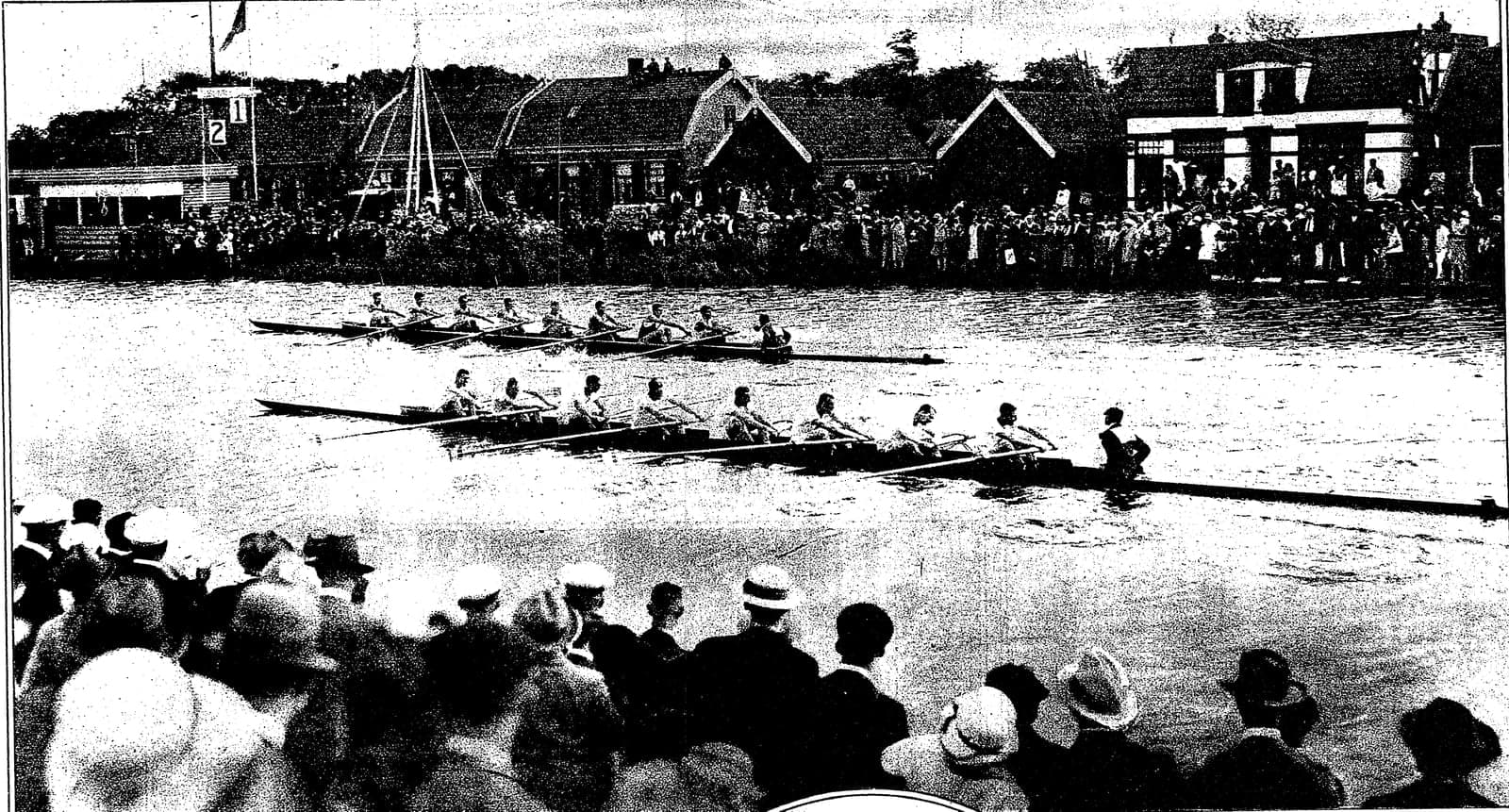
An oar is the long lever a rower uses to move a boat, with a shaped blade at the water end and a handle at the other. Crucially, an oar pivots against the boat at a rowlock or gate, which acts as a fulcrum, so the rower drives the boat forward by levering the blade through the water.
In sweep rowing each rower handles a single oar with both hands, while in sculling each rower uses two shorter oars, called sculls, one in each hand. This attachment to the boat is what separates an oar from a paddle, which is held free and used in canoeing and kayaking.
Where you’ll hear “oar”
Sports that use this term:
Explore across the knowledge base
Follow the threads that connect Oar to the rest of SocialSportHub.
Disciplines
- Sweep RowingSweep rowing is the discipline in which each rower handles a single oar with both hands, driving one side of the boat as part of a crew.
- ScullingSculling is the discipline in which each rower uses two oars, one in each hand, propelling the boat symmetrically from both sides.
- BreaststrokeBreaststroke uses a simultaneous, symmetric arm sweep and a whip-like frog kick, with a distinct glide between strokes — technical, rhythmic and the slowest of the four strokes.
- SnatchThe snatch is one of the two Olympic weightlifting lifts, taking the barbell from the platform to overhead in one continuous movement.
Equipment
- Table tennis batA small wooden blade covered with rubber used to hit the ball in table tennis.
- Pickleball paddleA solid, flat paddle used to hit the perforated plastic ball in pickleball.
- Squash racquetA slim strung racquet used to hit the ball against the walls in squash.
- Golf clubA shafted club with a specialised head used to strike the ball around a golf course.
- Padel racketA solid, stringless perforated racket used to play padel.
Techniques
- Free ThrowAn unguarded basketball shot taken from the free-throw line, relying on a calm, repeatable routine rather than power.
- BreaststrokeA swimming stroke with a simultaneous arm sweep, a whip-like frog kick and a glide, performed on the front.
- VolleyA shot played near the net by blocking the ball out of the air before it bounces, using a short, firm punch rather than a full swing.
- HeaderA technique for controlling or striking the ball with the forehead in football, used to pass, shoot or clear the ball in the air.
Sports science
- Managing fatigue and loadThe educational idea of balancing how much training you do against how well you recover, so effort turns into progress rather than into excess fatigue.
- The overload principleThe idea that the body adapts to demands greater than it is used to — the foundation of why training works.
- Recovery and adaptationThe idea that the body adapts during recovery, not during the effort itself — which is why rest is treated as part of training rather than a break from it.
Rules
- Penalty kick awardA one-on-one kick against the goalkeeper awarded when a defending player commits a direct-free-kick foul inside their own penalty area.
- Ball-handling faultsVolleyball faults for catching, carrying or double-contacting the ball rather than cleanly hitting it.
- Direct and indirect free kicksThe two types of free kick awarded in football to restart play after a foul or other stoppage.
Player roles
- Utility playerA dependable, versatile player who can competently fill several different positions as the team needs, rather than specialising in just one.
- All-RounderAn all-rounder is a versatile player who contributes across attack and defence rather than specialising in a single phase, position, or skill.