
Line choice
Choosing the path you take through a course or descent, trading the shortest route against the one you can carry most speed on.
Overview
Line choice is the decision about where to travel, not how fast to travel. On a gated ski course, a winding descent or a technical bike trail, the shortest route is rarely the quickest: cutting tight to a gate or an apex can force a sharper, slower turn, while a wider entry can let the athlete carry more speed through and out of it.
Because the exit speed of one turn sets the entry speed of the next, good line choice thinks a section ahead rather than a turn at a time. It is also terrain-dependent — the right line on smooth, firm snow is not the right line when the surface is soft, rutted or icy.
Key points
- The shortest line and the fastest line are usually not the same line.
- Exit speed matters more than entry speed, because it carries into what follows.
- A line is chosen for a section, not for a single turn in isolation.
- Surface and conditions change which line actually works on the day.
- Inspecting or scouting the course beforehand is how the line gets learned.
Where it’s used
Sports that use line choice:
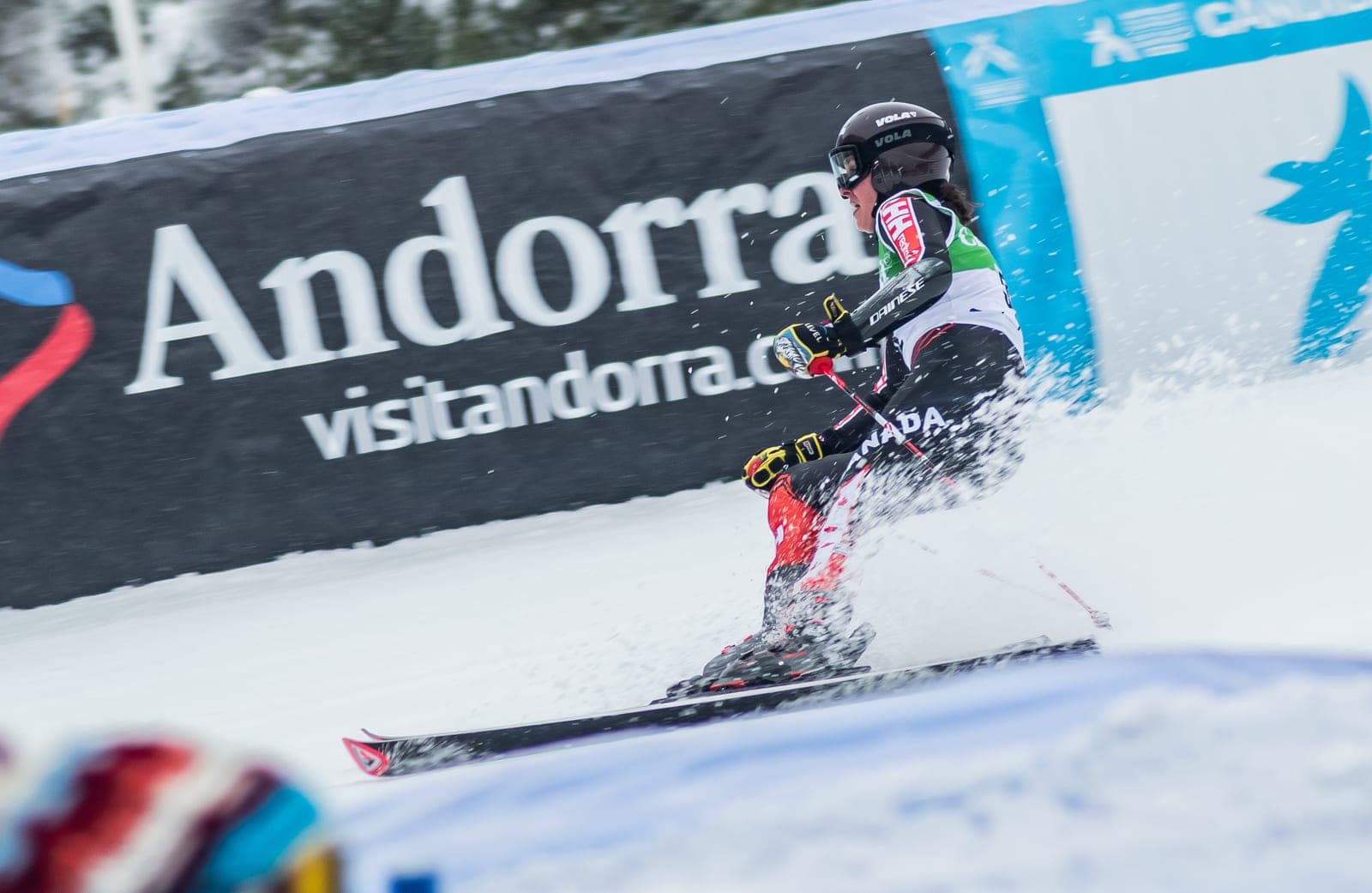
Alpine Skiing
A downhill snow sport where you glide and turn down groomed slopes on a pair of skis.

Cycling
A low-impact endurance sport that doubles as transport, exercise and adventure.
Mountain Biking
An off-road cycling sport ridden on rugged trails, mixing endurance, bike handling and outdoor adventure.
Related tactics
Drafting
Riding, running or swimming close behind another competitor to save energy in their slipstream.
Pacing strategy
Planning how to distribute effort across a race so energy lasts the full distance without fading.
Negative split
A pacing tactic where an athlete covers the second half of a race faster than the first.
How it connects
The meaning-bearing relationships that place Line choice in the wider knowledge graph — each one with the reason it exists.
Frequently learned together
Taught side by side in the same stage of a learning path.
- DraftingBoth are taught in the “Understand tactics & strategy” stage of the Cycling learning path.
- Pacing strategyBoth are taught in the “Understand tactics & strategy” stage of the Cycling learning path.
- Negative splitBoth are taught in the “Understand tactics & strategy” stage of the Cycling learning path.
- Breakaway and pelotonBoth are taught in the “Understand tactics & strategy” stage of the Cycling learning path.
- Interval-training strategyBoth are taught in the “Understand tactics & strategy” stage of the Cycling learning path.
Explore across the knowledge base
Follow the threads that connect Line choice to the rest of SocialSportHub.
Rules
Techniques
- Carving TurnA turn where the edged skis cut a clean arc in the snow and follow their own shape with little or no skidding.
- Snowplough TurnThe wedge-shaped turn beginners learn first on skis, where the ski tips are brought together to control speed and steer.
- Parallel TurnA turn in which both skis stay parallel throughout, steered together rather than wedged apart.
Skills
Learning paths
Disciplines
- DownhillDownhill is alpine skiing's fastest discipline, run on long courses with widely spaced gates where skiers glide at high speed in an aerodynamic tuck.
- Snowboard CrossSnowboard cross is a racing discipline in which several riders descend a terrain course together, with the fastest advancing through rounds.
- Speed ClimbingA timed format where climbers ascend a route as fast as possible, most recognizably as a head-to-head race on a standardized competition wall.
- SlalomSlalom is the most technical alpine skiing discipline, run on a short course with closely spaced gates that demand rapid, precise turns.
- SprintSprint is a short-course race format decided over an individual qualifier and knockout heats, skied in either classic or skate technique.
Go deeper with Line choice
Everywhere else on the platform that covers Line choice — assembled from what actually references it, so nothing here is a dead end.
Learn it
Structured courses and paths on the platform that cover this directly.
How this page is maintained
- Content type
- Tactic
- Provenance
- Tier A — evergreen educational
- Verified external sources
- 0
- Content updated
- 2026-09-12
Evergreen, first-party explanation — it makes no claim that needs an external source. How we handle sources and reviews.