
Alpine race gates
In alpine ski racing the course is defined by pairs of poles, and a racer must pass through every gate to record a valid run.
Overview
An alpine race course is set out with gates — paired poles planted in the snow that mark the line the racer must follow. Passing through every gate in order is what makes a run count; missing one means the run is not valid, however fast it was.
How the gates are set defines the event. Tightly spaced gates force short, frequent turns, while gates set far apart allow long, fast arcs. That is the practical difference between the technical and speed disciplines, and it is why racers inspect a course before running it.
Key points
- Every gate must be passed in the set order for a run to be valid.
- Gate spacing is what makes one alpine discipline different from another.
- Closely set gates demand short, quick turns; widely set gates allow long, fast ones.
- Racers inspect the course beforehand because the gate line has to be learned, not improvised.
- A missed gate ends the run’s validity regardless of the time recorded.
Where it’s used
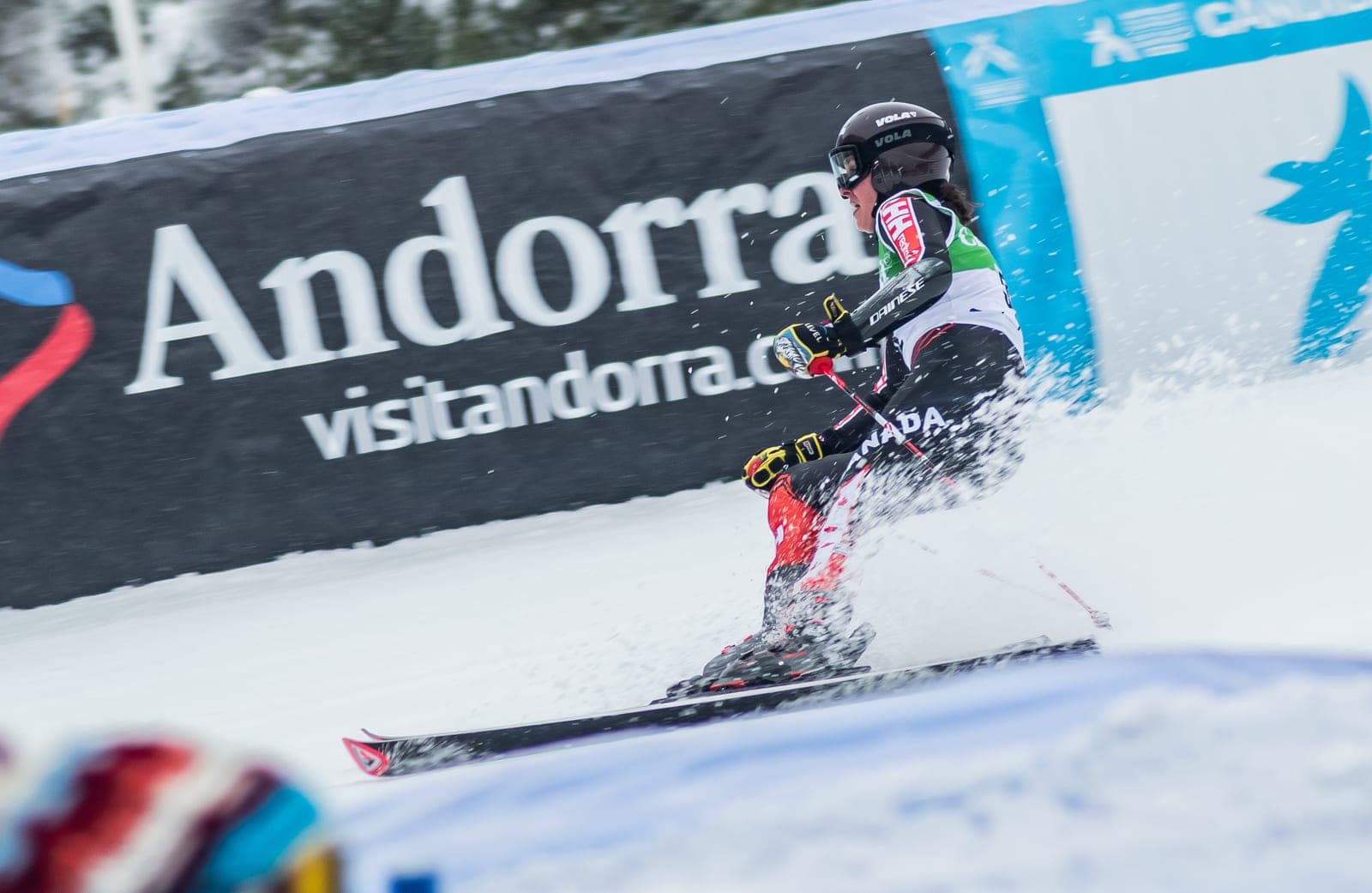
Sports that use alpine race gates:
How it connects
The meaning-bearing relationships that place Alpine race gates in the wider knowledge graph — each one with the reason it exists.
Frequently learned together
Taught side by side in the same stage of a learning path.
Explore across the knowledge base
Follow the threads that connect Alpine race gates to the rest of SocialSportHub.
Disciplines
- SlalomSlalom is the most technical alpine skiing discipline, run on a short course with closely spaced gates that demand rapid, precise turns.
- DownhillDownhill is alpine skiing's fastest discipline, run on long courses with widely spaced gates where skiers glide at high speed in an aerodynamic tuck.
- Super-GSuper-G, or super giant slalom, is a speed discipline with gates set farther apart than giant slalom, blending high speed with sweeping turns.
- Giant SlalomGiant slalom pairs technical turning with more speed, using gates set farther apart than slalom so skiers make longer, rounder, carved turns.
- CombinedAlpine combined blends a speed run with a slalom run, adding the times together so the result rewards all-around skiers across both ends of the spectrum.
Go deeper with Alpine race gates
Everywhere else on the platform that covers Alpine race gates — assembled from what actually references it, so nothing here is a dead end.
Learn it
Structured courses and paths on the platform that cover this directly.
Take it away
Open data and the whole-platform view of this subject.
How this page is maintained
- Content type
- Rule
- Provenance
- Tier A — evergreen educational
- Verified external sources
- 0
- Content updated
- 2026-09-12
Evergreen, first-party explanation — it makes no claim that needs an external source. How we handle sources and reviews.