
Wicketkeeping
The only fielding position allowed gloves and pads — where a keeper stands and why, how standing up differs from standing back, and the dismissals only a keeper can make.
Overview
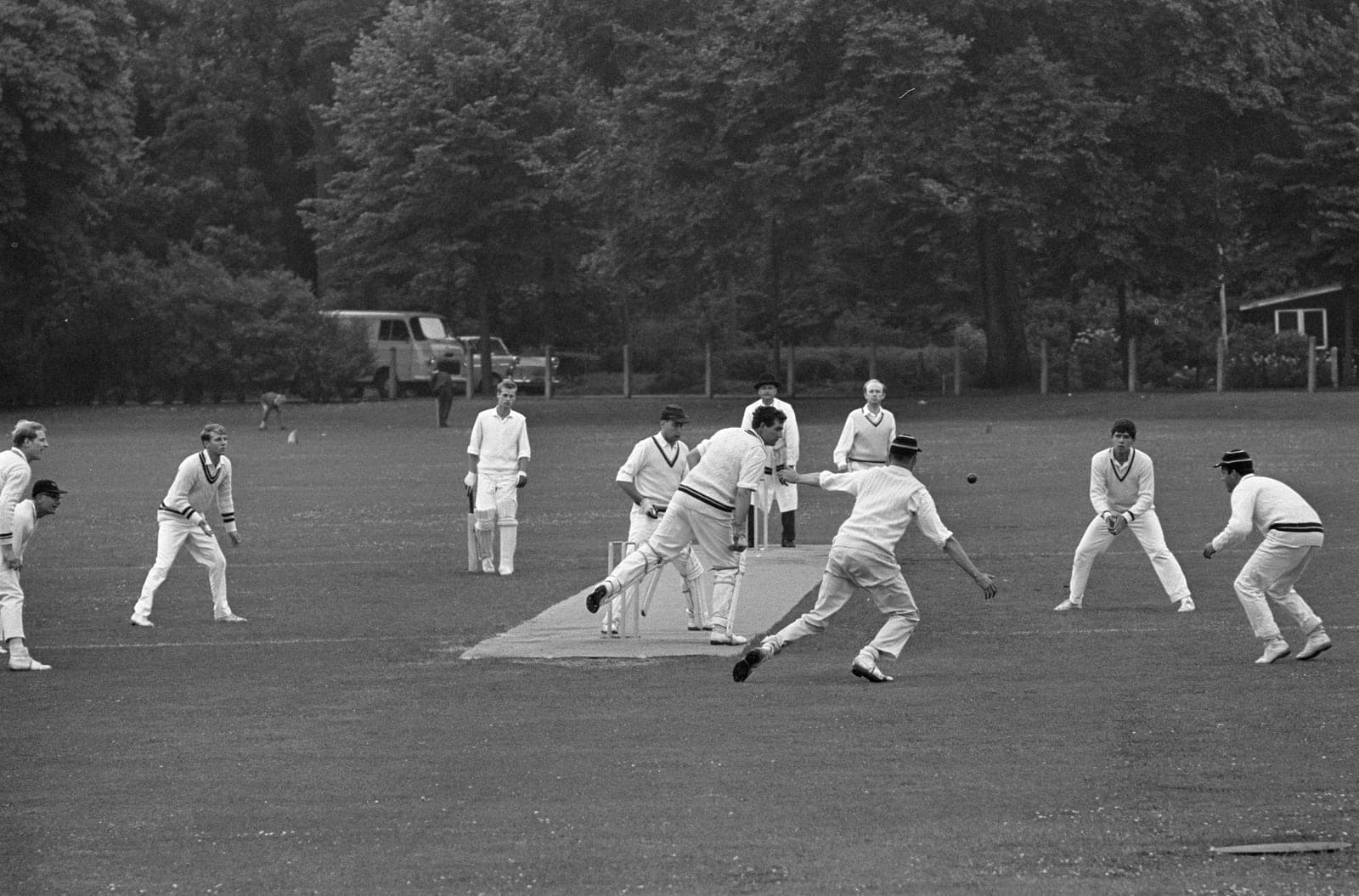
The wicketkeeper stands behind the striker's wicket and takes every delivery the batter does not hit. They are involved in more deliveries than anyone else on the field, and they are the only fielder permitted to wear external leg guards and gloves.
A keeper's position is a decision, not a fixture. Standing up to the stumps enables stumpings and pressures the batter into staying in their crease; standing back gives more time to take a fast bowler and improves the chance of holding an edge.
Standing up versus standing back
Against spin and slow-medium bowling a keeper usually stands up to the stumps. From there they can complete a stumping the moment the striker's foot leaves the ground, which prevents the batter from advancing down the pitch to negate the spin.
Against genuine pace they stand back, often many metres. The ball arrives with more time to be judged, edges carry to a catchable height, and the keeper becomes the first of the slip cordon rather than a threat at the stumps. The cost is that stumpings effectively disappear.
The dismissals a keeper owns
Stumping is exclusive to the wicketkeeper: it requires the wicket to be put down by the keeper while the striker is out of their ground and not attempting a run. Catching behind is not exclusive but is overwhelmingly the keeper's, and a keeper standing back to pace will take a large share of a team's catches.
Run outs at the striker's end are also usually a keeper's, as is the work of collecting throws from the deep. The distinction between a stumping and a run out is whether a run was being attempted — the same act with the gloves, categorised by what the batter was doing.
Position and restrictions
The Laws require the wicketkeeper to remain wholly behind the wicket, on either side, until a delivery touches the bat or the striker's person, passes the stumps, or the striker attempts a run. Moving up early is a no-ball.
The keeper is also the only fielder permitted gloves and external leg guards. Every other fielder catches bare-handed, which is why the keeper is a specialist role rather than a rotation.
How to do it
- 1Set your depth by the bowler: up to the stumps for spin, back for pace.
- 2Start in a low, balanced crouch with the hands relaxed and low.
- 3Watch the ball out of the bowler's hand and track it all the way, not the bat.
- 4Move your feet to get your body behind the line wherever possible.
- 5Give with the hands on taking the ball rather than snatching at it.
- 6When standing up, take the ball before breaking the stumps — gather, then remove.
Key points
- The keeper takes more deliveries than anyone else on the field.
- Standing up prevents a batter from advancing; standing back holds more edges.
- A stumping can only be made by the wicketkeeper.
- Stumped and run out differ only by whether a run was being attempted.
- The keeper must stay wholly behind the wicket until the ball passes the stumps.
Where it’s used
Sports that use wicketkeeping:
Sources
The rules, dimensions and specifications on this page were read from these documents.
- The Laws of Cricket — Marylebone Cricket Club (MCC), 2017 Code, Law 27 — The wicket-keeper; Law 39 — Stumped (read 2026-09-12)
How it connects
The meaning-bearing relationships that place Wicketkeeping in the wider knowledge graph — each one with the reason it exists.
Prerequisite of
These need this one first.
Frequently learned together
Taught side by side in the same stage of a learning path.
- Cricket fielding positionsWicketkeeping declares Cricket fielding positions as “frequently learned together” in its sport cluster.
- CatchingBoth are taught in the “Learn the core skills” stage of the Cricket learning path.
- ThrowingBoth are taught in the “Learn the core skills” stage of the Cricket learning path.
Supports
Helps the training or recovery side of these.
Explore across the knowledge base
Follow the threads that connect Wicketkeeping to the rest of SocialSportHub.
Rules
- How a batter is out in cricketThe lawful ways to dismiss a batter — bowled, caught, LBW, run out, stumped and the rarer modes — what separates them, and which ones a bowler is credited with.
- Tennis serving rulesThe rules governing how a tennis point begins, including where the server stands and where the serve must land.
- The maulThe contest for a ball held off the ground in rugby union — how a maul differs from a ruck, why that difference changes what players may legally do, and why it is a driving weapon.
- Out-of-court play in padelThe rule that lets a padel player leave the court to keep a rally alive — when it is authorised, what the court must provide for it, and why it depends on the safety area.
Positions
- Cricket fielding positionsHow cricket names the places a fielder can stand — the off-side and leg-side halves, the forward and behind-square split, and why the same spot has a different name for each batter.
- Centre (netball)The centre is netball’s link between attack and defence, the only player allowed in every third except the two goal circles, and the player who takes the centre pass.
- Goal shooterThe goal shooter is a netball attacker who scores goals and is one of only two players allowed to shoot, working within the attacking goal third and circle.
- GoalkeeperThe goalkeeper is the last line of defence in football and the only player allowed to handle the ball inside their own penalty area.
- LiberoThe libero is a defensive volleyball specialist who wears a contrasting shirt, plays only in the back row, and cannot attack the ball above the height of the net.
Equipment
- Wickets, stumps and bailsThe three stumps and two bails a bowler aims at and a batter defends — their exact height, width and shape, and what the Laws say about when bails may be dispensed with.
- Shin guardsProtective pads worn over the shins in football and other field sports.
- Boxing glovesPadded gloves worn to cover the hands when punching in boxing and striking sports.
Tactics
- Playing spin bowlingWhat a batter actually does against a spinner — using the crease and the feet to change the length, picking the ball from the hand, and the options when the pitch is turning sharply.
- Net position and the lobThe tactical core of padel — why the pair at the net wins most points, why the lob is the main weapon for taking that position, and how the walls make the exchange repeatable.
Learning paths
Go deeper with Wicketkeeping
Everywhere else on the platform that covers Wicketkeeping — assembled from what actually references it, so nothing here is a dead end.
Learn it
Structured courses and paths on the platform that cover this directly.
How this page is maintained
- Content type
- Skill
- Provenance
- Tier A — evergreen educational
- Verified external sources
- 0
- Content updated
- 2026-09-01
Evergreen, first-party explanation — it makes no claim that needs an external source. How we handle sources and reviews.