
Pivot
Rotating the body around one stationary foot to change facing or protect the ball without travelling.
Definition
Pivoting is the fundamental footwork skill of turning on the ball of one foot — the pivot foot — while the other foot steps to reposition. It lets a player change direction, shield the ball, or square up to a target without moving from the spot, which matters in sports whose rules limit how far you may travel while holding the ball.
In basketball the rules define a pivot foot: after gathering the ball a player may rotate on it and may lift it to pass or shoot, but the ball must leave the hand before the pivot foot returns to the floor — and to begin a dribble the ball must leave the hand before the pivot foot is lifted, or it is a travel. A comparable footwork discipline governs netball and handball. Beyond the rule, a clean pivot keeps the body low and balanced so the player can explode into a pass, drive, or shot.
Meaning by sport
This term is used differently across sports:
- Basketball
- Footwork of turning on a planted pivot foot; the foot may be lifted to pass or shoot, but the ball must leave the hand before it returns to the floor, or it is a travelling violation. 'The pivot' can also refer to the post area or centre.
- Netball
- Turning on the landing foot within the footwork rule, without dragging or lifting it illegally.
- Handball
- The pivot (line player) is the attacker who operates on the defenders' line.
Where you’ll hear “pivot”
Sports that use this term:

Basketball
A fast, dynamic team sport of running, jumping and quick decisions on court.
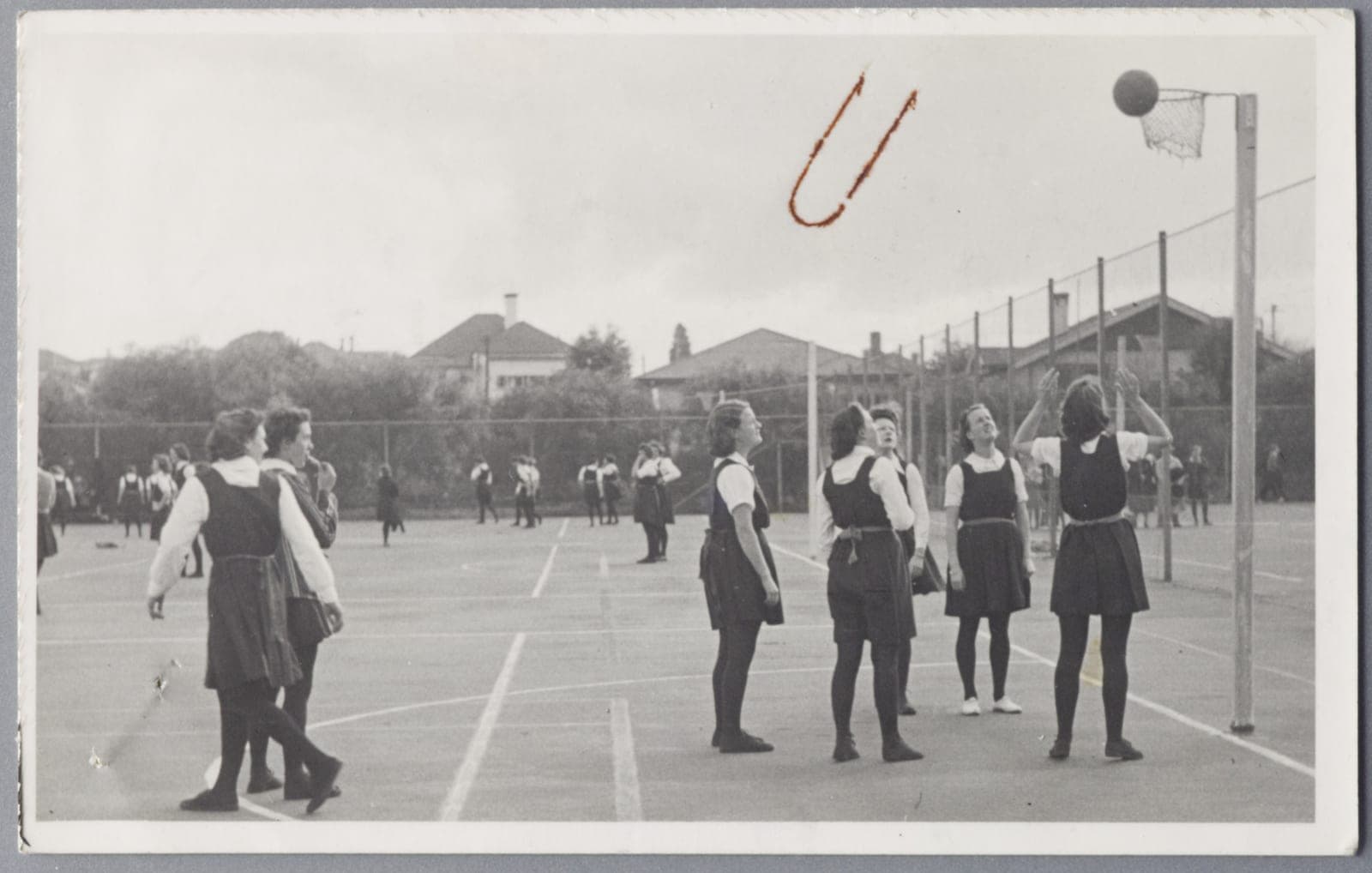
Netball
A non-contact, position-based team sport of quick passing and accurate shooting.

Handball
A fast indoor team sport of passing, jumping and throwing to score with the hands.
Explore across the knowledge base
Follow the threads that connect Pivot to the rest of SocialSportHub.
Movement patterns
- Change of DirectionA planned redirection of the body from one movement vector to another, requiring an athlete to decelerate existing momentum and reaccelerate along a new line between two known points.
- Crossover StepA lateral or diagonal travelling step in which one leg crosses over the other with accompanying hip and trunk rotation, trading a stable base for greater reach and speed.
- CutA sharp, frequently reactive plant-and-redirect performed in a single decisive foot contact to evade an opponent or abruptly alter a line of travel.
- DecelerationThe athletic pattern of actively braking and absorbing momentum to slow or stop under control, producing eccentric forces that oppose the direction of travel.
- PivotA rotation of the body about one planted foot, reorienting the trunk and hips around a vertical axis without travelling to a new location.
Movement comparisons
- Change of Direction vs PivotChange of Direction vs Pivot: how these two movements differ, what they share, and how to tell them apart — from mechanics to the sports that use them.
- Cut vs PivotCut vs Pivot: how these two movements differ, what they share, and how to tell them apart — from mechanics to the sports that use them.
Go deeper with Pivot
Everywhere else on the platform that covers Pivot — assembled from what actually references it, so nothing here is a dead end.
Take it away
Open data and the whole-platform view of this subject.
How this page is maintained
- Content type
- Term
- Provenance
- Tier A — evergreen educational
- Verified external sources
- 0
- Content updated
- 2026-09-01
Evergreen, first-party explanation — it makes no claim that needs an external source. How we handle sources and reviews.