
Course Management
Playing a golf course to your own realistic game rather than to its hardest line, choosing targets and clubs that keep big numbers off the card.
Overview
Course management is the layer of thinking that sits above any individual golf shot. Rather than asking “how well can I hit this?”, it asks “where does this shot need to finish for the next one to be straightforward, and what happens if I miss?”. Because golf totals every stroke, including penalties, the score is shaped far more by avoiding the bad outcomes than by producing the exceptional ones. A player who never makes a birdie but never makes a triple bogey usually posts a better round than one who alternates between the two.
In practice it means choosing a target that leaves room for a normal miss, selecting the club that reaches the safe part of the hole rather than the club that would reach the flag on the best strike, and accepting a sideways recovery when the ball is somewhere it should not be. It also means planning a hole backwards — deciding the distance and angle you want for the approach, and then choosing the tee shot that delivers it. None of that requires more skill; it requires deciding before the swing rather than during it.
Key ideas
- Plan the hole backwards: pick the approach you want, then choose the tee shot that leaves it. The longest drive is not useful if it leaves an awkward angle or a blind second.
- Aim at the fat part, not the flag. Choosing a target with room on both sides turns a mediocre strike into a playable position instead of a penalty.
- Club for a normal strike, not your best one. Most players choose by their longest-ever distance with a club, which leaves the average shot short of the target.
- Take the recovery, not the hero shot. When the ball is in trouble, the cheapest route back to a playable position almost always beats the low-percentage escape.
- Know where the trouble is before you play. Water, out of bounds and deep bunkers cost strokes directly, so the shot that removes them from play is usually the right one.
- Adjust as the round goes on. Conditions, how you are actually striking the ball that day, and your position relative to your own target all change which line is sensible.
Where it’s used
Sports that use course management:
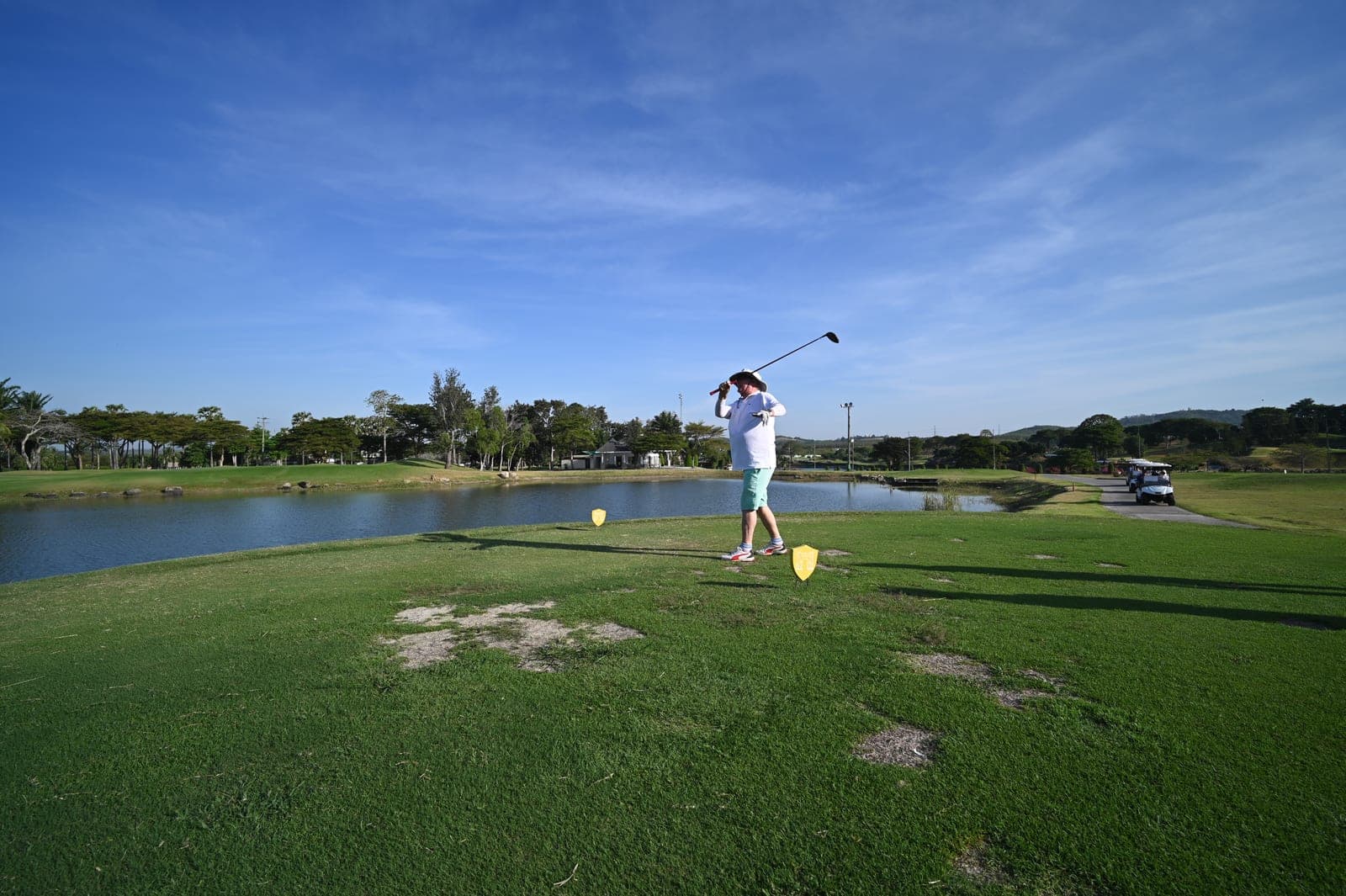
Golf
A precision target sport played across an outdoor course, blending skill, strategy and a long walk in the open air.
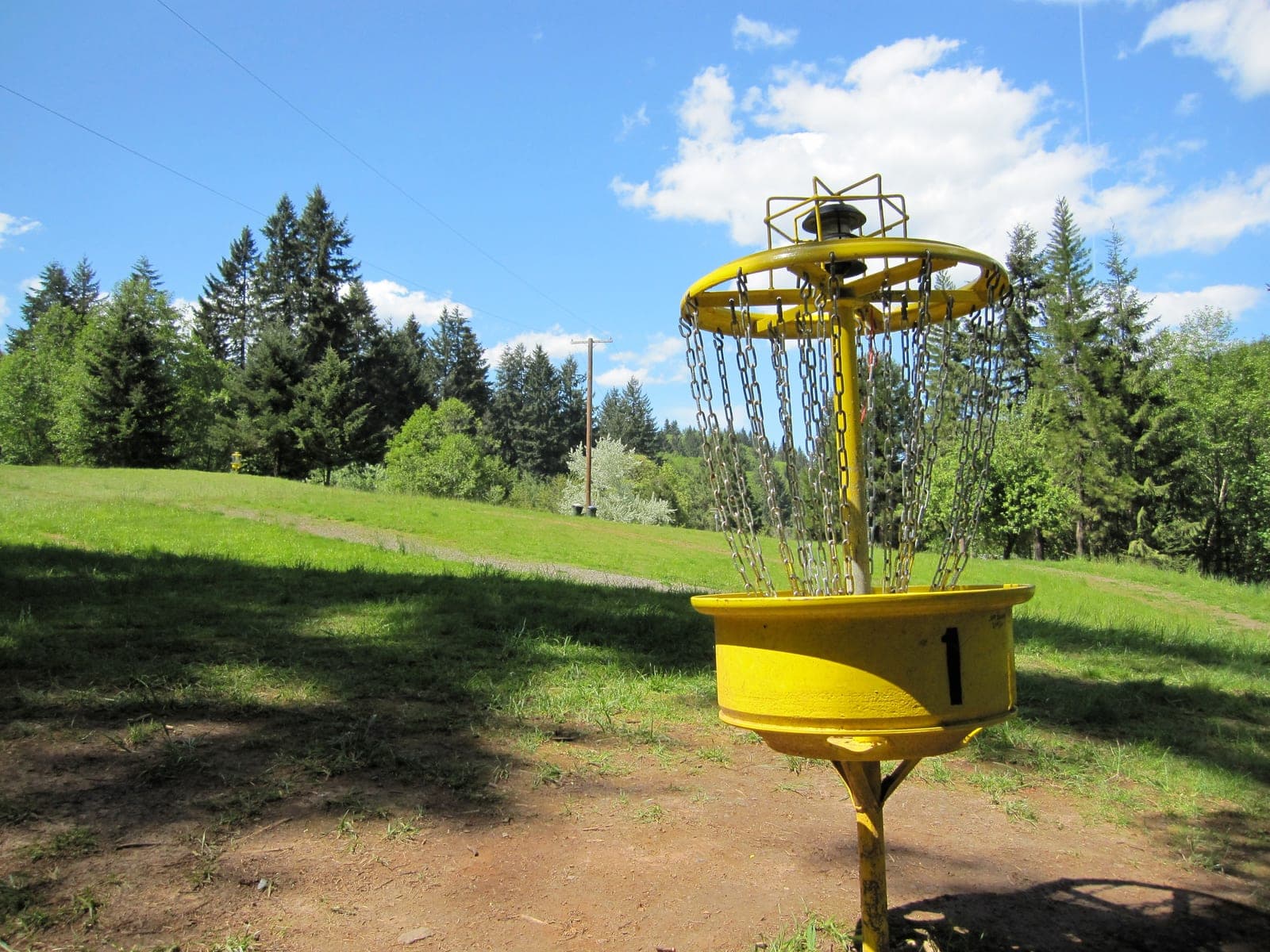
Disc Golf
A relaxed, low-cost target sport where players throw flying discs toward chain baskets across an outdoor course.
Related strategies
Playing the percentages
Favouring the higher-probability, lower-risk option most of the time to cut out unforced errors, while recognising when a calculated risk is worth taking.
Adapting to Conditions
Adapting to conditions is the strategy of shaping your game plan around the venue, surface, weather, altitude and home-or-away setting you face.
How it connects
The meaning-bearing relationships that place Course Management in the wider knowledge graph — each one with the reason it exists.
Frequently learned together
Taught side by side in the same stage of a learning path.
- Risk–reward shot selectionBoth are taught in the “Understand tactics & strategy” stage of the Golf learning path.
- Playing the percentagesBoth are taught in the “Understand tactics & strategy” stage of the Golf learning path.
- Adapting to ConditionsBoth are taught in the “Understand tactics & strategy” stage of the Golf learning path.
Explore across the knowledge base
Follow the threads that connect Course Management to the rest of SocialSportHub.
Tactics
- Risk–reward shot selectionWeighing the gain from an aggressive shot against the cost of the miss before choosing which shot to play.
- Line choiceChoosing the path you take through a course or descent, trading the shortest route against the one you can carry most speed on.
- Territory versus possessionRugby union's central strategic trade — when to keep the ball and when to kick it away — and why the 22-metre line makes field position worth more than possession in some parts of the field.
- Point constructionHow tennis points are built rather than won — the neutral, attacking and defensive positions, what each one permits, and why most errors come from playing the wrong shot for the position.
- Crosscourt and down the lineThe geometry that makes crosscourt the default tennis shot — the net is lower in the middle and the court is longer on the diagonal — and when down the line is worth its extra risk.
Skills
- DrivingThe skill of hitting a long tee shot that sets up the rest of the hole from a playable position.
- ChippingThe short lofted shot played from near the green to get the ball rolling toward the hole.
- PuttingThe skill of rolling the ball along the green so it drops into the hole.
- Aiming and alignmentThe skill of setting the body and the implement so the shot starts on the line you intend.
Facilities
- Golf courseA large outdoor course of individually designed holes, each running from a teeing area to a hole cut in a putting green.
- The cricket field and boundaryHow the edge of a cricket field is defined and marked, what scores four and what scores six, and why the Laws set no boundary distance while international playing conditions do.
Learning paths
Go deeper with Course Management
Everywhere else on the platform that covers Course Management — assembled from what actually references it, so nothing here is a dead end.
Learn it
Structured courses and paths on the platform that cover this directly.
How this page is maintained
- Content type
- Strategy
- Provenance
- Tier A — evergreen educational
- Verified external sources
- 0
- Content updated
- 2026-09-12
Evergreen, first-party explanation — it makes no claim that needs an external source. How we handle sources and reviews.