
Ice hockey skating
The skill everything else in hockey sits on — how a skater generates power from the edges, why stopping and turning use the same mechanism, and what makes crossovers faster than striding.
Overview
Hockey is two sports combined: everything a player does with the puck has to be done while skating. A player who cannot skate cannot use any other skill, which is why skating is taught first and continues to be trained at every level.
Skating power does not come from pushing backwards. It comes from pushing sideways against the ice with the inside edge of the blade, which converts a lateral push into forward motion.
Edges are the whole mechanism
A skate blade is hollow-ground, which gives it an inside and an outside edge. Every push, turn and stop is made by setting one of those edges into the ice at an angle and loading it.
This is why a deeper knee bend produces more speed. Bending the knees lowers the centre of mass and lets the skater set the edge at a sharper angle, which gives the push something to work against. A skater standing upright has almost nothing to push from.
Stopping and turning are the same skill
A hockey stop turns the skates perpendicular to the direction of travel and scrapes the edges across the ice. A tight turn does the same thing at a shallower angle — the edge bites, and the skater's momentum is redirected rather than destroyed.
Being able to stop in both directions is a genuine requirement rather than a refinement. A player who can only stop one way has to turn their body before they can stop, which costs the fraction of a second that decides most puck battles.
Crossovers
A crossover is the technique used to accelerate around a curve: the outside leg crosses over the inside one, and both legs push. Because two pushes happen per stride cycle instead of one, crossovers accelerate faster than straight-line striding.
This is why players so often take a curved route rather than a straight one when building speed from a standstill — the curve is not indirection, it is acceleration.
How to do it
- 1Set a deep knee bend with the chest up — power comes from the knees, not the back.
- 2Push sideways against the ice with the inside edge rather than backwards.
- 3Extend the pushing leg fully and return it under the body before the next push.
- 4To stop, turn both skates perpendicular to travel and set the edges into the ice.
- 5Practise stopping in both directions rather than only your strong side.
- 6To accelerate around a curve, cross the outside leg over and push with both legs.
Key points
- Skating power comes from pushing sideways against an edge, not backwards.
- A hollow-ground blade gives two edges, and every action uses one of them.
- A deeper knee bend produces more speed by allowing a sharper edge angle.
- Stopping and turning are the same edge mechanism at different angles.
- Crossovers accelerate faster than striding because both legs push.
Where it’s used
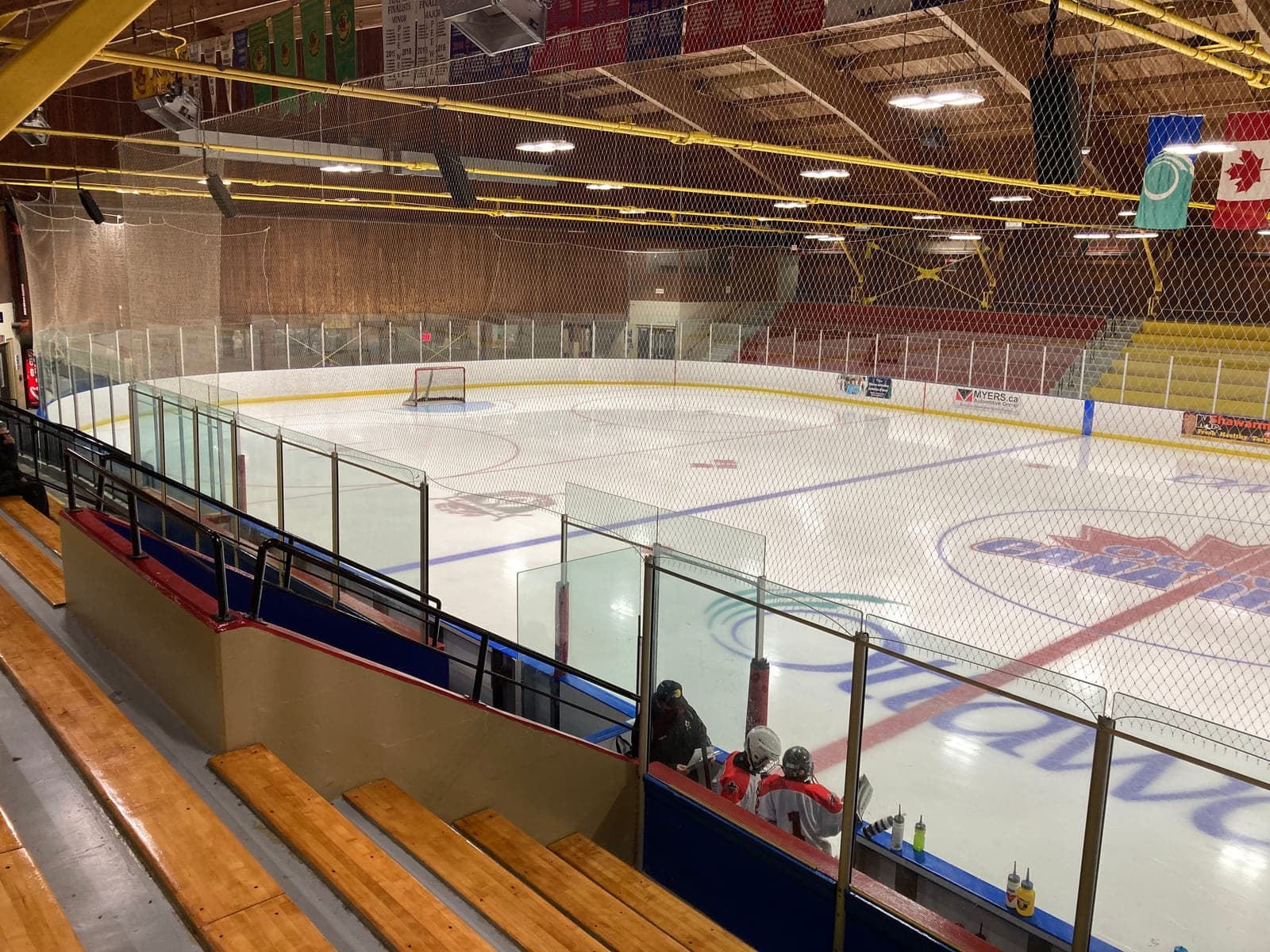
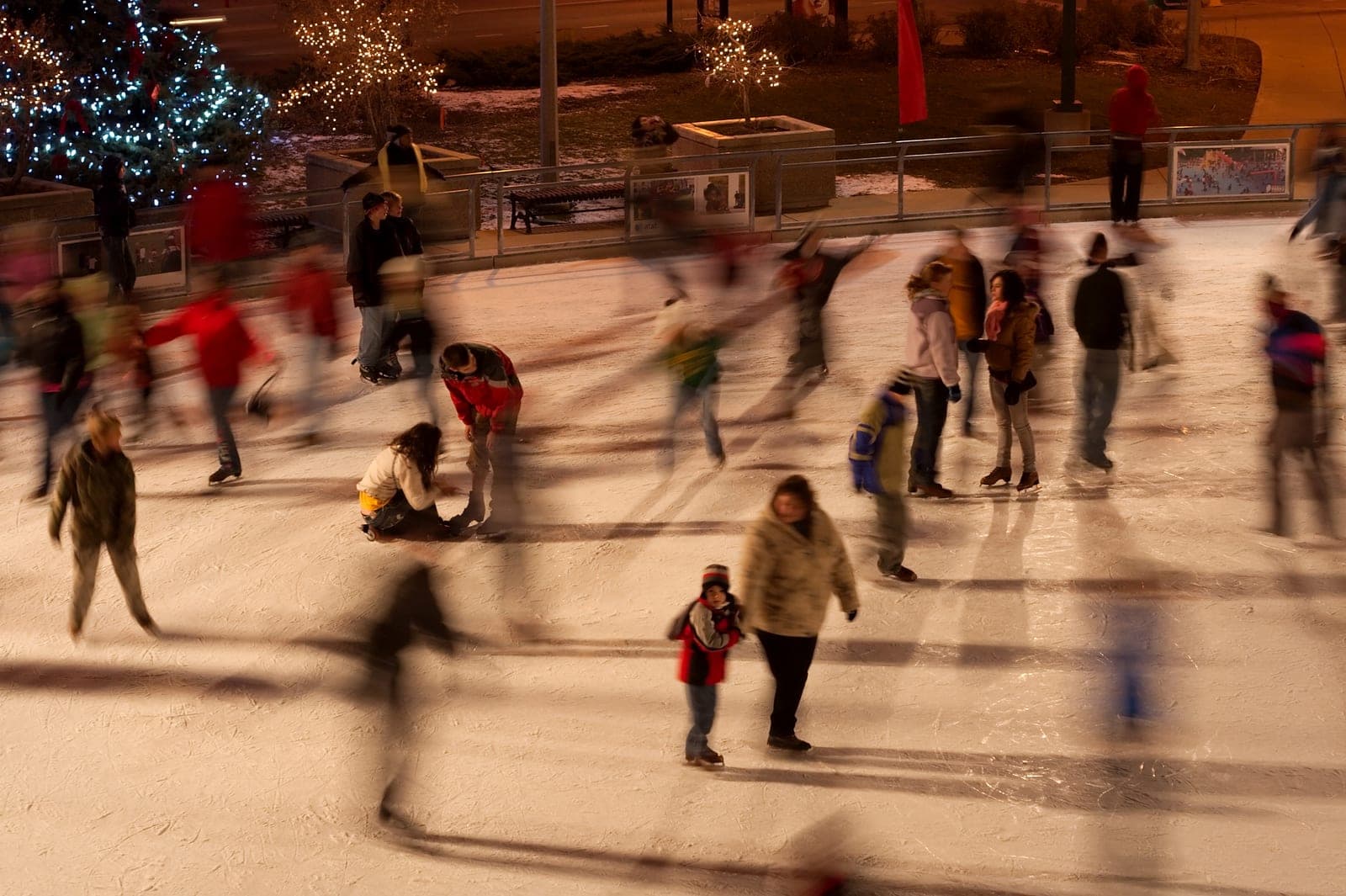
Sports that use ice hockey skating:
Related techniques
Stickhandling
How a hockey player carries and protects the puck at speed — why the hands work independently of the feet, the role of soft hands, and how body position beats stick skill.
Ice hockey shooting
The four shots hockey is scored with — wrist shot, snap shot, slap shot and backhand — how each trades power against release time, and why the stick is bent on purpose.
Face-offs
How every hockey stoppage restarts — the nine face-off locations, why the location is itself a sanction, and the techniques centres use to win possession.
How it connects
The meaning-bearing relationships that place Ice hockey skating in the wider knowledge graph — each one with the reason it exists.
Explore across the knowledge base
Follow the threads that connect Ice hockey skating to the rest of SocialSportHub.
Playing surfaces
Disciplines
- Skate (Freestyle)Skate skiing pushes off angled skis in a V pattern, like ice skating, on firm groomed snow — the faster of the two main techniques.
- SinglesSingles is figure skating performed alone, with one skater presenting jumps, spins, and step sequences to music in separate men's and women's events.
- ClassicClassic is the original cross-country technique, with skis kept parallel in set tracks and a striding kick-and-glide motion.
Skills
- SprintingThe skill of running or riding at maximum controlled speed over a short distance.
- BlockingThe skill of using the hands or body to stop or slow an opponent’s attack.
- PedallingThe skill of turning the pedals smoothly and at an efficient rhythm on a bike.
- TacklingThe skill of legally challenging an opponent to win the ball or stop their progress.
- Speed control on snowThe skill of managing how fast you travel down a slope, mainly by shaping turns rather than braking.
Go deeper with Ice hockey skating
Everywhere else on the platform that covers Ice hockey skating — assembled from what actually references it, so nothing here is a dead end.
Learn it
Structured courses and paths on the platform that cover this directly.
Take it away
Open data and the whole-platform view of this subject.
How this page is maintained
- Content type
- Technique
- Provenance
- Tier A — evergreen educational
- Verified external sources
- 0
- Content updated
- 2026-09-01
Evergreen, first-party explanation — it makes no claim that needs an external source. How we handle sources and reviews.