
Multi-use games area (MUGA)
A fenced outdoor hard-surface area marked for several sports, common in schools, parks and community facilities.
Overview
A multi-use games area, or MUGA, is an enclosed outdoor space with a durable all-weather surface marked for several sports. Fencing or rebound boards keep the ball in play, and overlaid markings let the same area serve games such as small-sided football, basketball, netball and tennis.
MUGAs are a space-efficient way to offer many sports on a small footprint, which is why they are common at schools and in parks.
Good to know
- The all-weather surface lets the area be used year-round in most conditions.
- Fencing keeps the ball inside and, in some designs, acts as a rebound wall.
- Markings for several sports share the same surface and are often colour-coded.
- A MUGA packs many sports onto a small footprint.
Where it’s used
Sports that use multi-use games area (muga):
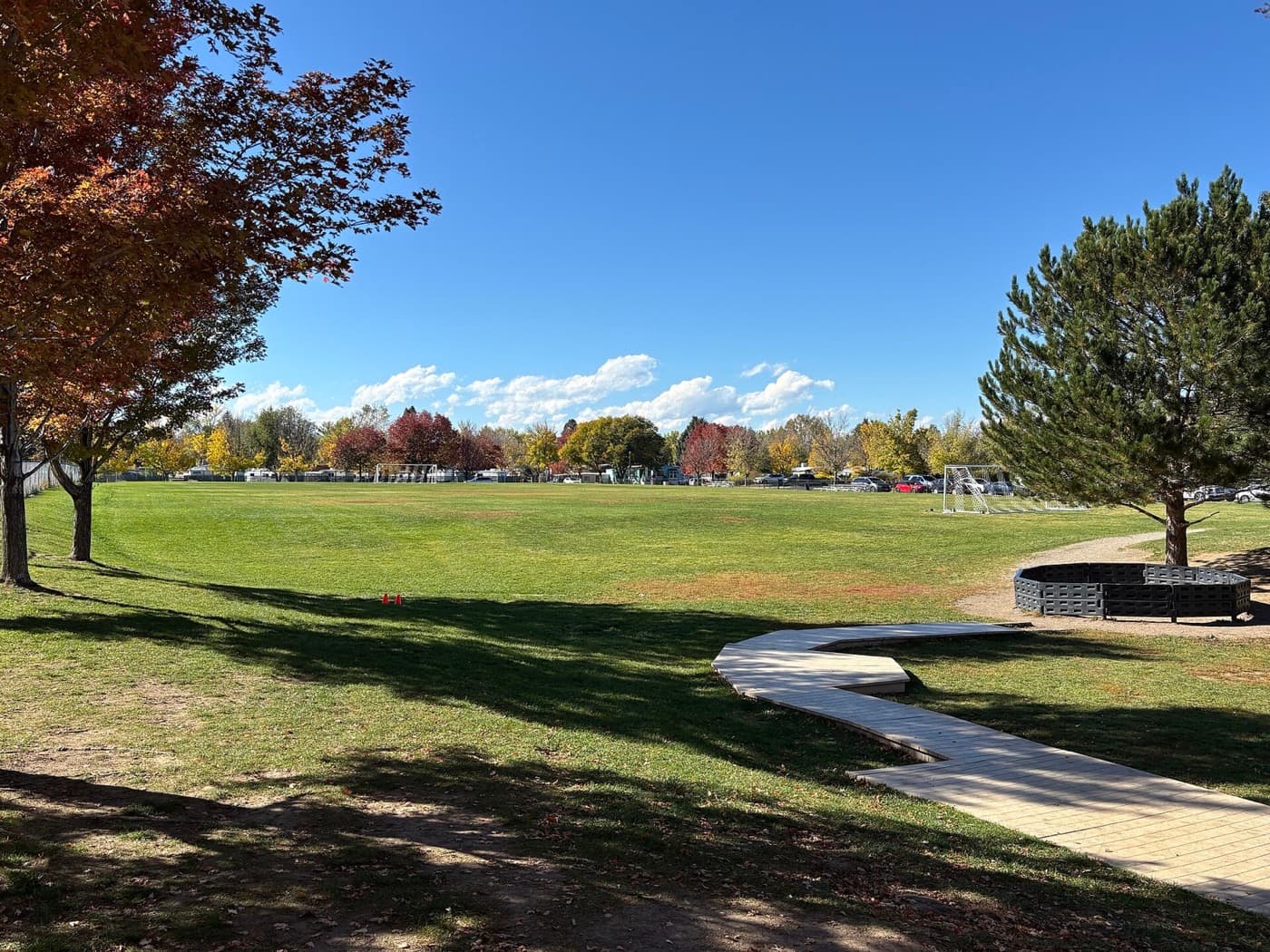
Football
The world’s most popular team sport — endless running, teamwork and community in one game.
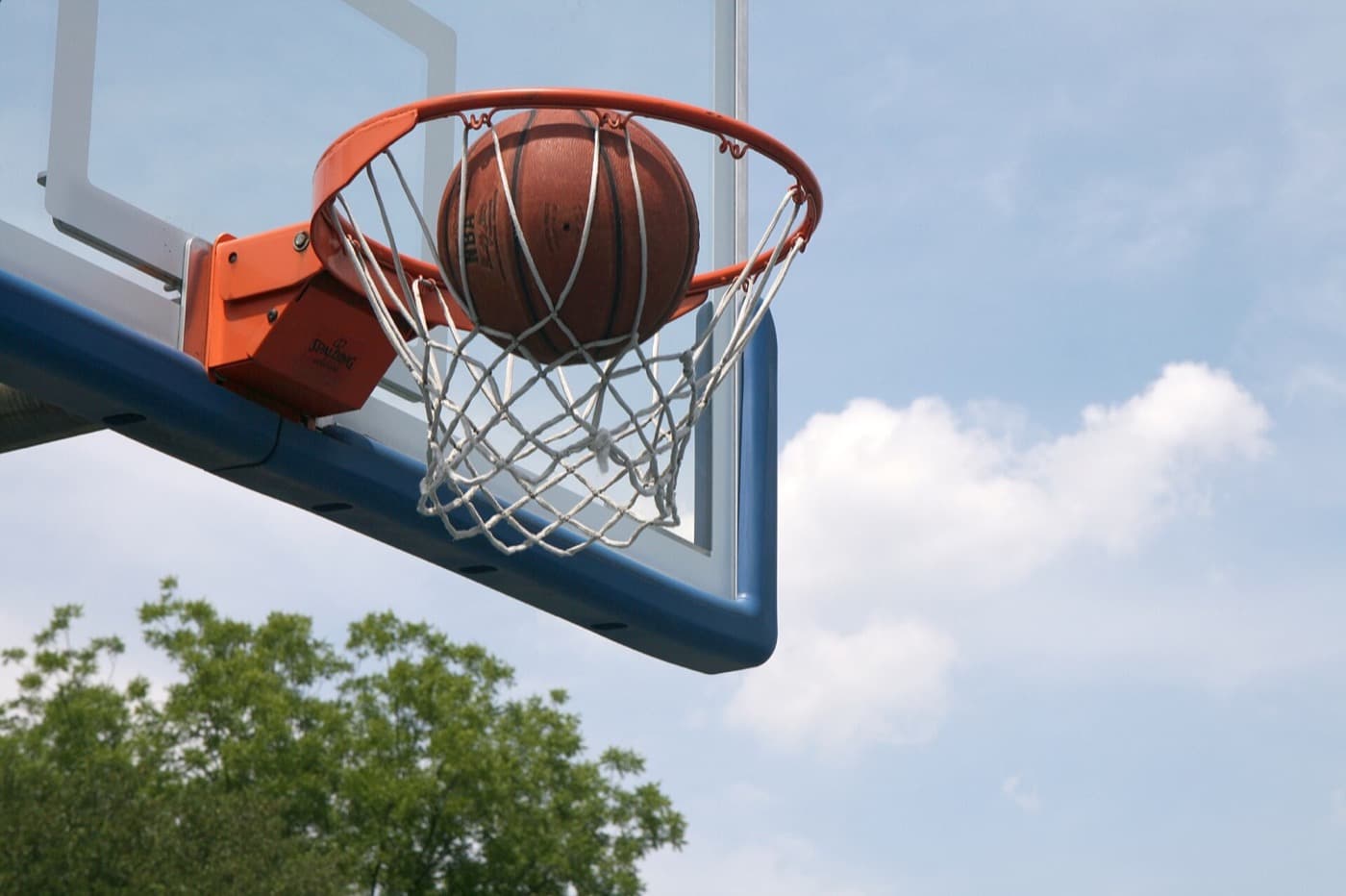
Basketball
A fast, dynamic team sport of running, jumping and quick decisions on court.
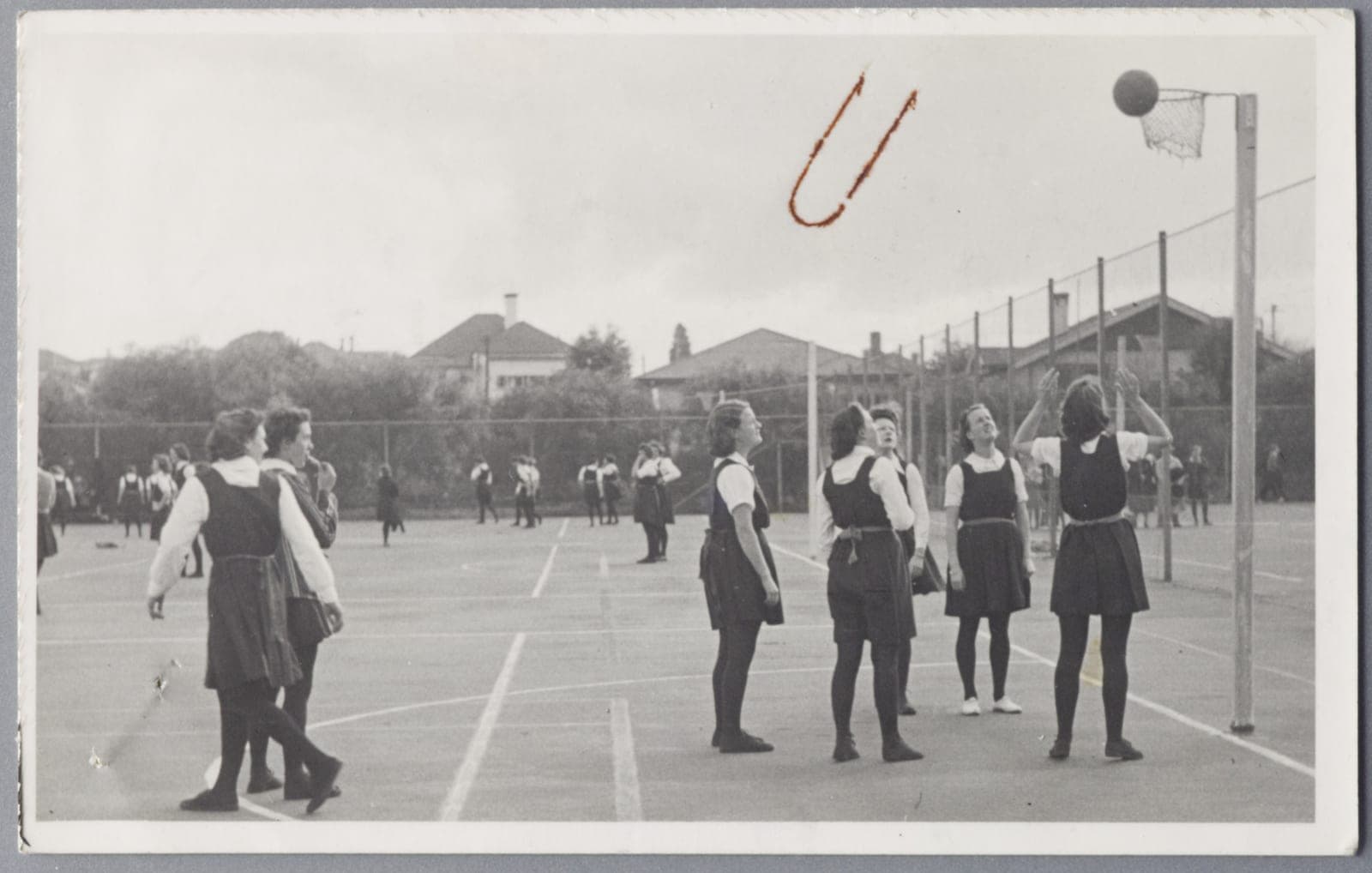
Netball
A non-contact, position-based team sport of quick passing and accurate shooting.
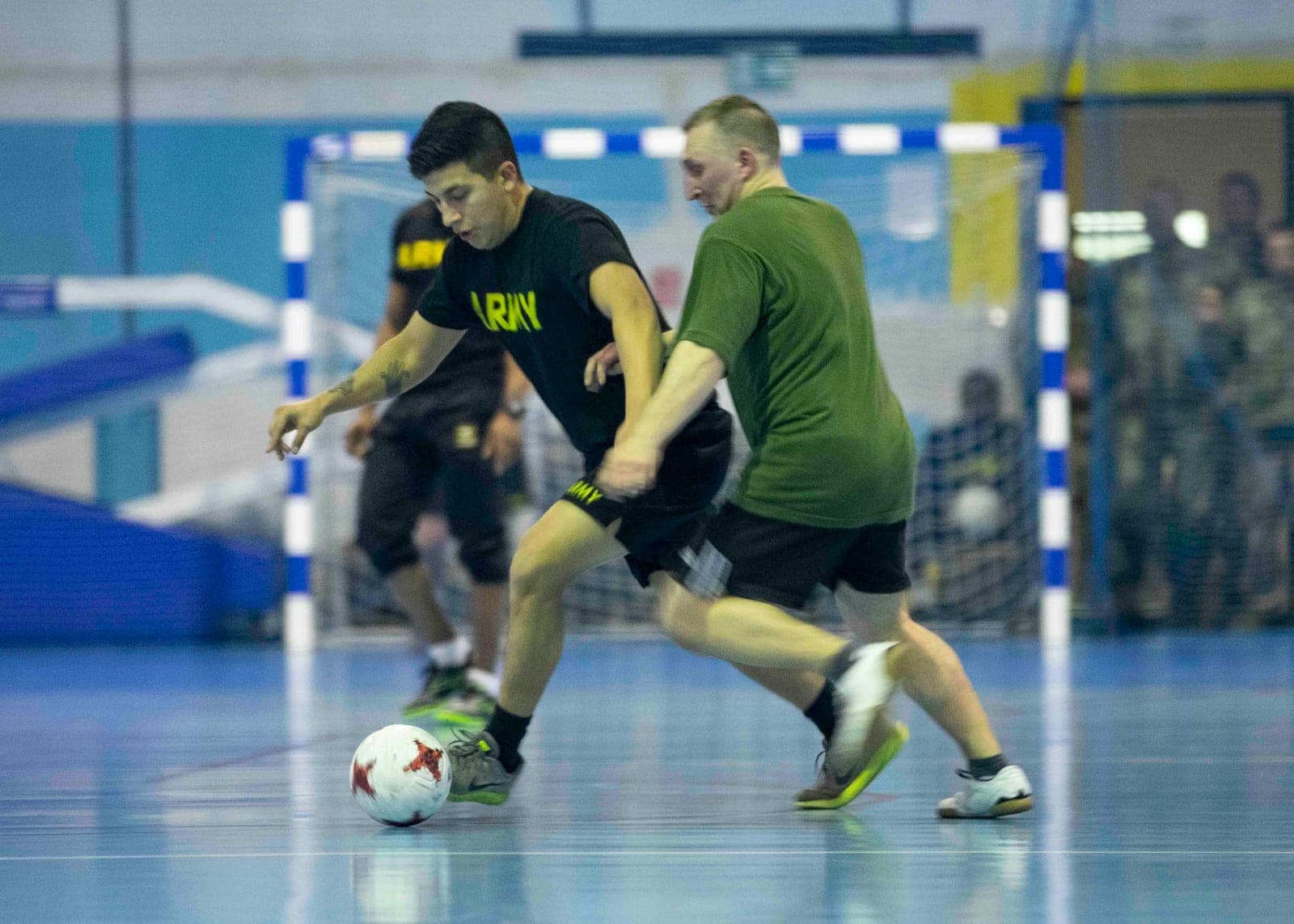
Futsal
A fast, small-sided indoor form of football played on a hard court with a low-bounce ball.
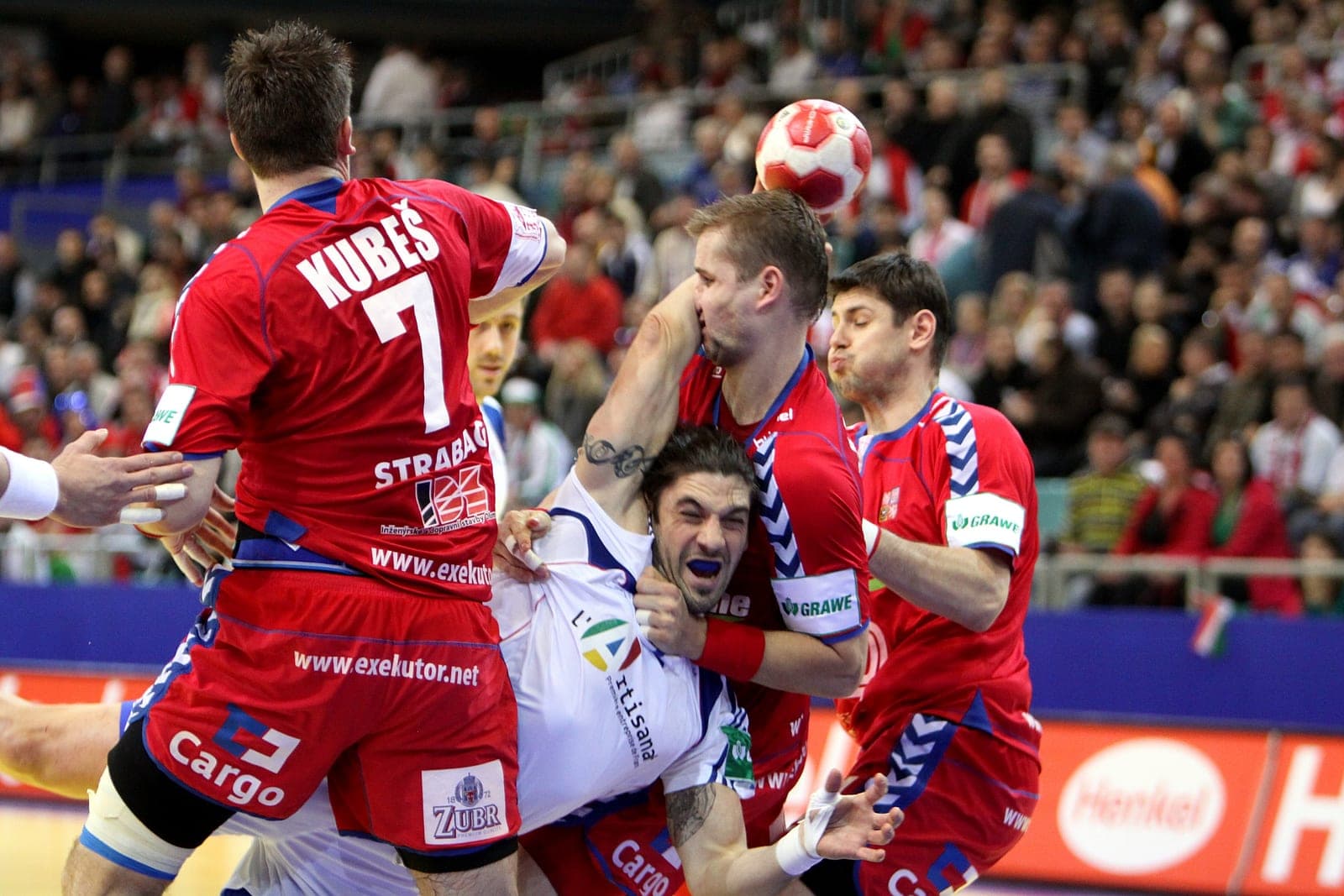
Handball
A fast indoor team sport of passing, jumping and throwing to score with the hands.
Related facilities
Football pitch
The large rectangular grass or artificial-turf field on which football (soccer) is played, with a goal at each end.
Basketball court
A rectangular hard-surfaced court with a raised hoop and backboard at each end where basketball is played.
Sports hall
A large indoor hall with multi-sport line markings, used for court sports like basketball, volleyball and badminton.
How it connects
The meaning-bearing relationships that place Multi-use games area (MUGA) in the wider knowledge graph — each one with the reason it exists.
Frequently learned together
Taught side by side in the same stage of a learning path.
- BasketballBoth are taught in the “What you’ll need” stage of the Basketball learning path.
- Basketball courtBoth are taught in the “What you’ll need” stage of the Basketball learning path.
- Sports hallBoth are taught in the “What you’ll need” stage of the Basketball learning path.
- Hard courtBoth are taught in the “What you’ll need” stage of the Basketball learning path.
- WoodBoth are taught in the “What you’ll need” stage of the Basketball learning path.
Explore across the knowledge base
Follow the threads that connect Multi-use games area (MUGA) to the rest of SocialSportHub.
Equipment
- BasketballA large, inflated ball with a dimpled surface used to play basketball.
- Football (soccer ball)A round, inflated ball used to play association football and futsal. Futsal uses a smaller, heavier ball that bounces far less on a hard court.
- Shin guardsProtective pads worn over the shins in football and other field sports.
Playing surfaces
- Hard courtA rigid acrylic, concrete or asphalt court that gives a true, consistent, medium-paced bounce — the standard multi-use outdoor surface.
- WoodAn indoor sprung timber or parquet floor — grippy, consistent and lightly cushioned; the classic surface for indoor court sports.
- SandLoose beach sand: a soft, shifting, energy-sapping surface with no true bounce that rewards balance and footwork, used for beach sports and conditioning.
- Artificial turfSynthetic grass, often filled with sand or rubber, that gives a firm, even, all-weather surface. It plays faster and truer than worn natural grass.
- Synthetic trackAn all-weather rubberised athletics running surface — firm, springy and high-grip — giving sprinters and distance runners fast, consistent, predictable footing.
Adaptive sports
- Sports for Deaf and Hard of Hearing AthletesMainstream sports made accessible by replacing sound-based signals with visual cues so that deaf and hard of hearing athletes can take part and compete.
- Inclusive facilitiesSports venues designed or adapted so that disabled and non-disabled people can arrive, take part and feel welcome on equal terms.
Learning paths
- Learn FootballA structured, educational learning path for football — from the rules to skills, techniques, tactics and training.
- Learn BasketballA structured, educational learning path for basketball — from the rules to skills, techniques, tactics and training.
- Learn FutsalA structured, educational learning path for futsal — from the rules to skills, techniques, tactics and training.
- Learn HandballA structured, educational learning path for handball — from the rules to skills, techniques, tactics and training.
- Learn NetballA structured, educational learning path for netball — from the rules to skills, techniques, tactics and training.
Go deeper with Multi-use games area (MUGA)
Everywhere else on the platform that covers Multi-use games area (MUGA) — assembled from what actually references it, so nothing here is a dead end.
Learn it
Structured courses and paths on the platform that cover this directly.
- Basketball courseTeaches Multi-use games area (MUGA) in its “What you’ll need” stage.
- Futsal courseTeaches Multi-use games area (MUGA) in its “What you’ll need” stage.
- Handball courseTeaches Multi-use games area (MUGA) in its “What you’ll need” stage.
- Netball courseTeaches Multi-use games area (MUGA) in its “What you’ll need” stage.
How this page is maintained
- Content type
- Facility
- Provenance
- Tier A — evergreen educational
- Verified external sources
- 0
- Content updated
- 2026-09-12
Evergreen, first-party explanation — it makes no claim that needs an external source. How we handle sources and reviews.