
Cycling's sock rule is measured against two bones
The UCI limits how high a sock may rise, and it does not use centimetres. The limit is half the distance between the middle of the lateral malleolus and the middle of the fibula head — a rule stated in anatomy, for a stated reason.

Cycling’s technical regulation is mostly written in millimetres from fixed points on a machine. Then it reaches the rider’s clothing, and one article changes units entirely.
Socks and overshoes used in competition may not rise above the height defined by half the distance between the middle of the lateral malleolus and the middle of the fibula head.
Reference The sock and overshoe height limit, defined as half the distance between the middle of the lateral malleolus and the middle of the fibula head, from Article 1.3.033 bis, introduced 15 October 2018.
The lateral malleolus is the bony prominence on the outside of the ankle — the end of the fibula. The fibula head is the other end of the same bone, just below and behind the outside of the knee. The rule takes the length of one bone, halves it, and calls that the maximum sock height.
The UCI says why in the next sentence: in order to clarify the socks height regulation and have a fair height between riders.
Reference The stated purpose of the anatomical definition — to clarify the regulation and have a fair height between riders — from the guide’s entry on Article 1.3.033 bis.
Why not centimetres
A sock rule in centimetres would be simple to write, easy to check, and unfair.
Riders differ in leg length. A limit of, say, 14 cm from the top of the shoe would sit at a different point on the shin of a 1.90 m rider than on a 1.65 m one — covering proportionally less of the taller rider’s leg and more of the shorter one’s. If the rule exists because covering the shin has an aerodynamic effect, then a fixed number hands one body type an advantage the other cannot legally take.
Defining the limit as a fraction of a bone makes it proportional. Every rider’s ceiling sits at the same anatomical fraction up their own leg, so nobody is advantaged by their skeleton.
This is the same move basketball makes with the cylinder principle, arrived at from a different sport and a different problem. When a rule has to be neutral between bodies of different sizes, a fixed distance is the wrong instrument, and the fix is to state the limit in units of the body.
It is also, notably, the opposite of what the same UCI regulation does to a rider’s position on the bicycle. There the limits are absolute distances from the bottom bracket, and the unfairness that produces is handled by an exemption process rather than by proportional drafting. Two problems of the same shape; two different solutions, in one document.
What the clothing rule underneath it does
The sock provision sits beneath a broader article about fabric, and that one regulates texture.
Modifications to the surface roughness of clothing are authorised, but only as a result of threading, weaving or assembling the fabric, and are limited to a profile difference of at most 1 mm. The measurement of surface roughness must be made without pressure or traction on the clothing.
Reference That surface-roughness modifications must result from threading, weaving or assembly, are limited to a profile difference of 1 mm at most, and are measured without pressure or traction on the clothing, from Article 1.3.033.
The technique matters as much as the amount. Roughness is permitted if it comes from how the fabric was made, and not if it was added to a finished garment — the same distinction the regulation draws elsewhere between a component that is shaped and a fairing that is attached.
Then the structural condition, which is the one with teeth: all clothing must maintain the original texture of the textile and may not be adapted to integrate form constraints, so that when not worn, clothing may in no case contain any self-supporting element or rigid parts.
Reference That clothing must maintain the original texture of the textile, may not be adapted to integrate form constraints, and may contain no self-supporting element or rigid parts when not worn, from Article 1.3.033.
“When not worn” is an inspection instruction disguised as a definition. A commissaire cannot easily judge whether a skinsuit is shaping a rider while the rider is inside it. They can pick it up off a table and see whether it holds a shape on its own. The rule is written so that the test can be performed on the garment rather than on the athlete.
The helmet, and two categories of it
The article above the clothing rules covers helmets, and it divides responsibility before it specifies anything.
A rigid safety helmet is mandatory during competition and official training in all disciplines except indoor cycling and BMX Freestyle Flatland, and recommended outside those sessions. Each rider is then made responsible for a list: that the helmet is approved to an official safety standard and identifiable as approved; that it is worn correctly, including the adjustment on the head and of the chin strap; that nothing has been done to it that could compromise its protective characteristics; that it has not suffered an accident or shock; that no element has been added or removed from its design or form; and that only accessories approved by the manufacturer are used.
Reference The mandatory-helmet rule and its exceptions, and the six responsibilities placed on each rider regarding approval, adjustment, manipulation, prior impacts, alteration and accessories, from Article 1.3.031.
That is a safety regulation delegated to the individual. The UCI does not test helmets itself in this article; it requires an approved helmet, in good condition, worn correctly, and puts the burden on the rider.
The dimensional part is separate, and it is where the aerodynamic question returns. For road and track, a helmet including accessories must not exceed 450 mm in length, 300 mm in width and 210 mm in height. Two categories then share those maxima and differ on everything else:
- A traditional helmet must have at least three distinct air inlet openings on the shell structure. Its shell and accessories must not extend to cover, obstruct or enclose the rider’s ears, seen from the side. And no visor is allowed — integrated or detachable — where a visor means any fixed or attached shield that cannot be worn independently of the helmet.
- A time trial helmet has no restriction on ventilation, no restriction on ear coverage, and permits integrated or detachable visors.
Reference The maximum helmet dimensions of 450 × 300 × 210 mm including accessories, and the differing ventilation, ear-coverage and visor rules for traditional and time trial helmets, from Article 1.3.031.
The three named differences are all aerodynamic. Air inlets cost drag; covered ears smooth the airflow around the head; a visor closes the gap in front of the face. A traditional helmet must have the first, must not have the second, and may not have the third. A time trial helmet may have all three.
So the same rider, in the same race week, is subject to two different aerodynamic regimes depending on which event they are in — and the boundary between them is drawn in features of the helmet rather than in a measured drag figure.
The pattern
Read together, the clothing and helmet articles are a compact demonstration of how this rulebook thinks.
Where a limit must be fair between different bodies, it is expressed in the body — half a fibula. Where a limit must be checkable by an official, it is expressed in something inspectable off the rider: a garment that must not hold its shape on a table, a helmet that must fit inside a box. Where a limit is about safety rather than performance, it is delegated, with the rider made responsible for the condition of the thing they are wearing.
None of those is a rule about how fast anyone goes. All of them are rules about what can be measured, by whom, and against what — which, in a sport where the margins are aerodynamic, turns out to be almost the same question.
Read the evergreen pages
This piece is an argument. These are the reference pages on SocialSportHub that document the same subjects.
References
- [1]Union Cycliste InternationaleGoverning body. Clarification Guide of the UCI Technical Regulation, in force from 1 January 2026 — Articles 1.3.031, 1.3.033 and 1.3.033 bis. Accessed 6 September 2026.
Continue reading
Editor’s pick
The UCI does not regulate the bicycle for speed. It says so
Cycling's technical regulation is usually read as a fight over marginal gains. Read the governing body's own clarification guide instead and a different rulebook appears — one that regulates the shape of a bicycle to preserve an idea of what a bicycle is, and states that purpose in writing.
Editor’s pick
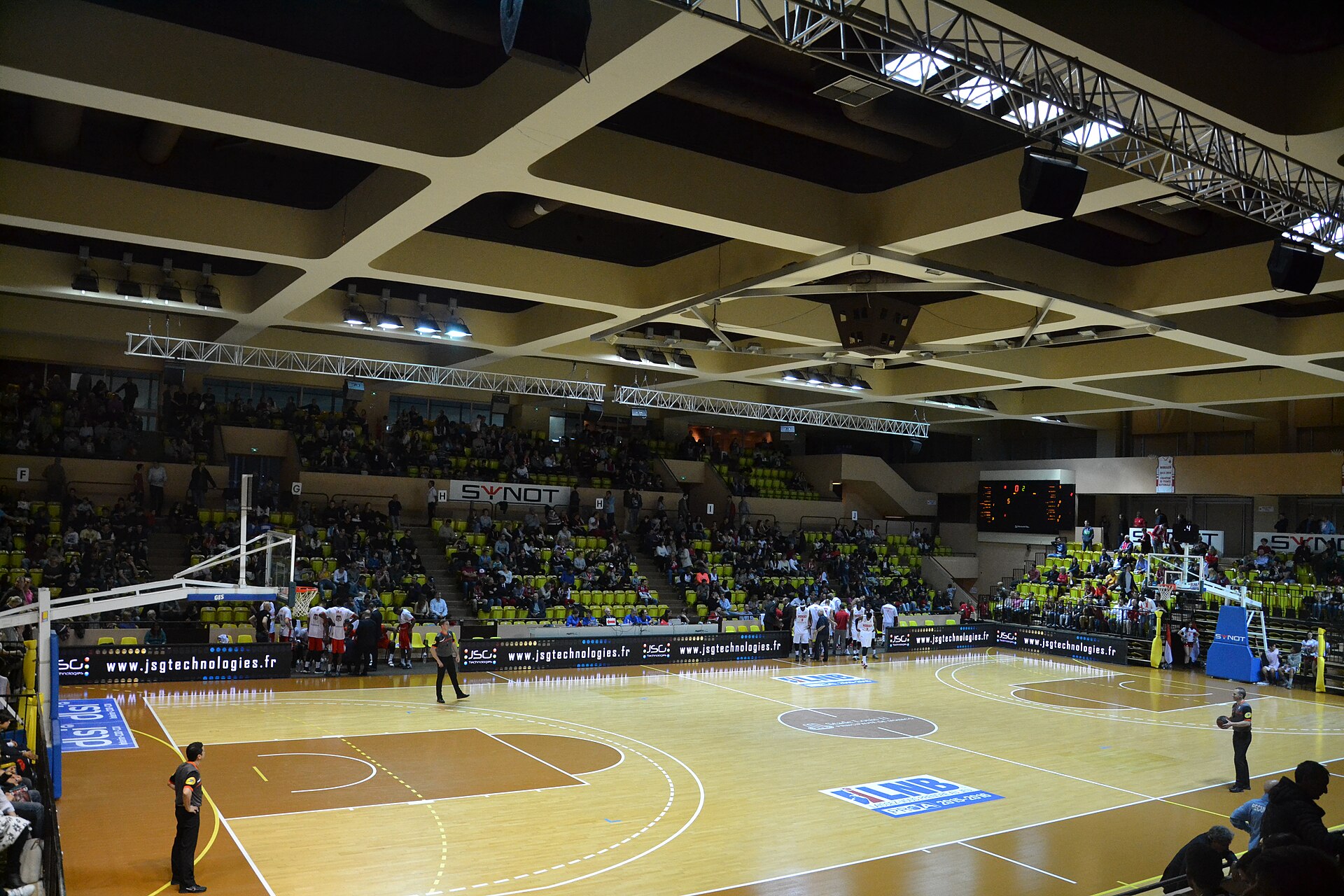
Basketball's most important boundary is not painted, and it is a different size for everyone
FIBA's cylinder principle gives each player a personal volume of court whose dimensions vary with their height and size. It is the one rule in the book measured in units of the body rather than in metres — and there are two versions of it, depending on who has the ball.
More on cycling
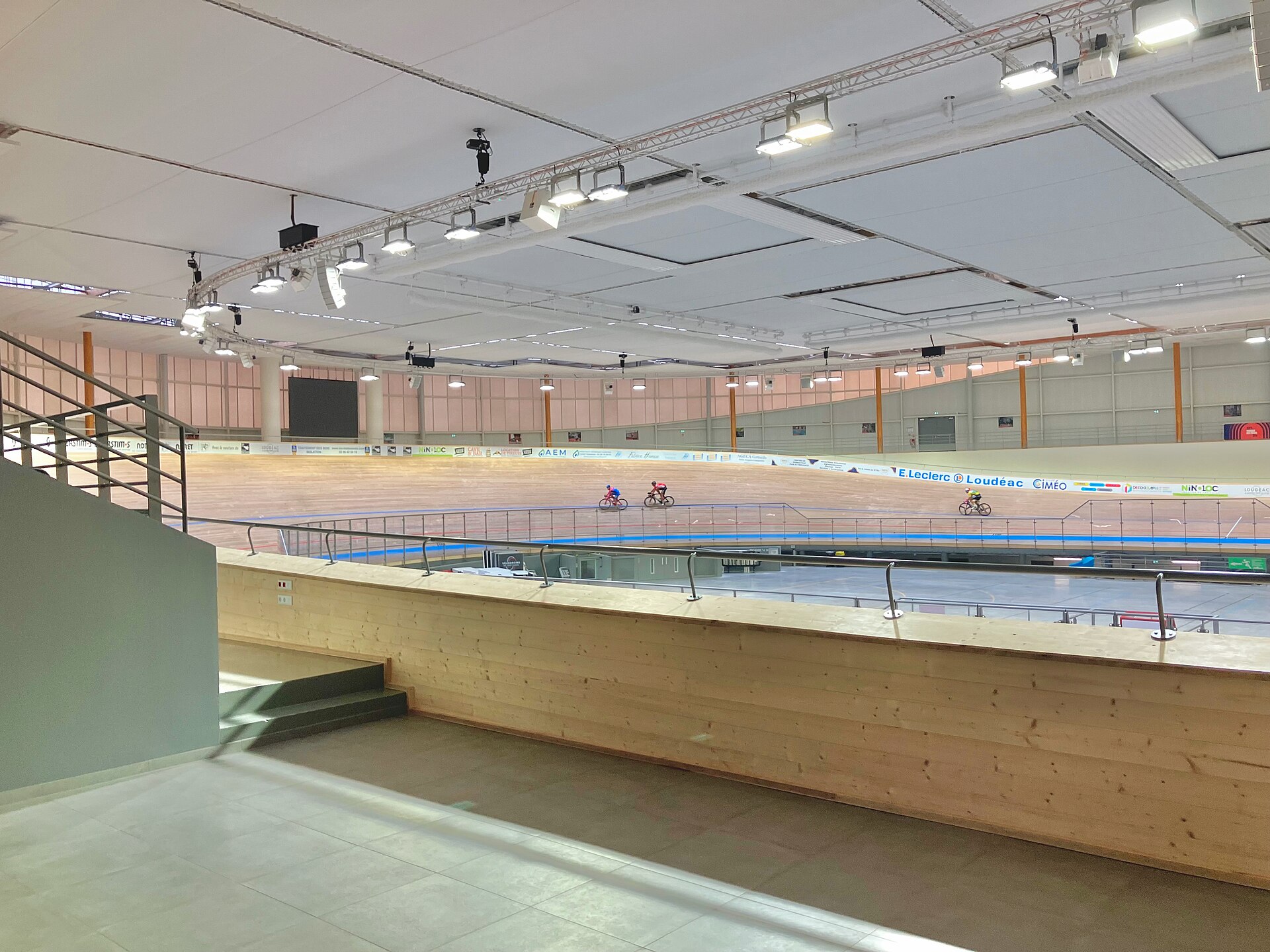
Every 250-metre velodrome is a different 250 metres
The UCI fixes a track's length, its width, the position of three painted lines and the requirement that any cross-section be straight. It does not fix the banking, does not require the four quadrants to match, and the resulting geometry is often withheld as commercially confidential.