
Velodrome
A steeply banked oval track for track cycling, with sloped bends that let riders hold high speeds through the turns.
Overview
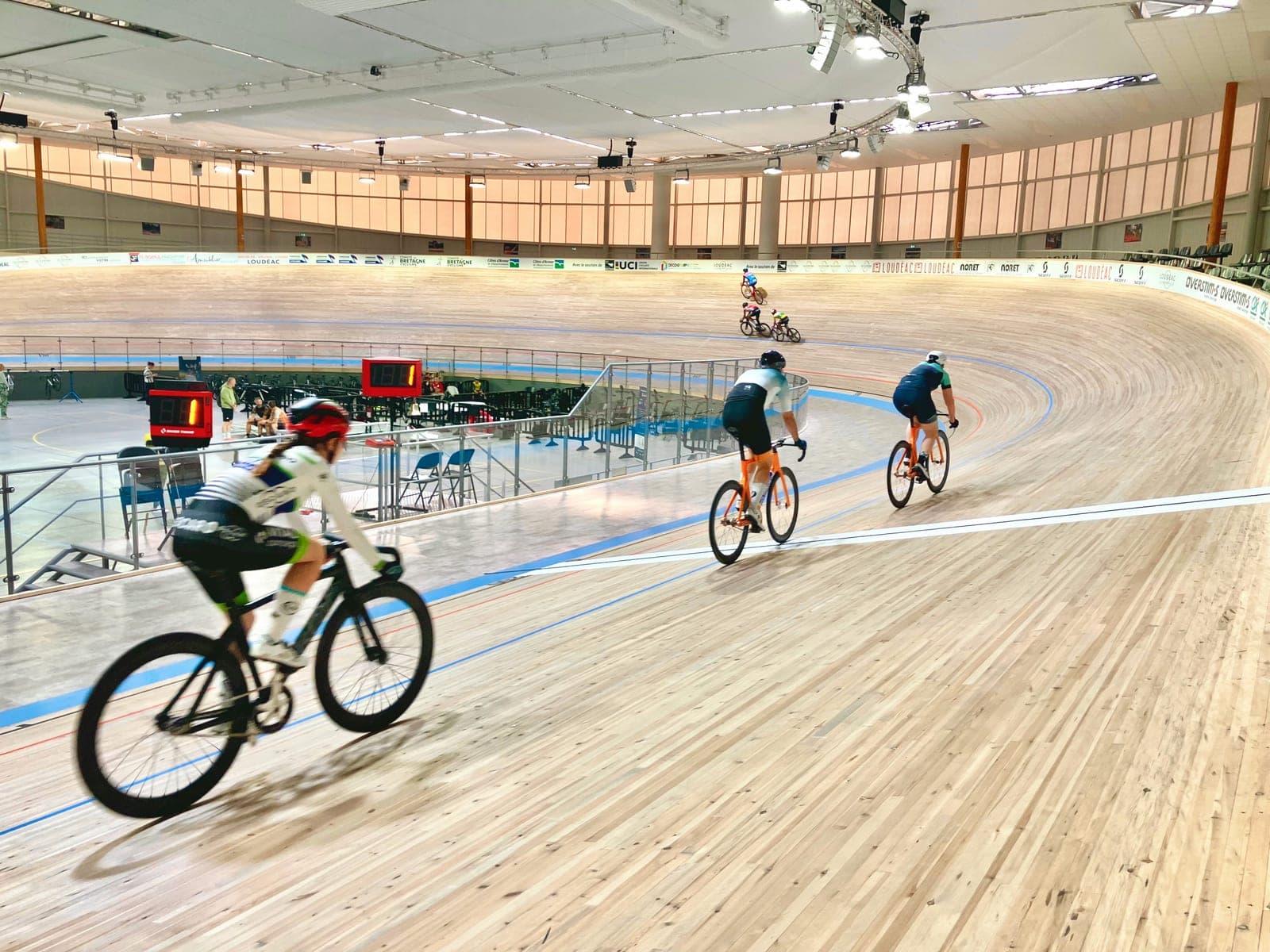
A velodrome is a purpose-built oval track for track cycling, with two straights joined by steeply banked bends. The banking lets riders carry high speed through the turns without slowing.
Indoor velodromes usually have a smooth timber surface, while outdoor tracks are often concrete. A track length of 250 metres is common for modern indoor venues, though lengths vary.
Good to know
- The steep banking on the bends counteracts the sideways forces of cornering at speed.
- Track bikes have a single fixed gear and no brakes.
- Coloured lines such as the sprinters' line and the stayers' line govern racing positions.
- Track lengths differ between venues, with 250 metres common for modern indoor tracks.
Where it’s used
Sports that use velodrome:


How it connects
The meaning-bearing relationships that place Velodrome in the wider knowledge graph — each one with the reason it exists.
Frequently learned together
Taught side by side in the same stage of a learning path.
- Cycling shoesBoth are taught in the “What you’ll need” stage of the Cycling learning path.
- Bike helmetBoth are taught in the “What you’ll need” stage of the Cycling learning path.
- Road bikeBoth are taught in the “What you’ll need” stage of the Cycling learning path.
- Mountain bikeBoth are taught in the “What you’ll need” stage of the Cycling learning path.
- Water bottleBoth are taught in the “What you’ll need” stage of the Cycling learning path.
Explore across the knowledge base
Follow the threads that connect Velodrome to the rest of SocialSportHub.
Equipment
- Cycling shoesStiff-soled shoes that clip onto pedals to transfer power efficiently while riding.
- Bike helmetA hard-shelled head covering worn while cycling, built to absorb a single significant impact and be replaced afterwards.
- Road bikeA lightweight bicycle built for speed and efficiency on paved surfaces.
- Mountain bikeA rugged bicycle built for rough, off-road terrain, with wide knobbly tyres, low gearing and suspension to absorb uneven ground.
- Water bottleA refillable bottle for carrying drinks and staying hydrated during sport.
Playing surfaces
Disciplines
- Track CyclingTrack cycling is racing on a velodrome, an oval banked track, using fixed-gear bikes with no brakes across sprint and endurance events.
- BMX RacingBMX racing is a short, intense sprint on a dirt track full of jumps and banked turns, with riders starting together from a gate.
- Parallel (Alpine)Parallel is an alpine snowboarding discipline in which two riders race side by side down gated courses, carving turns on stiffer alpine boards.
- Super-GSuper-G, or super giant slalom, is a speed discipline with gates set farther apart than giant slalom, blending high speed with sweeping turns.
Learning paths
Go deeper with Velodrome
Everywhere else on the platform that covers Velodrome — assembled from what actually references it, so nothing here is a dead end.
Learn it
Structured courses and paths on the platform that cover this directly.
How this page is maintained
- Content type
- Facility
- Provenance
- Tier A — evergreen educational
- Verified external sources
- 0
- Content updated
- 2026-09-12
Evergreen, first-party explanation — it makes no claim that needs an external source. How we handle sources and reviews.