
Tennis ball types and specifications
The four ITF ball types and what separates them — mass, size, rebound and deformation — plus the counterintuitive rule that fast balls are for slow courts.
Overview
The ITF specifies four ball types for adult play: Type 1 (fast), Type 2 (medium), Type 3 (slow) and a High Altitude ball. They share a mass range of 56.0–59.4 grams (1.975–2.095 ounces) and differ in size, rebound and deformation.
Every ball must have a uniform outer surface consisting of a fabric cover, except for the Stage 3 (Red) foam ball, and any seams must be stitchless. All four adult types may be white or yellow.
The inverse rule most people get backwards
Ball Type 1 (fast speed) is intended for play on SLOW pace court surfaces. Ball Type 3 (slow speed) is intended for play on FAST pace court surfaces. Type 2 (medium) is for medium-slow, medium and medium-fast surfaces.
The pairing is compensatory rather than additive. A fast ball on a slow court and a slow ball on a fast court both move the overall speed of play towards the middle, which is the point: the ball type exists to offset the surface, not to reinforce it.
What actually differs between the types
Size is the clearest difference. Types 1, 2 and High Altitude measure 6.54–6.86 cm (2.57–2.70 in); Type 3, the slow ball, is noticeably larger at 7.00–7.30 cm (2.76–2.87 in). A bigger ball meets more air resistance, which is how the slow ball is slowed.
Rebound differs too. Type 1 rebounds 138–151 cm (54–60 in); Types 2 and 3 rebound 135–147 cm (53–58 in); the High Altitude ball rebounds 122–135 cm (48–53 in). Forward deformation is 0.56–0.74 cm for all four; return deformation is 0.74–1.08 cm for Type 1 and 0.80–1.08 cm for the others.
Altitude
Thin air at altitude means less drag, so a standard ball flies faster and further. The Rules provide two answers. The High Altitude ball is pressurised and has a lower rebound range than any other type.
Alternatively, a pressureless Type 2 ball with an internal pressure no greater than 7 kPa (1 psi) may be used for high-altitude play above 1,219 m (4,000 feet) above sea level, provided it has been acclimatised for 60 days or more at the altitude of the specific tournament. Type 3 is also recommended for high-altitude play on any surface above that height.
Good to know
- All four adult ball types share a mass range of 56.0–59.4 g.
- Type 1 (fast) balls are for SLOW courts; Type 3 (slow) balls are for FAST courts.
- Type 3 is physically larger, which is how it is slowed.
- The High Altitude ball has the lowest rebound range of the four types.
- Acclimatised pressureless balls are an alternative above 1,219 m (4,000 ft).
Where it’s used
Sports that use tennis ball types and specifications:
Related equipment
Tennis racquet
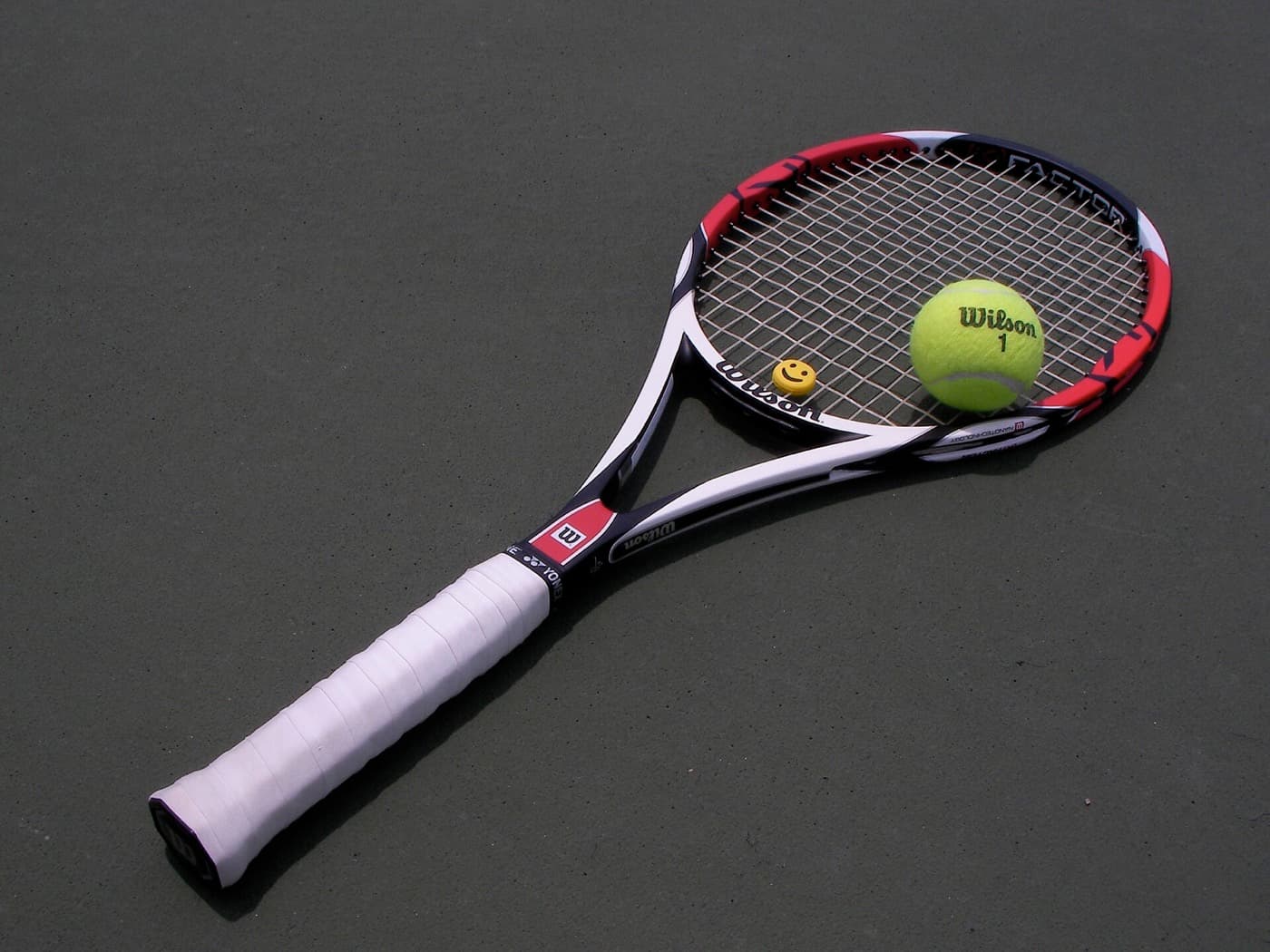
A strung frame with a handle, used to hit the ball in tennis. Head size, weight and balance vary to suit different playing styles.
Tennis ball
A hollow rubber ball covered in felt used in tennis and related racquet sports.
Sports bag
A roomy bag for carrying kit, footwear and gear to and from training, usually with a separate compartment for wet or muddy items.
Sources
The rules, dimensions and specifications on this page were read from these documents.
- ITF Rules of Tennis — International Tennis Federation, 2026, Appendix I — The ball (read 2026-09-12)
- ITF Approved Tennis Balls, Classified Surfaces & Recognised Courts — International Tennis Federation, 2026, Ball specifications and test methods (read 2026-09-12)
How it connects
The meaning-bearing relationships that place Tennis ball types and specifications in the wider knowledge graph — each one with the reason it exists.
Frequently learned together
Taught side by side in the same stage of a learning path.
- Tennis racquetBoth are taught in the “What you’ll need” stage of the Tennis learning path.
- Tennis ballBoth are taught in the “What you’ll need” stage of the Tennis learning path.
- Sports bagBoth are taught in the “What you’ll need” stage of the Tennis learning path.
- The tennis net, posts and singles sticksBoth are taught in the “What you’ll need” stage of the Tennis learning path.
- What the Rules regulate about a tennis racketBoth are taught in the “What you’ll need” stage of the Tennis learning path.
Part of
The wider grouping this belongs to.
Used with
Turns up alongside this across the same sports.
Explore across the knowledge base
Follow the threads that connect Tennis ball types and specifications to the rest of SocialSportHub.
Learning paths
Techniques
- Flat, slice and kick servesThe three serves and what actually separates them — the contact point on the ball and the toss that makes it possible — plus what each one does to the ball after it bounces.
- Playing the walls in padelThe skill that separates padel from every other racket sport — reading a rebound off glass, positioning behind the bounce rather than at it, and using your own back wall to attack.
- The pull and the hookThe two cross-batted strokes that punish short bowling — how the pull and the hook differ, the height of the ball that separates them, and the risk each one carries.
- Ice hockey shootingThe four shots hockey is scored with — wrist shot, snap shot, slap shot and backhand — how each trades power against release time, and why the stick is bent on purpose.
Go deeper with Tennis ball types and specifications
Everywhere else on the platform that covers Tennis ball types and specifications — assembled from what actually references it, so nothing here is a dead end.
Learn it
Structured courses and paths on the platform that cover this directly.
Take it away
Open data and the whole-platform view of this subject.
How this page is maintained
- Content type
- Equipment
- Provenance
- Tier A — evergreen educational
- Verified external sources
- 0
- Content updated
- 2026-09-01
Evergreen, first-party explanation — it makes no claim that needs an external source. How we handle sources and reviews.