
Five sports paint a line around the court. Only four of them agree it is part of it
A ball on the line is in, unless you are playing basketball, where the boundary line is not court at all. The disagreement is written into the rulebooks, and it decides which edge of the paint the tape measure is held against.
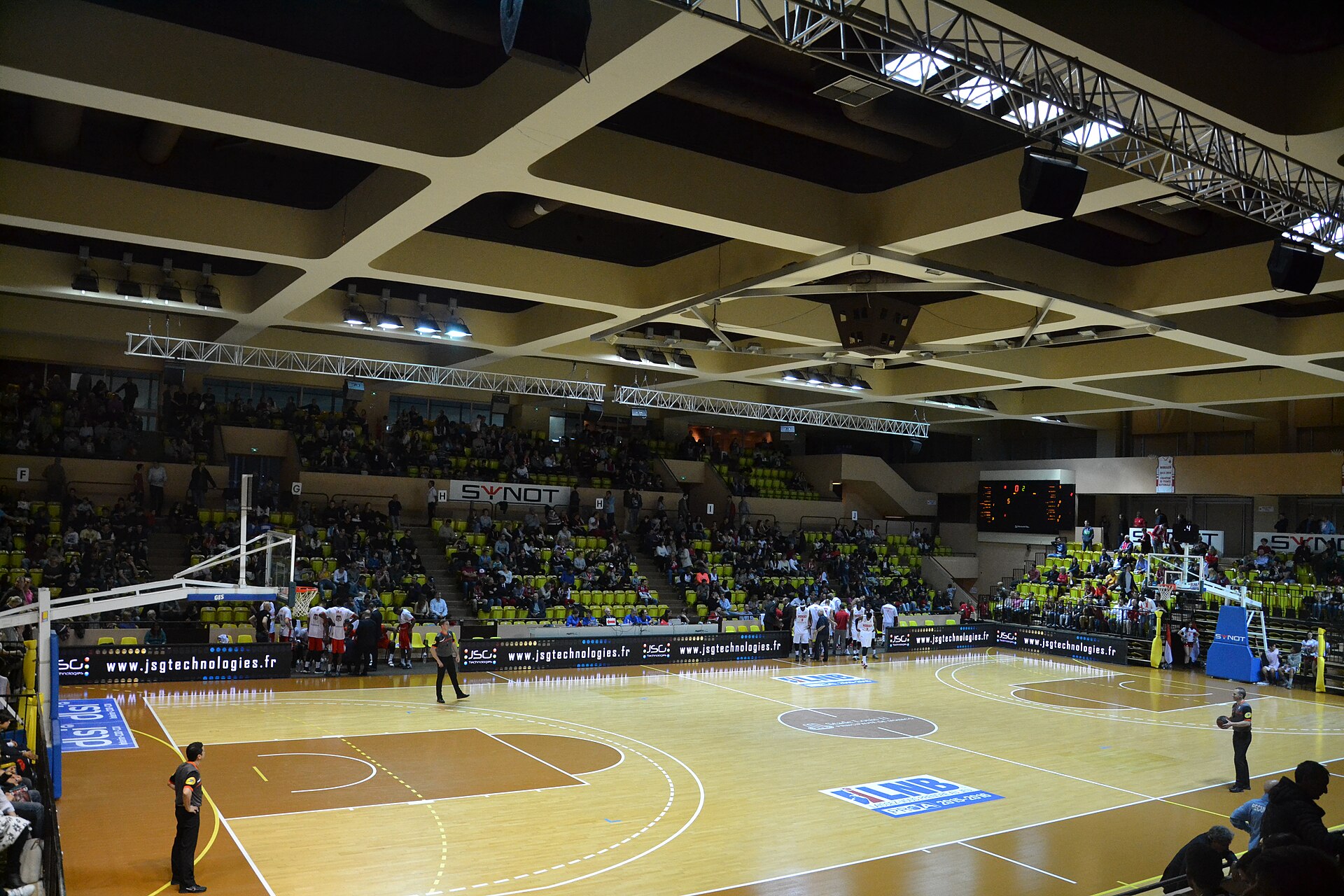
A line has to be somewhere. Paint is a physical thing with a width, so the moment a rulebook says a court is twenty-eight metres long, it has taken a position on a question it may not have meant to raise: twenty-eight metres measured to which side of the paint?
Four of the five federations here answer the same way, and one does not. The disagreement is not a technicality. It decides whether a player standing on the boundary is in the game.
The rule that says it out loud
Football’s Law 1 puts the whole thing in one sentence:
Measurements are from the outside of the lines as the lines are part of the area they enclose.
The clause after “as” is the reasoning, and it runs in the direction you might not expect. The measuring convention is not the rule; it is a consequence of the rule. Because the line belongs to the field, the field ends where the paint ends, so the tape goes to the outer edge. Law 1 states the principle separately too, and more broadly: “These lines belong to the areas of which they are boundaries.” That covers the penalty area and the goal area as well as the touchline, which is why a foul committed on the penalty-area line is a foul inside the penalty area.
Reference Both quoted clauses, and the twelve-centimetre maximum line width, from Law 1, The Field of Play.
Tennis reaches the same place in fewer words — “All court measurements shall be made to the outside of the lines” — and badminton states the principle without the measurement: “All the lines shall form part of the area which they define.”
Volleyball says it a third way, geometrically rather than legally: “Both side lines and end lines are drawn inside the dimensions of the playing court.” Same answer. The paint is inside the eighteen by nine.
Reference The measurement convention, and the line widths of 2.5–5 cm generally, 5 cm for the centre service line and centre mark, and up to 10 cm for the baselines, from Rule 1, The Court.
Reference The 40 mm line width and the clause that all lines form part of the area which they define, from Law 1.
Reference The 5 cm line width, the clause placing the boundary lines inside the court’s dimensions, and the centre line belonging to both courts equally, from Rule 1.3.
The rule that says the opposite
Basketball’s Article 2.1 measures the court “from the inner edge of the boundary line”. Article 2.5.1 explains why, in six words that reverse everything above:
These lines are not part of the court.
Reference The court measured from the inner edge of the boundary line, from Article 2.1; the 5 cm line width and the clauses on which lines belong to which areas, from Article 2.5 and its subsections.
So a basketball court is twenty-eight by fifteen metres of playing surface with a five-centimetre band of paint drawn around it. The band is not court. A player whose foot touches it is out of bounds, which is exactly the opposite of the tennis player whose ball catches the sideline and is in.
How much of a court is boundary paint
Area of the boundary line as a percentage of the court it encloses
The numbers behind this chart
| Row | Area of the boundary line as a percentage of the court it encloses | Detail |
|---|---|---|
| Badminton | 1.90 | playable |
| Basketball | 1.03 | not court |
| Football | 0.58 | playable |
| Tennis | 0.67 to 2.65 | playable |
| Volleyball | 1.66 | playable |
Source IFAB Laws of the Game 2026/27 Law 1; ITF Rules of Tennis 2026 Rule 1; FIBA Official Basketball Rules 2026 Articles 2.1 and 2.5; FIVB Official Volleyball Rules 2025–2028 Rule 1.3; BWF Laws of Badminton Law 1. SocialSportHub analysis.
Method Band area is the painted ring around the court, computed from each rule's stated line width and court dimensions: for a line inside the stated dimensions, length x width minus (length-2w)(width-2w); for a line outside them, (length+2w)(width+2w) minus length x width. Expressed as a percentage of the nominal court area. Values are computed at full precision and rounded for display only.
In four of these five sports that painted band is playable. In basketball it is not court at all, so the same measurement means opposite things: badminton’s 1.90 per cent is court a shuttle can land in, and basketball’s 1.03 per cent is paint a foot may not touch. The table under the chart marks which is which.
The percentages are small and the point is not their size. It is that badminton’s court, the smallest here, gives up nearly two per cent of itself to paint, while football’s, the largest, gives up barely half a per cent to lines more than twice as wide. A boundary is a fixed cost, and a small court pays it proportionally harder.
The absolute figures make the same point from the other end. Football’s boundary band covers about forty-one square metres — half the area of an entire badminton court, spent on the outline of something else.
Tennis permits four different courts
Tennis is the only sport here whose rule does not fix one width. The centre service line and the centre mark must be five centimetres. The other lines may be anywhere between two and a half and five. The baselines may be up to ten.
That is a genuine range, not a rounding: a tennis court painted at the narrow end of every permission and one painted at the wide end differ by about five square metres of playable surface, and both are legal. Because the lines are in, the difference is not cosmetic. It is court.
Line widths as each rule states them
Millimetres
The numbers behind this chart
| Row | Millimetres | Detail |
|---|---|---|
| Football | 120 | maximum only |
| Tennis | 25 to 100 | range |
| Basketball | 50 | exact |
| Volleyball | 50 | exact |
| Badminton | 40 | exact |
Source IFAB Law 1; ITF Rule 1; FIBA Article 2.5; FIVB Rule 1.3; BWF Law 1. SocialSportHub analysis.
Method Widths as stated by each rule, converted to millimetres where the rule uses centimetres or inches. Football's figure is a maximum with no stated minimum and is not the same kind of number as the others; the note column marks it.
Football’s number belongs in a different column from the others, and the chart says so rather than quietly plotting a ceiling as though it were a measurement. Law 1 sets twelve centimetres as a limit and gives no floor at all, so a groundsman may paint a line as thin as they like. Every other sport here states a figure.
One line in football does have its width fixed, and not by Law 1’s own reasoning: “The goal lines must be of the same width as the goalposts and the crossbar.” The posts stand on the line, and the ball must wholly cross it, so the line’s thickness and the post’s thickness have to be the same number or the geometry of a goal stops being well defined.
Basketball disagrees with itself
The interesting part of the basketball rule is not that it differs from everyone else. It is that it differs from itself, three times, in the same article.
The boundary lines are not part of the court. The three-point line is not part of the three-point goal area — which is why a shot taken with a foot on it is worth two. But the restricted-area lines are part of the restricted area, and the no-charge semi-circle lines are part of the no-charge semi-circle.
Read as a single principle it is incoherent. Read as four separate decisions about four separate questions it is not, and the pattern is visible once you ask what each line is for. A line that marks where the game stops — the boundary, the arc that ends the three-point area — excludes itself, so the harder call goes against the player. A line that marks a protected zone includes itself, so the protection is as large as it looks.
The limits of the comparison
The figures above are what the rules permit, not what any particular venue has painted. A line laid five millimetres wide of specification is a groundskeeping matter that no rulebook here addresses, and none of these percentages should be read as a measurement of a real court.
Nor should the widths be compared as though a narrower line meant a more precise sport. Badminton’s forty millimetres and football’s hundred and twenty bound spaces two orders of magnitude apart in area. The comparison that survives is the one about conventions, not the one about millimetres.
Read the evergreen pages
This piece is an argument. These are the reference pages on SocialSportHub that document the same subjects.
References
- [1]International Football Association BoardGoverning body. Laws of the Game — Law 1, The Field of Play. Accessed 7 September 2026.
- [2]International Tennis FederationGoverning body. Rules of Tennis 2026 — Rule 1, The Court. Accessed 7 September 2026.
- [3]Badminton World FederationGoverning body. Laws of Badminton — Law 1, Court and court equipment. Accessed 7 September 2026.
- [4]Fédération Internationale de VolleyballGoverning body. Official Volleyball Rules 2025–2028 — Rule 1.3, Lines on the court. Accessed 7 September 2026.
- [5]Fédération Internationale de BasketballGoverning body. Official Basketball Rules 2026 — Article 2, Court. Accessed 7 September 2026.
Continue reading
Editor’s pick
Some sports fix the size of the field. Football is not one of them
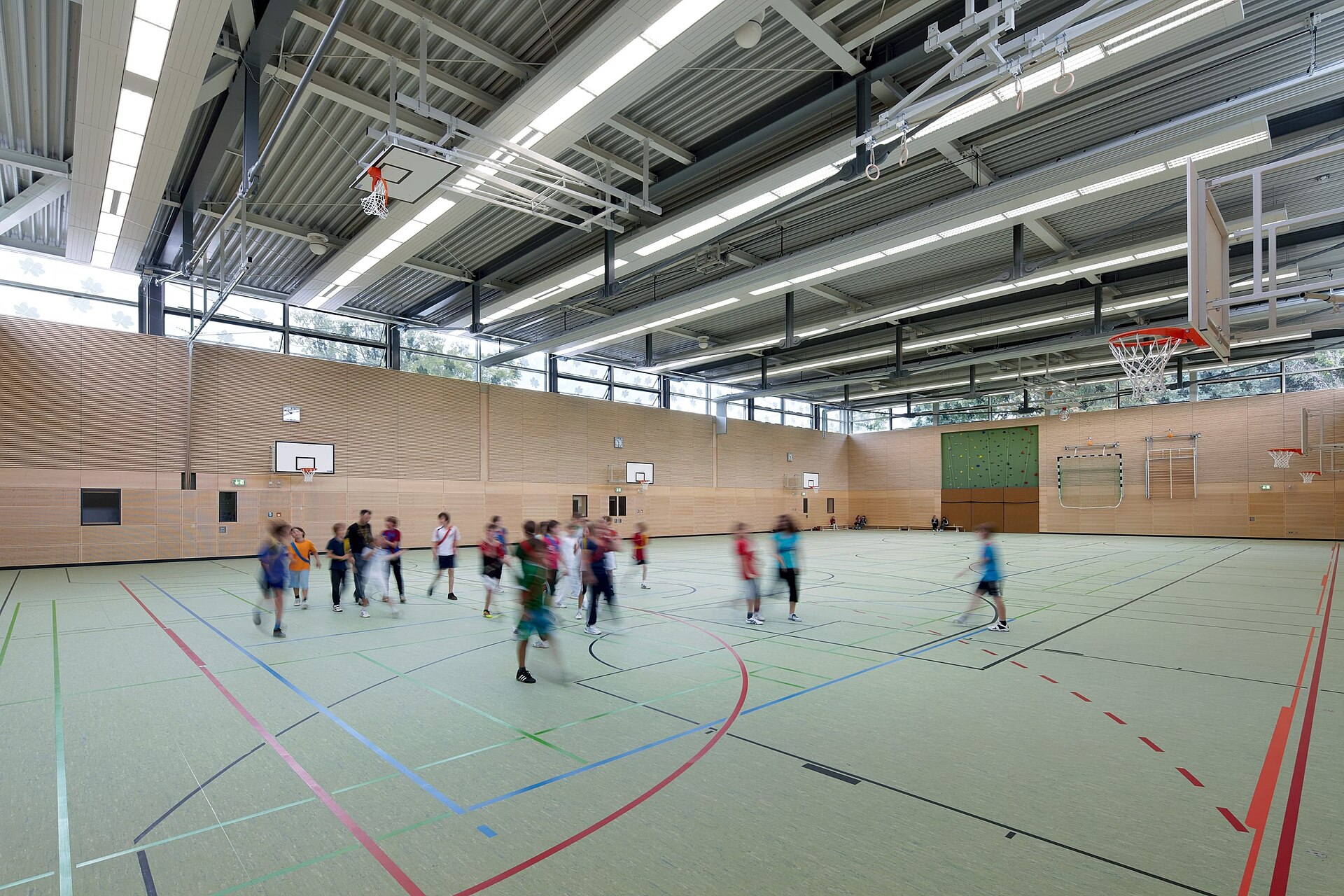
Read four rulebooks side by side and a division appears that nobody argues about: three of the four give the playing area a single number, and the fourth gives it a range wide enough to swallow two-and-a-half of its own smallest legal pitch.
Editor’s pick
Tennis spent two years working out what its own courts were doing
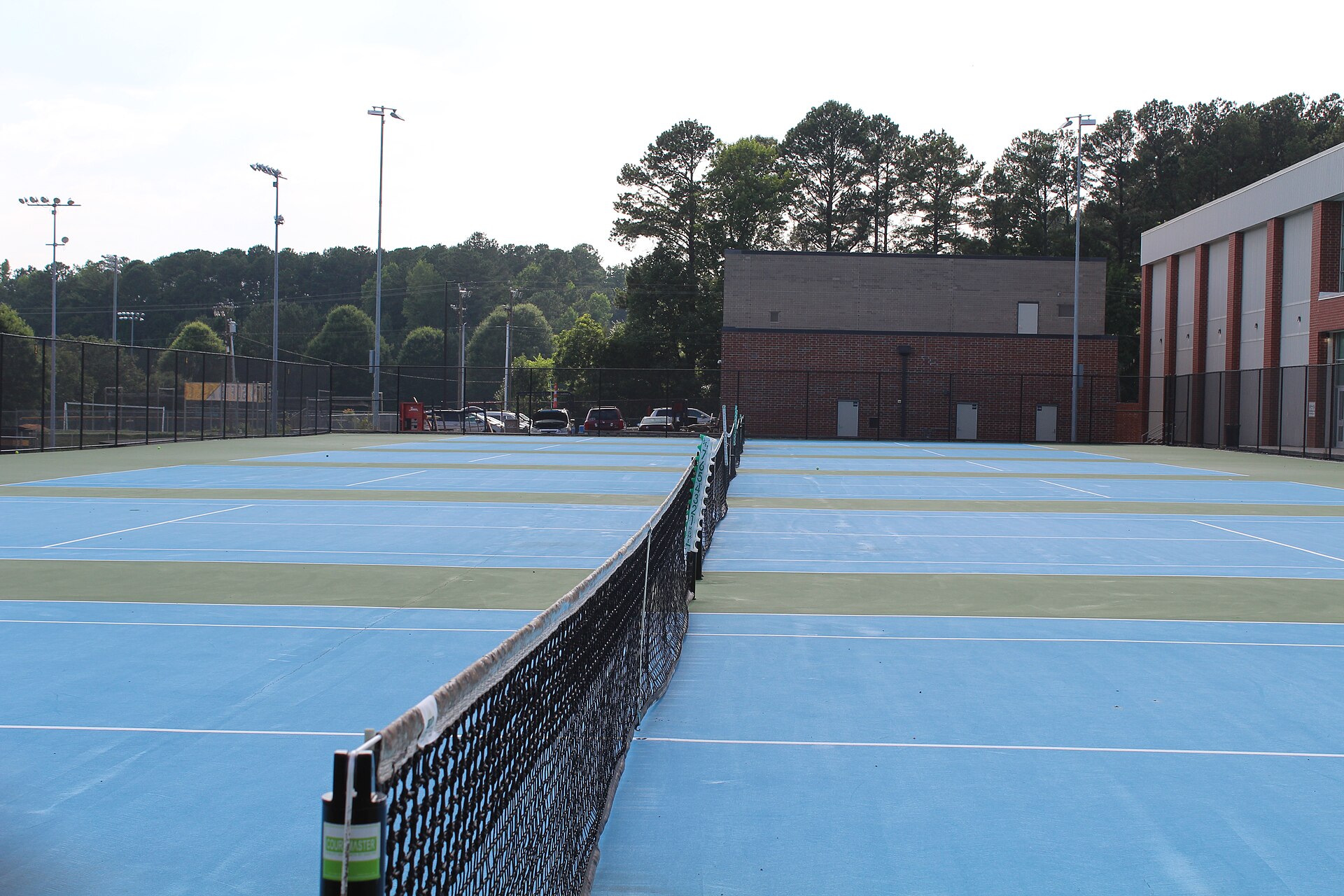
Until 2000 the sport had no official way to say how fast a surface played. What it built afterwards was replaced within eight years, because the first measure did not match what players said they felt — and the replacement is still only valid for the day the test was run.
Editor’s pick
Basketball's most important boundary is not painted, and it is a different size for everyone
FIBA's cylinder principle gives each player a personal volume of court whose dimensions vary with their height and size. It is the one rule in the book measured in units of the body rather than in metres — and there are two versions of it, depending on who has the ball.