
Some sports fix the size of the field. Football is not one of them
Read four rulebooks side by side and a division appears that nobody argues about: three of the four give the playing area a single number, and the fourth gives it a range wide enough to swallow two-and-a-half of its own smallest legal pitch.
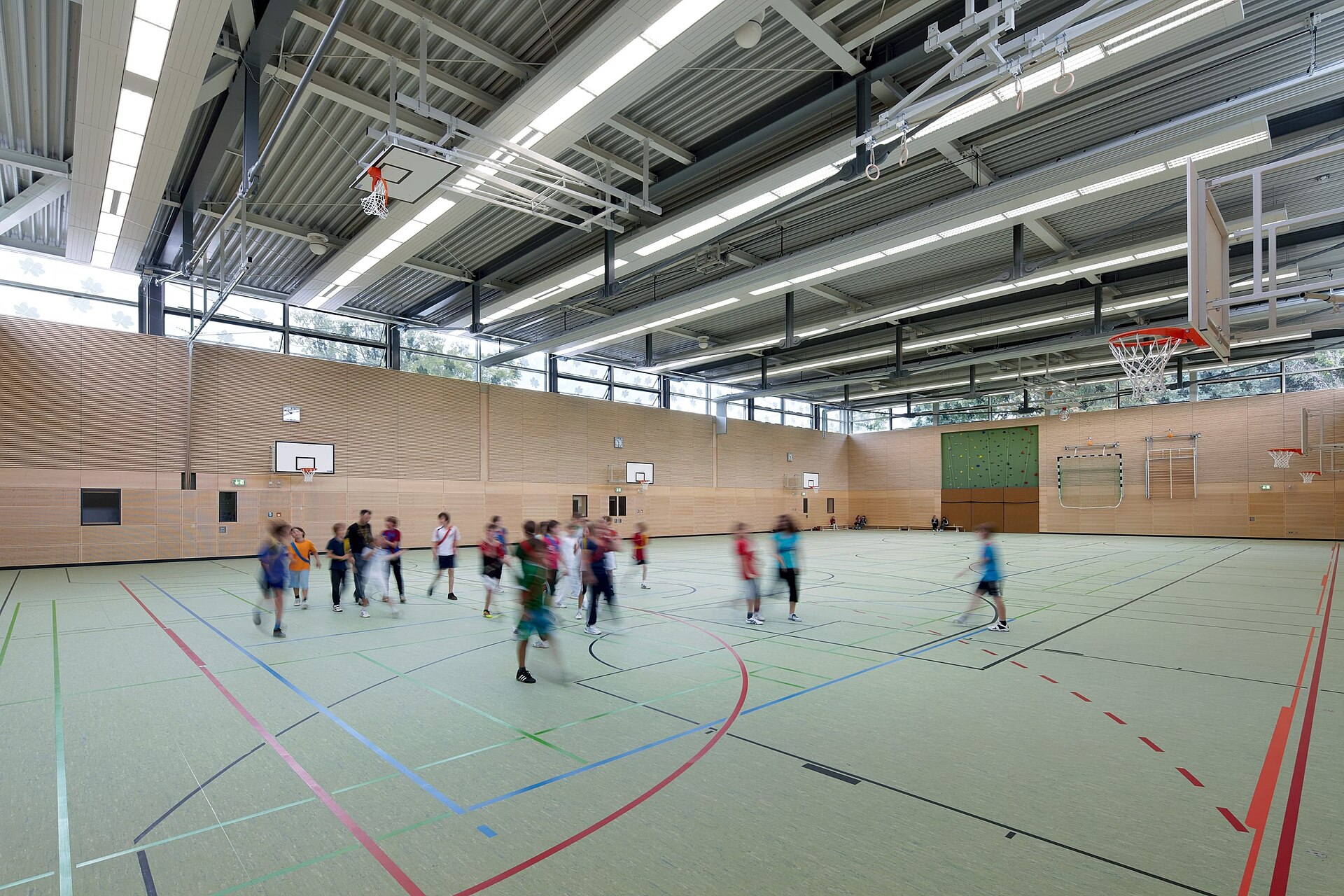
The question is boring enough that it is rarely asked: how big is the field?
Four international federations answer it in the opening pages of their rulebooks, and the answers are not the same kind of answer. FIBA states that the basketball court is 28 m by 15 m. FIVB states that the volleyball court is 18 m by 9 m. The ITF states that the tennis court is 23.77 m long and, for doubles, 10.97 m wide. Each of those is one number and one number only.
Reference The court as 28 m by 15 m, measured from the inner edge of the boundary line, from Article 2.1.
Reference The playing court as a rectangle measuring 18 by 9 m, from Rule 1.1.
Reference The court as 23.77 m long and 10.97 m wide for doubles, from Rule 1.
The IFAB does something else. Law 1 gives football’s touchline a minimum of 90 m and a maximum of 120 m, and its goal line a minimum of 45 m and a maximum of 90 m — adding only that the touchline must be longer than the goal line, and that competitions may fix a size within those bounds.
Reference The permitted range for the touchline and goal line, and the note that competitions may determine the length within it, from Law 1.3.
Playing area permitted by each rulebook
Square metres of playing area — bars with end caps show a permitted range
The numbers behind this chart
| Row | Square metres of playing area — bars with end caps show a permitted range | Detail |
|---|---|---|
| Football | 4,050 to 10,800 | The IFAB, Law 1.3–1.4 — 90–120 × 45–90 m |
| Basketball | 420 | FIBA, Article 2.1 — 28 × 15 m |
| Volleyball | 162 | FIVB, Rule 1.1 — 18 × 9 m |
| Tennis (doubles) | 261 | ITF, Rule 1 — 23.77 × 10.97 m |
Source Compiled from the four rulebooks named in the references, read 6 September 2026. See the dataset note below.
Method Area is the product of the length and width the rule states. Where the rule gives a range, both ends are plotted; no midpoint is taken. Free zones, run-off and obstruction-free lanes outside the lines are excluded.
Football’s range is not a rounding tolerance. Its largest legal pitch has 2.67 times the area of its smallest. The gap between the two — 6,750 m² — is more than sixteen basketball courts.
Two different theories of what a field is
The division is not about outdoor versus indoor, or about how old the sport is. It is about what the rule thinks it is specifying.
A fixed dimension treats the playing area as equipment. The court is part of the apparatus, in the same category as the net height and the ball’s circumference, and a match played on the wrong one is not quite the same sport. FIVB makes this explicit by regulating things no outdoor rule could: a free zone at least 3 m wide on every side, and at least 7 m of unobstructed height above the playing surface.
Reference The 3 m minimum free zone on all sides and the 7 m minimum free playing space above the surface, from Rule 1.1.
That is a rule about a room. Volleyball is the only one of the four to specify the third dimension at all, and it does so because the sport’s decisive actions happen above the net, where a low ceiling would change the game.
A permitted range treats the playing area as terrain. The pitch is where the sport happens rather than a component of it, and the laws accommodate the ground that exists. This shows in what the IFAB does next: rather than pick a number, it defers, letting competitions fix a size inside the range. The governing body of the laws declines to govern the field.
Space per player, and why the comparison misleads
Divide each area by the number of players on it and a second table appears. FIBA puts five players from each team on court; FIVB’s rotational positions number six per side; Law 3 gives football eleven each; doubles tennis is two.
Reference That five team members from each team are on the court during playing time, from Article 4.2.2.
Reference The six numbered playing positions per team — three front-row and three back-row — from Rule 7.4.1.
Reference The maximum of eleven players per team, one of whom must be the goalkeeper, from Law 3.1.
Playing area divided by the players on it
Square metres per player, both teams counted
The numbers behind this chart
| Row | Square metres per player, both teams counted | Detail |
|---|---|---|
| Football — 11 a side | 184 to 491 | The IFAB, Law 3.1 |
| Basketball — 5 a side | 42 | FIBA, Article 4.2.2 |
| Volleyball — 6 a side | 14 | FIVB, Rule 7.4.1 |
| Tennis (doubles) — 2 a side | 65 | ITF, Rule 1 (doubles) |
Source Compiled from the four rulebooks named in the references, read 6 September 2026.
Method Playing area divided by twice the players-per-team figure the same rulebook states. Football is plotted as a range because its area is a range. This is a ratio, not a description of how any sport uses space.
The spread is enormous — a volleyball player has roughly a fortieth of the ground a footballer on a maximum pitch does — and the number should be read with care, which is why the dataset records the caveat rather than leaving it to the chart.
Space per player is a ratio, not a description. It assumes every player may use every part of the area, and in two of these four sports that is false. A volleyball player may not cross under the net; a tennis player in doubles has half a court. Football and basketball do allow the whole field to every player, which is what makes their comparison meaningful: 42 m² per basketball player against 184 m² at football’s tightest legal pitch, on rules that let anyone go anywhere.
What the dataset does not show
Four rulebooks is not a survey. They were chosen because the Journal already cites all four and could read each one in its current edition; sports whose rulebook could not be retrieved during compilation are absent rather than estimated, and their absence says nothing about them.
Nor do these figures describe any stadium or hall. They are what a rule permits. No senior football is played on 90 × 45 m, and competition regulations narrow the range considerably — the chart’s football bar is the width of a legal possibility, not of observed practice. The whole point of the comparison survives that caveat, because the question was never how big pitches are. It was whether the rule has an opinion.
The dataset
The comparison above is compiled from the four documents named in the references and nothing else. Each row records which rule its numbers came from, and the compiled table declares its own limitations — that these are permitted limits rather than measurements, that competitions may narrow them, and that area excludes free zones and run-off except where a rule specifies them.
Two of the four sports also carry a note the chart cannot show. Basketball’s 420 m² sits inside a further obstruction-free lane at least 2 m wide, so the floor a hall needs is 32 by 19 m — 608 m², nearly half as much again as the court. Volleyball’s 162 m² sits inside a 3 m free zone, needing 24 by 15 m, or 360 m²: more than twice the court itself.
Reference The requirement for a further obstruction-free boundary lane of at least 2 m in width around the court, from Article 2.2.
Counting only what is inside the lines therefore understates the indoor sports and not the outdoor one, which is the sort of thing a chart hides and a method note has to say out loud. It does not change the shape of the finding. It does mean the true gap between football and the rest is smaller than the bars suggest — and still larger than an order of magnitude.
Read the evergreen pages
This piece is an argument. These are the reference pages on SocialSportHub that document the same subjects.
References
- [1]FIBAGoverning body. Official Basketball Rules 2026 — Article 2, Court; Article 4, Teams. Accessed 6 September 2026.
- [2]FIVBGoverning body. Official Volleyball Rules 2025–2028 — Rule 1, Playing Area; Rule 7.4, Positions. Accessed 6 September 2026.
- [3]International Tennis FederationGoverning body. Rules of Tennis 2026 — Rule 1, The Court. Accessed 6 September 2026.
- [4]The IFABGoverning body. Laws of the Game 2026/27 — Law 1, The Field of Play; Law 3, The Players. Accessed 6 September 2026.
Continue reading

Editor’s pick
Two pitches, both legal, one two-and-a-half times the other
Law 1 gives the football pitch a range and every marking on it a single number. Draw the legal extremes at the same scale and the consequence is unmistakable: the penalty areas cover a third of the smallest permitted field and an eighth of the largest.
Editor’s pick
Why every racquet sport drew a different court
A padel ball and a tennis ball are almost the same object. The ground they are hit on is not — because two of these sports decided that a boundary should return the ball instead of ending the point.
More on football
Football spent a century leaving time to the referee. The 2026/27 Laws put numbers on it
Ten seconds to leave the field when substituted. A minute off after treatment. A five-second countdown, visibly signalled, on throw-ins and goal kicks. The changes are small individually and they add up to a different way of regulating delay.