
Sport's most-used test measures something the field still argues about
Dip before you jump and you jump higher. The gap between a countermovement jump and a squat jump is treated as a readout of elastic energy — but a review of the mechanisms concludes elastic energy is a small contributor, and that a bigger gap may be the worse sign.
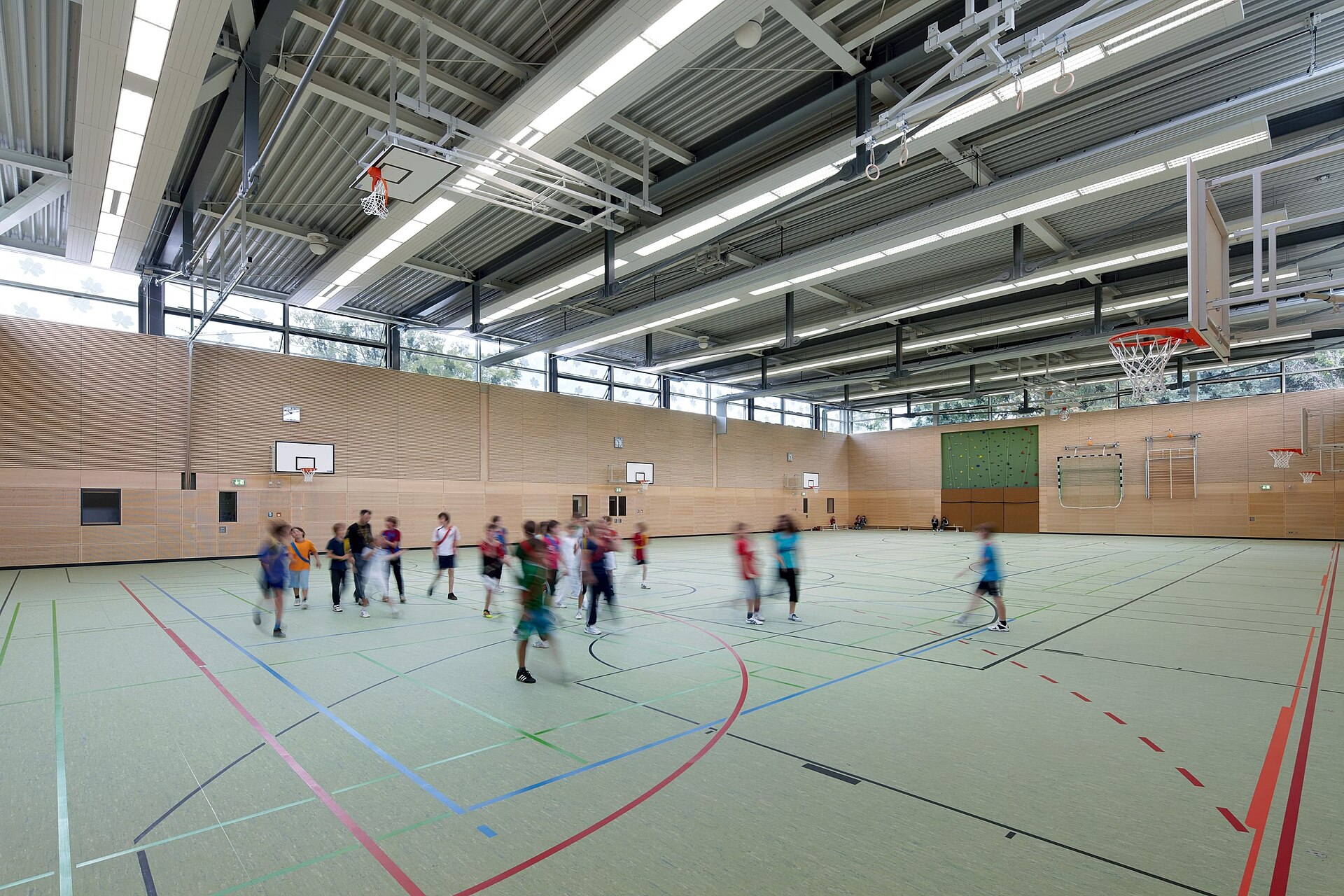
Two jumps, one difference. In a countermovement jump the athlete dips before driving upward. In a squat jump they start from a held squat and go straight up. Countermovement jump performance is almost always better, and the gap between the two is widely used as a measure of how well an athlete exploits the stretch-shortening cycle.
A 2017 review set out to establish what actually produces the gap, and opened with an observation about the state of the field: the mechanisms responsible for the performance-enhancing effect of the stretch-shortening cycle are frequently undefined.
Reference That countermovement jump performance is almost always better than squat jump performance, that the difference is thought to reflect effective utilisation of the stretch-shortening cycle, and that the responsible mechanisms are frequently undefined, from the review’s abstract.
Frequently undefined is a careful phrase. It does not mean unknown. It means that the term is used to explain a result without the explanation being specified — which is a particular kind of scientific problem, because it looks like understanding.
What the review concludes
The difference in performance, the authors conclude, may primarily be related to the greater uptake of muscle slack and the build-up of stimulation during the countermovement. Elastic energy may also have a small contribution to an enhanced countermovement jump performance.
Reference The conclusion that the difference may primarily relate to greater uptake of muscle slack and build-up of stimulation during the countermovement, with elastic energy contributing a small amount, from the review’s abstract.
That inverts the usual account. “Elastic energy”, the mechanism the difference is most often said to measure, is placed third and described as small. The two mechanisms placed first are less familiar and less intuitive.
Muscle slack is the idea that a muscle-tendon unit is not taut at the moment force production begins, so the first part of any contraction is spent taking up that slack rather than moving the body. A countermovement pre-loads the system: by the time the athlete drives upward, the slack has already been taken up and the force can go into the movement.
Build-up of stimulation is the observation that a muscle does not reach full activation instantly. A countermovement gives the nervous system time to raise activation before the propulsive phase begins, so the upward drive starts from a more activated muscle than a standing start allows.
Both are about readiness rather than storage. Neither requires anything to be stored and returned; both describe a system that is simply further along when the useful work starts.
The conclusion that reverses the practical advice
If elastic energy is small and readiness is large, then a large gap between the two jumps stops being straightforwardly good news. The review says so directly, and this is the part with immediate consequences for how the test is read.
A larger difference between the jumps is not necessarily a better indicator of high-intensity sports performance. It may reflect the utilisation of elastic energy in a small-amplitude countermovement jump, resulting from a well-developed capability to co-activate muscles and quickly build up stimulation. But it may equally reflect a poor capability to reduce muscle slack and build up stimulation in the squat jump.
Reference That a larger difference is not necessarily a better indicator of high-intensity sports performance, and that it may reflect either a well-developed capability in the countermovement jump or a poor capability in the squat jump, from the review’s abstract.
The measure is a difference between two things, and a difference can widen from either end. Nothing in the arithmetic distinguishes an athlete who has become exceptional at exploiting a countermovement from one who is unusually poor without one — and the second is the athlete who would be in trouble the moment a sport asked them to produce force from a standing start.
The authors follow it to the practical conclusion. Because the capability to reduce muscle slack and quickly build up stimulation in the squat jump may be especially important to high-intensity sports performance, training protocols might concentrate on attaining a smaller difference between the jumps.
Reference The practical implication that training might concentrate on attaining a smaller difference between the jumps, because the capability to reduce muscle slack and build stimulation in the squat jump may be especially important, from the review’s abstract.
That is the opposite of how the test is usually read, and it follows from taking the mechanisms seriously rather than from any new data.
How much of this is settled
It matters to be clear about the epistemic status of everything above, and the review’s own hedging is the guide.
This is a review of mechanisms, not an experiment. It weighs the existing evidence for competing explanations and reaches a conclusion about which are likely to dominate; it does not measure muscle slack in an athlete and report a number. Its language is correspondingly careful — the difference may primarily relate to slack uptake and stimulation; elastic energy may have a small contribution.
So three things can be said with different confidence.
Firm. The countermovement jump almost always outperforms the squat jump. That is a robust, repeatedly observed result and nothing here disputes it.
Well-argued. That the advantage owes more to the muscle being pre-loaded and pre-activated than to energy being stored and returned. This is the review’s conclusion from the available mechanistic evidence, and it is a considered position rather than a settled fact.
Open. Exactly how the contributions divide, in which athletes, at which jump amplitudes. The review’s framing — that the mechanisms are frequently undefined — is a description of an unresolved literature, and it does not resolve it.
The reason to be careful about the boundaries is that the test is not a laboratory curiosity. The countermovement and squat jump are, as the review notes at the outset, two movements widely used to monitor athletic performance. Numbers derived from them describe real athletes to real coaches, and a number whose meaning is contested is more dangerous than one whose meaning is unknown, because the contest is not visible in the output.
Dip before you jump and you jump higher. That much has been measured many times. Why is a harder question, and the honest answer is that the field has a leading explanation, a reasonable amount of support for it, and a habit of naming a mechanism it has not specified.
Read the evergreen pages
This piece is an argument. These are the reference pages on SocialSportHub that document the same subjects.
References
- [1]PubMed, US National Library of MedicinePeer-reviewed. The Difference Between Countermovement and Squat Jump Performances: A Review of Underlying Mechanisms With Practical Applications — Van Hooren and Zolotarjova, Journal of Strength and Conditioning Research 31(7), 2017, pages 2011–2020. Accessed 6 September 2026.
Continue reading
Editor’s pick
What the middle of the peloton is worth, measured
Cycling has long put the benefit of drafting at somewhere between a third and a half. A study simulating two 121-rider pelotons at nearly three billion cells apiece, checked against four wind-tunnel tests, found that deep inside a packed bunch the figure is not a third. It is a twentieth.
Editor’s pick
The movement patterns underneath every sport
A fencer's lunge and a badminton retrieval are the same shape used for opposite purposes. Sport's variety is a set of recombinations of one short list of human movements — and the list is what makes transfer between sports legible.

More on basketball
Five sports paint a line around the court. Only four of them agree it is part of it
A ball on the line is in, unless you are playing basketball, where the boundary line is not court at all. The disagreement is written into the rulebooks, and it decides which edge of the paint the tape measure is held against.