
Fourteen seconds is not a shorter twenty-four
Basketball's shot clock has two numbers, and the smaller one is not a discount on the larger. Read against FIBA's Article 29, the fourteen-second reset turns out to be a rule about who lost the ball, not about how much time is left.
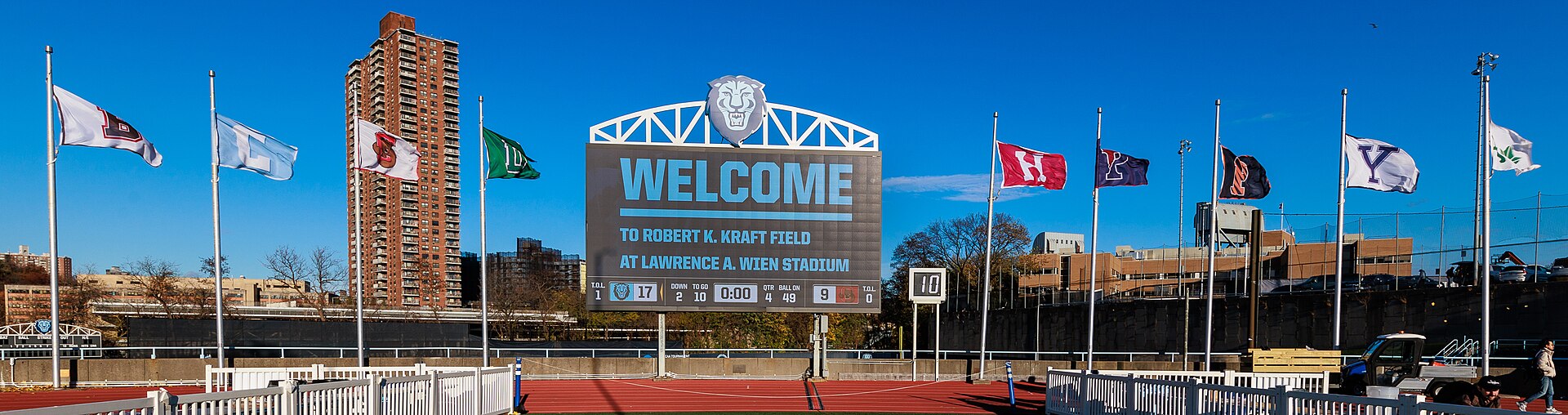
A shot clock showing 14 looks like a shot clock showing 24 that has already run for ten seconds. It is not. In FIBA’s rules the two numbers arrive by different routes and mean different things, and the distinction is the whole design of the rule.
Article 29 begins with the familiar part. When a player gains control of a live ball on the court, or when a throw-in is touched and the throwing team keeps control, that team has 24 seconds to attempt a shot for a goal.
Reference The 24-second requirement and the two events that start it, from Article 29.1.1.
Then it defines “attempt a shot”, and the definition is stricter than it sounds. Two things must happen: the ball must leave the player’s hands before the signal sounds, and after it has left, the ball must touch the ring or enter the basket.
Reference Both conditions for constituting a shot within 24 seconds, from Article 29.1.1.
A shot released with half a second remaining that falls short and touches nothing is not a late shot. It is not a shot at all under this article, and the violation stands. The clock does not measure when the ball was thrown; it measures whether a genuine attempt on the basket was completed. That is a rule about intent, enforced through a physical test that a referee can actually see.
Where fourteen comes from
The reset rules divide by a question that has nothing to do with time: who caused the stoppage.
If the game is stopped for a foul or violation by the team not in control of the ball, or for any valid reason not caused by either team, the same team keeps possession. It is getting its own ball back. And so, if the throw-in is in its frontcourt, the clock is not simply reset — it is examined. If 14 seconds or more are showing, the clock does not reset at all and continues from where it stopped. If 13 or fewer are showing, it goes to 14.
Reference The reset procedure when the stoppage was caused by the team not in control, including the 14-or-more and 13-or-fewer branches, from Article 29.2.2.
Read that again, because it is the part that is usually described backwards. Fourteen is not what the team is given. Fourteen is the floor beneath what it already had. A team stopped with 19 seconds left resumes with 19. A team stopped with 6 resumes with 14. The rule restores a possession and guarantees it a minimum; it does not hand out a new one.
The other branch is different in kind. When the stoppage was caused by the team in control — its foul, its violation, its ball out of bounds — the throw-in goes to the opponents, and in the frontcourt the clock is reset to 14 flat.
Reference The reset to a new 24 seconds in the backcourt and to 14 seconds in the frontcourt when possession passes to the opponents, from Article 29.2.3.
Same number, opposite logic. In one case 14 is a protection for a team that never lost the ball. In the other it is the allowance for a team that has just been given one in a favourable position.
Why fourteen and not sixteen
There is an arithmetic reason the frontcourt figure is not larger, and it sits one article earlier.
Article 28 gives a team 8 seconds to move the ball from its backcourt into its frontcourt. A team that uses all of them has 16 seconds left on the shot clock when it arrives. Sixteen, therefore, is the most frontcourt time a full possession can ever produce.
Reference The 8-second requirement to move the ball into the frontcourt, from Article 28.
A frontcourt throw-in skips the backcourt entirely. Setting the reset at 14 rather than 24 keeps the granted possession shorter than a slow, legally-completed one — the team is spared the work of advancing the ball, so it is not also given the time it would have taken. The number is not a round fraction of 24. It is calibrated against what the 8-second rule leaves.
The exceptions say what the rule is for
Two carve-outs make the intent explicit.
First, even in the branch where the team keeps possession, the clock continues rather than resetting if the stoppage was for a reason connected with neither team, or if resetting would place the opponents at a disadvantage.
Reference Both exceptions — a stoppage connected with neither team, and a reset that would disadvantage the opponents — from Article 29.2.2.
That is unusual language for a timing rule. It asks an official to consider whether applying the reset would be unfair, and to decline to apply it if so. The clock is not a machine the referees merely operate; it has a purpose, and the rule authorises them to protect it.
Second, a technical foul by the team in control does not reset anything. Play restarts with a throw-in near where it stopped and the clock continues from where it stopped.
Reference That a technical foul by the team in control does not reset the shot clock, from Article 29.2.4.
A team cannot buy itself time by misbehaving. Every other stoppage it causes hands the ball away; this one does not, so the rule closes the loophole by freezing the clock instead.
What the number on the board is telling you
Put the branches side by side and the display resolves into something legible.
- 24, in the backcourt. A full possession, either fresh or restored. The team has to advance the ball and then shoot.
- 14, in the frontcourt, after the opponents’ error. A granted possession, deliberately shorter than the slowest legal one.
- 14, in the frontcourt, after being fouled with under 14 showing. A restored possession, topped up to the floor.
- A number between 15 and 24, still running. A restored possession that was already worth more than the floor, so the rule left it alone.
The clock is showing two things at once: how long is left, and what kind of possession this is. A single figure carries both because the rule was written to make the second visible through the first.
That is a small piece of design, and it is easy to miss because the number looks like a countdown and nothing else. But a countdown that resets differently depending on whose fault the stoppage was is not really measuring time. It is measuring entitlement, and using seconds to express it.
Read the evergreen pages
This piece is an argument. These are the reference pages on SocialSportHub that document the same subjects.
References
- [1]FIBAGoverning body. Official Basketball Rules 2026 — Article 29, Shot clock. Accessed 6 September 2026.
- [2]FIBAGoverning body. Official Basketball Rules 2026 — Article 28, Eight seconds. Accessed 6 September 2026.
Continue reading
Editor’s pick
The corner three is a shorter shot, and FIBA's own rulebook says so
Basketball's three-point line is defined twice over: as an arc 6.75 m from the basket, and as a pair of straight lines 0.90 m inside the sidelines. On a 15-metre court those two definitions cannot both give the same distance, and the gap they leave is fifteen centimetres wide.
Editor’s pick
The line under the basket that nobody paints
Basketball's no-charge semi-circle is the one area of the court where the same collision changes owner. Part of its boundary is painted on the floor. The rest of it exists only in the rulebook, projected down from the front edge of a backboard three metres in the air.
More on basketball
Five sports paint a line around the court. Only four of them agree it is part of it
A ball on the line is in, unless you are playing basketball, where the boundary line is not court at all. The disagreement is written into the rulebooks, and it decides which edge of the paint the tape measure is held against.