
Clay is unbound, and that one word changes tennis
The ITF's surface table separates clay from every hard court with a single word: unbound. A few millimetres of loose grit over a deep compacted base is the whole difference — and it rewrites which shots and which footwork are worth having.
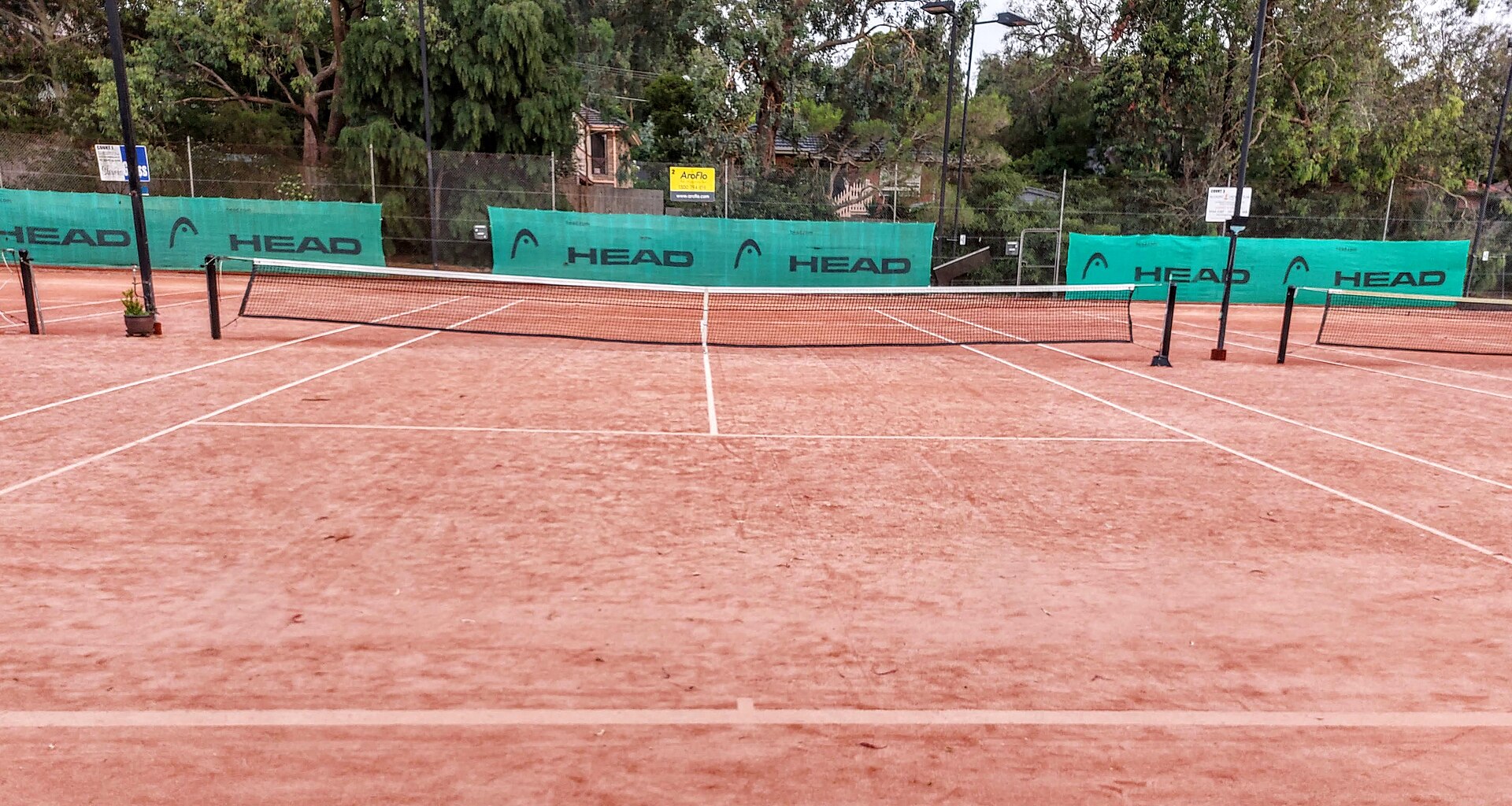
The International Tennis Federation keeps a short table describing what court surfaces are made of. Acrylic is a textured, pigmented, resin-bound coating. Asphalt is bitumen-bound aggregate. Concrete is cement-bound aggregate. Clay is unbound mineral aggregate — naturally derived, with a fine gritty material as its uppermost playing layer, and its integrity, the ITF adds, must not depend on a carpet or membrane holding it together.
Every hard court is named after the thing that glues its top layer in place. Clay is named after the absence of the glue.
Reference Surface-type descriptions, and the definition of clay as unbound mineral aggregate, from the ITF surface-types table.
The ITF’s construction guidance — offered, it is careful to say, as guidance and not a definitive specification — sketches a clay build as a geotextile membrane over the sub-grade, 120 to 600 mm of compacted foundation, 60 to 100 mm of graded aggregate chosen to support capillary action, 40 to 50 mm of compacted crushed aggregate, and on top of all of it 3 to 6 mm of fine crushed aggregate. Half a metre or more of compacted engineering, and only the last few millimetres are played on.
Reference Layer depths, court fall and the note on incomplete drainage are from the ITF court-construction document, which describes itself as guidance rather than a definitive specification.
Two things touch those few millimetres during a point: a ball and a shoe. Both can move them. Almost everything people mean by clay-court tennis is downstream of that one fact, taken twice.
What friction takes from the ball
The ITF measures how fast a court plays with a test method, CS 01/02, that reduces the question to two quantities. Its Court Pace Rating covers friction, which primarily determines the reduction in the ball’s horizontal speed, and vertical restitution, which determines the time between successive bounces. Pace and bounce are not independent properties of a court. They are two outputs of one collision.
The procedure is more revealing than the number it produces. A ball cannon delivers balls at 30 m/s and an incident angle of 16 degrees, both within a couple of units either way, and with almost no spin. The spin limit is not a convenience: the rating comes from a theoretical model that assumes ball and surface are both rigid and that the ball slides throughout its contact with the court. Court pace measures what happens to a ball while it is skidding.
Reference The CS 01/02 method, the sliding assumption, the pace bands and the ball types, from the ITF technical booklet.
Physics work on the bounce describes the same event from the other end. A ball landing on a court usually slides for a short distance before rebounding, and the horizontal speed it loses depends on the angle it arrived at and on the coefficient of sliding friction between ball and surface. Given enough topspin, it stops sliding and grips the court instead.
Reference The slide-then-grip account of a court bounce is set out, citing earlier work, in the introduction to a University of Sydney study whose own subject is ball-string impacts.
Skidding is where a loose top dressing has something to work on, and friction fixes the direction of the effect: it acts along the surface, not through it, so what a court takes it takes from the horizontal component, not the vertical. A ball that keeps its vertical speed and loses more of its horizontal one leaves at a steeper angle, and a steeper, slower rebound takes longer to cross what is left of the court.
The ITF scale is worth reading slowly, because it is not a ranking by hardness.
- Category 1, slow — Court Pace Rating of 0 to 29. The ITF names most clay courts and other unbound mineral surfaces here.
- Category 2, medium-slow — 30 to 34.
- Category 3, medium — 35 to 39. Most acrylic-coated surfaces fall into these middle two bands, along with some carpet.
- Category 4, medium-fast — 40 to 44.
- Category 5, fast — 45 and above. Most natural grass and artificial grass fall into the top two bands.
The hard court sits in the middle of that scale, not at the top. The fast extreme is grass, and grass is not hard at all: the same ITF guidance lays 8 to 12 mm of turf over a root zone of clay, silt and sand. Court pace is plainly not a reading of how solid a surface feels underfoot. It is one number combining friction with vertical restitution — and on it the ITF’s own examples put most natural grass two bands above most acrylic coatings, and most clay two bands below.
Reference The five pace categories, their rating bands and the surface types the ITF gives as examples of each, from the technical booklet; the grass build from the construction guidance.
What the same looseness does to a shoe
The dressing a ball skids across is the dressing a shoe lands on, and the second consequence is the larger one. Read against what has been measured, sliding on clay looks less like a failure of grip than like a deceleration technique, available because the surface gives way by a controlled and repeatable amount.
Something close to that has been measured, though on a surrogate. Sixteen university tennis players ran into 180-degree turns on a synthetic clay surface whose friction was varied by the mass of sand infill laid over the force plate. At the lowest-friction setting, sliding distances were longer and vertical and shear loading rates lower — load, in the authors’ reading, spread more evenly over time — and peak knee flexion arrived later, which the authors read as longer time spent braking.
Reference Participant count, turn protocol, the sand-infill method of varying friction, and the sliding-distance, loading-rate and knee-flexion results, from a repeated-measures study of turns on a synthetic clay surface.
That surface was synthetic and its friction was set by infill mass rather than by loose grit, so what carries to a natural court is the relationship, not the values: less friction, longer slide, gentler loading rate, later brake.
That is what a controlled stop is: a change of direction whose cost is paid over a distance rather than inside a single footfall. On a bound surface the shoe holds roughly where it lands, so the stopping point is fixed at touchdown. On clay it stays negotiable for as long as the slide lasts, and arriving and stopping cease to be the same event.
Why the two effects compound
Taken separately, each effect is modest. Together they select a different sport. The ball arrives later and steeper, so the receiving player has more time — and a cheaper way of using it, since the last stretch can be covered as a slide rather than a sequence of steps. Defence is subsidised twice. Attack is not.
This is why first-strike power loses value on clay instead of gaining it. The shots that depend on it are flat, low and struck through the court, and their worth sits in the horizontal component of the ball’s velocity — the component friction reduces, on the surface class the ITF rates slowest. A serve is not weaker on clay. It is less decisive.
Topspin is the answer the surface rewards, and it works at both ends of the shot. In flight, a spinning ball feels an aerodynamic force perpendicular both to the flow and to its axis of rotation; with topspin the geometry points that force downward, so the ball can be struck harder and on a steeper path and still land inside the court — margin bought back after the surface has taken some.
Reference That the force on a spinning ball acts perpendicular to both the flow direction and the axis of rotation is stated by NASA Glenn; the downward direction under topspin follows from that geometry.
At the other end it changes which phase of the bounce decides the outcome. A ball with enough topspin on arrival, or enough acquired during impact, stops sliding part-way through and grips — and sliding is the phase in which the coefficient of friction does its work. For the gripping case one typical value is quoted: a spinless ball that grips leaves with roughly half the horizontal speed it arrived with, near enough whatever its angle of incidence. A skidding bounce is largely a property of the court. A gripping one is much more nearly a property of the shot.
Reference The grip transition, and the roughly-half figure quoted as a typical value for a spinless ball that grips, from the same University of Sydney paper.
So the topspin forehand is not a stylistic preference on clay. It buys back in the air the margin the court takes on the ground, and hands the bounce back to the player who hit it.
Baseline play follows as the efficient strategy, not the timid one: if no single shot reliably ends a point, points are ended by moving an opponent — geometry solved across a sequence of shots rather than inside one. Serve and volley meets the opposite arithmetic, since the approach shot arrives slower too, handing the player attempting the pass the same extra time.
The rules already treat the surface as a variable to compensate for. Three ball types are approved: Type 1, the fast ball, for slow-pace surfaces; Type 2 for the three middle categories; Type 3, the slow ball, for fast surfaces. The specification assumes a ball correct on one court is wrong on another.
A surface that has to be put back
The last consequence of an unbound playing layer appears in the test procedure itself. The pace test fires nine impacts, moving the impact point each time; if the surface is disturbed or damaged — the document gives movement of clay particles as its example — the tester must restore it or shoot at a nearby location. The measurement has to allow for the surface being altered by the act of measuring it.
The same property runs through the rest of the guidance. Clay needs moisture in its profile, so the foundation beneath it is built not to drain completely, and a court irrigated from above is laid to a fall of between 0.25 and 0.35 per cent. The ITF recommends for clay and grass a maximum gradient half that for acrylic and polyurethane, and gives the reason: a shallower gradient minimises erosion of the top dressing. A bound court is sloped to shed water. An unbound one is sloped gently enough not to shed itself.
The timescales say it too. An acrylic playing surface, the ITF advises, typically needs about a week to stabilise before it is worth testing; clay may need several months. And surface properties keep changing with conditions, use and maintenance. A bound coating is finished when it cures.
Reference The maximum-gradient recommendations, the stated reason for the shallower gradient on clay and grass, the stabilisation times and the note that surface properties change with conditions, use and maintenance, from the ITF technical booklet.
So clay is not simply slow where acrylic and grass are less slow. It taxes one component of the ball’s motion and refunds one component of the player’s, and a rally is settled in those two accounts. The court is not the neutral venue in which tennis decides which skills are worth having. It is one of the terms in which that gets decided.
Read the evergreen pages
This piece is an argument. These are the reference pages on SocialSportHub that document the same subjects.
References
- [1]International Tennis FederationGoverning body. Surface Types. Accessed 2 September 2026.
- [2]International Tennis FederationGoverning body. Court Construction. Accessed 2 September 2026.
- [3]International Tennis FederationGoverning body. ITF Approved Tennis Balls, Classified Surfaces & Recognised Courts. Accessed 2 September 2026.
- [4]University of Sydney, Physics DepartmentUniversity. Oblique impact of a tennis ball on the strings of a tennis racket (Sports Engineering). Accessed 2 September 2026.
- [5]PubMed, US National Library of MedicinePeer-reviewed. Biomechanical responses to changes in friction on a clay court surface (Journal of Science and Medicine in Sport). Accessed 2 September 2026.
- [6]NASA Glenn Research CenterGovernment. Ideal Lift of a Spinning Ball. Accessed 2 September 2026.
Continue reading
More on tennis
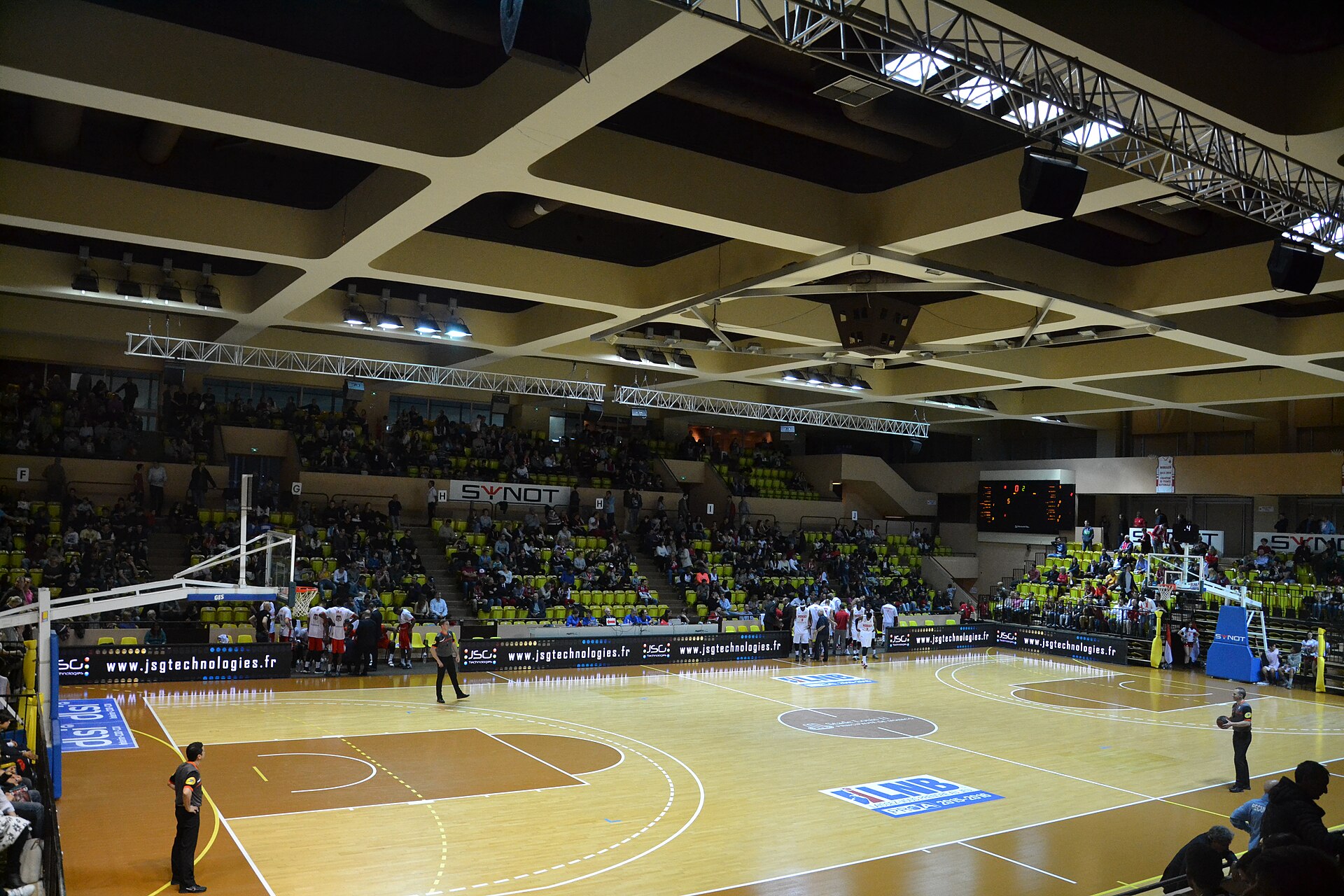
Five sports paint a line around the court. Only four of them agree it is part of it
A ball on the line is in, unless you are playing basketball, where the boundary line is not court at all. The disagreement is written into the rulebooks, and it decides which edge of the paint the tape measure is held against.
More on tennis
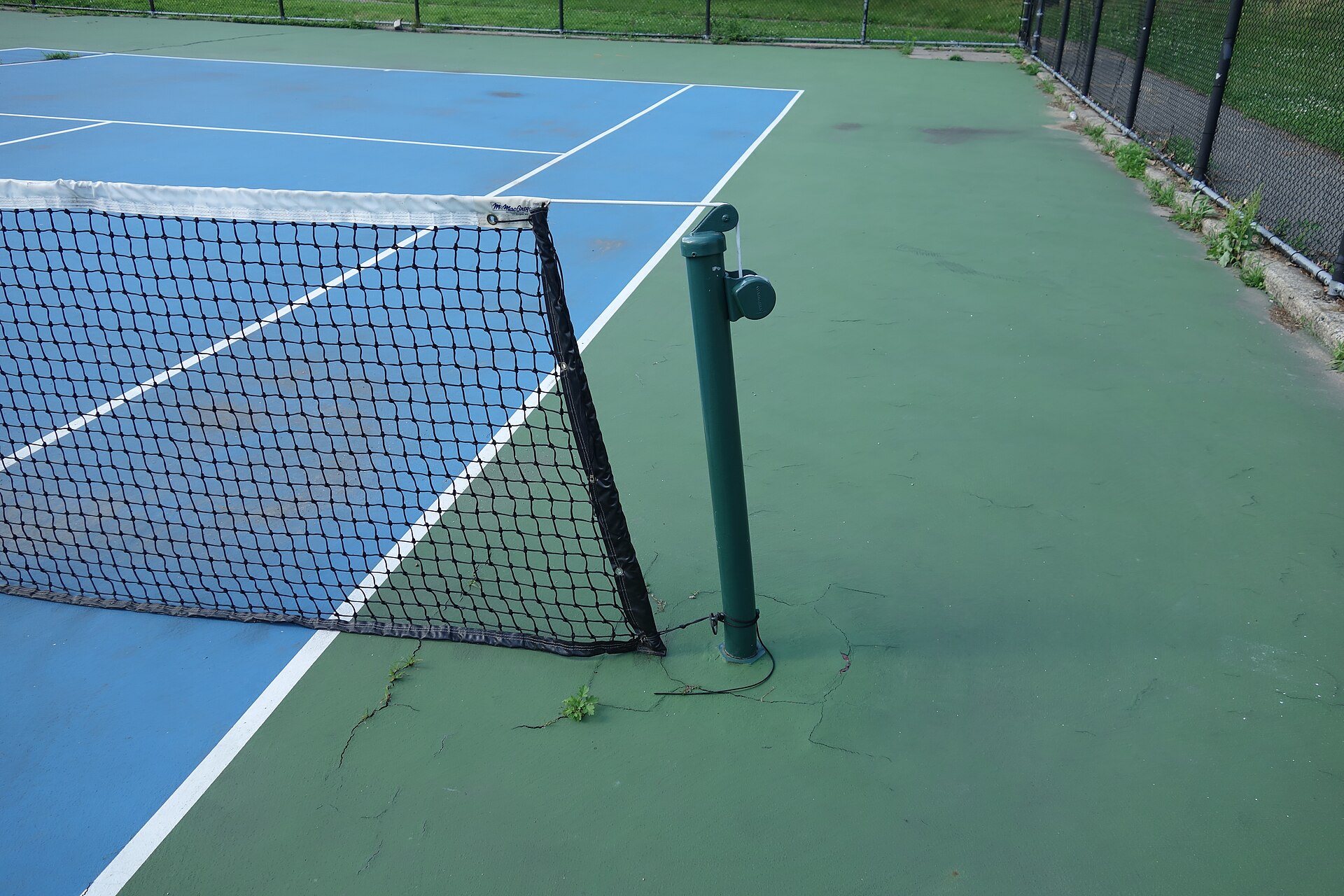
Three sports hang a cord between two posts, and all three answer the sag differently
A strung net always dips in the middle. Tennis decided to make the dip 156 millimetres and mandated a strap to produce it; badminton lets it be 26; volleyball forbids it and allows 20 millimetres of error. One physical fact, three regulatory answers.
More on tennis
Tennis spent two years working out what its own courts were doing
Until 2000 the sport had no official way to say how fast a surface played. What it built afterwards was replaced within eight years, because the first measure did not match what players said they felt — and the replacement is still only valid for the day the test was run.