
Swimming's technology rule fits in four sentences, and names no technology
Article 14 forbids anything that may aid speed, buoyancy or endurance — a test of effect rather than of shape — then permits a data recorder that must not transmit, and tape on up to two fingers or toes.
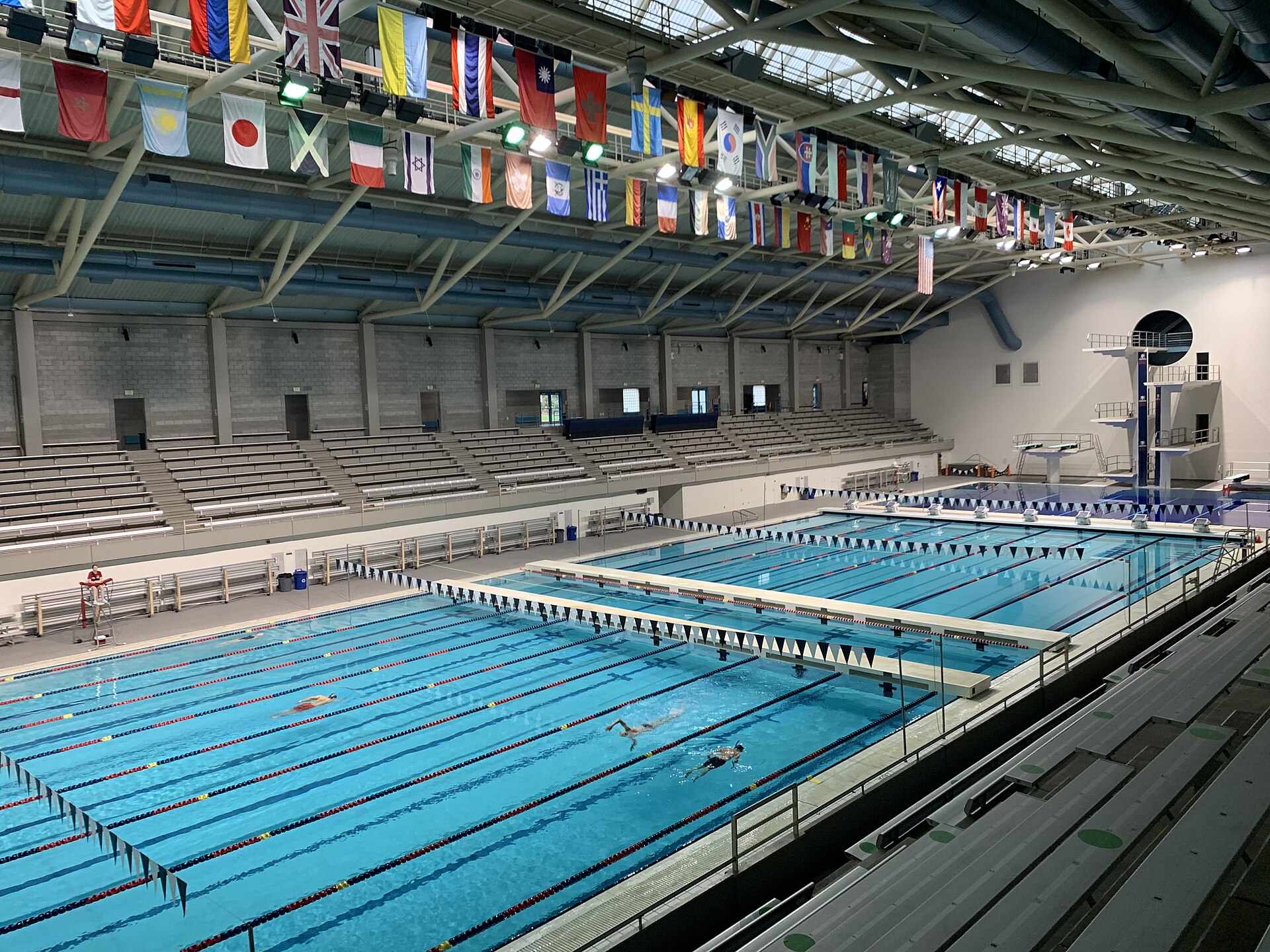
Athletics needs twenty pages to say what may be on a runner’s foot. Swimming’s equivalent rule is four clauses long, and it works in a completely different way.
The rule
During competition, an athlete must wear a swimsuit and may wear goggles and a cap, in each case as permitted by the regulations. And then:
Other than permitted swimwear, an athlete must not wear or use during competition any device or swimwear that may aid his or her speed, buoyancy, or endurance — such as, for example, webbed gloves, flippers, fins, or adhesive substances.
Reference The requirement to wear a swimsuit and the permission for goggles and a cap, and the prohibition on any device or swimwear that may aid speed, buoyancy or endurance, with the examples given, from Articles 14.1 and 14.2.
That is a test of effect, not of shape. The rule does not describe a permitted thickness, a permitted material, a permitted number of panels. It asks a single question about any object — does it help you go faster, float better, or last longer — and forbids anything that does.
The three named quantities are not arbitrary. Speed, buoyancy and endurance are the three ways an object in water could plausibly assist: by reducing drag or adding propulsion, by changing the swimmer’s position relative to the surface, or by reducing the metabolic cost of holding that position. The examples follow the same order — webbed gloves and fins add propulsion, adhesive substances change the surface, and the buoyancy case is left to the general words.
Why the two sports went opposite ways
World Athletics’ shoe regulations, by contrast, never mention a spring. They limit a sole thickness at two measured points, restrict the topology of rigid structures — one structure, in one plane, no loops, coils, concertinas or concentric circles — and require the shoe to be purchasable.
Reference That the Athletic Shoe Regulations limit sole thickness at defined measurement points, restrict rigid structures by number and arrangement rather than by stiffness, and require an approved shoe to be available for purchase.
Both approaches have a cost, and the costs are mirror images.
A shape rule is easy to apply and easy to design around. A gauge settles it; a manufacturer who reads the rule carefully can build right up to the line, and the sport gets an arms race inside the permitted geometry.
An effect rule is impossible to design around and hard to apply. “May aid speed” catches anything, including things nobody has invented yet — but it also, read literally, catches a well-made swimsuit, which is why the rule has to begin by exempting “permitted swimwear” and delegating what that means elsewhere. The strength of the clause is also its problem: without the exemption it would forbid the sport’s own uniform.
Swimming can afford the effect rule partly because it has less surface to regulate. A swimsuit is one object of one material; a running shoe is a laminated structure whose behaviour depends on things a rule cannot see. But the choice is still a choice, and the two rulebooks land in genuinely different places on it.
The device that may record but not speak
The third clause is the most modern, and it is drawn with unusual care.
An athlete is permitted to use an automated data collection device for the sole purpose of collecting data. Such a device must not be capable of transmitting, or be used to transmit, data, sounds or signals to the athlete, and must not be capable of aiding, or be used to aid, the athlete’s speed, buoyancy or endurance.
Reference The permission for an automated data collection device for the sole purpose of collecting data, and the requirements that it not be capable of transmitting data, sounds or signals to the athlete, nor capable of aiding speed, buoyancy or endurance, from Article 14.3.
Read the doubled construction: must not be capable of transmitting, and must not be used to transmit. The rule bars both the capability and the act, so a device that could relay information to a swimmer is prohibited even if it did not.
That is the line the clause is defending, and it is not really about the object. A recorder is a passive instrument; a receiver is coaching. World Athletics draws the same distinction from the other side, permitting personally worn heart-rate or speed-distance monitors while banning embedded sensing or intelligent technology in the shoe itself.
Two fingers
The fourth clause is the smallest and the most human.
An athlete will be permitted to use tape on one or two fingers or toes — including to bind together two fingers or toes — if use of the tape is required to treat or protect an injury to a finger or toe.
Reference The permission to use tape on one or two fingers or toes, including binding two together, where required to treat or protect an injury, from Article 14.4.
Everything in that sentence is a limit. One or two, not more. Fingers or toes, not hands or feet. To treat or protect an injury, not to modify a stroke. And binding two together is explicitly named, because binding is exactly what a swimmer might do to make a hand into a slightly better paddle.
It is the same shape as the medical-customisation clause in the athletics shoe regulations: a narrow permission, granted for a reason outside performance, and hedged so tightly that it cannot become a performance permission by accident.
What the article is really doing
Four clauses. A requirement, a prohibition on effect, a permission for a passive instrument, and a medical exception.
The article never names a fabric, a thickness, a seam or a coverage. It does not need to, because it is not trying to describe a legal swimsuit — it is trying to describe the boundary between a swimmer and a machine, and to place every object a swimmer might carry on one side of it or the other.
Whether that is the better design than athletics’ twenty pages of geometry is genuinely arguable. What is not arguable is that the two sports looked at the same problem — an athlete, an object, and an advantage — and wrote rules that share almost no structure at all.
Read the evergreen pages
This piece is an argument. These are the reference pages on SocialSportHub that document the same subjects.
References
- [1]World AquaticsGoverning body. Competition Regulations, Part Two: Swimming Rules, in force from February 2026 — Article 14, Swimwear, technology and wearables. Accessed 6 September 2026.
- [2]World AthleticsGoverning body. C2.1A — Athletic Shoe Regulations, effective 20 April 2026 (World Athletics Book of Rules). Accessed 6 September 2026.
Continue reading
Editor’s pick
A racing pool may be a centimetre too long and not a millimetre too short
World Aquatics gives the 50-metre pool a tolerance of plus ten millimetres and minus nothing — and requires that length to hold from 300 millimetres above the water to 800 below it. The asymmetry is the same one athletics applies to a wind reading.
Editor’s pick
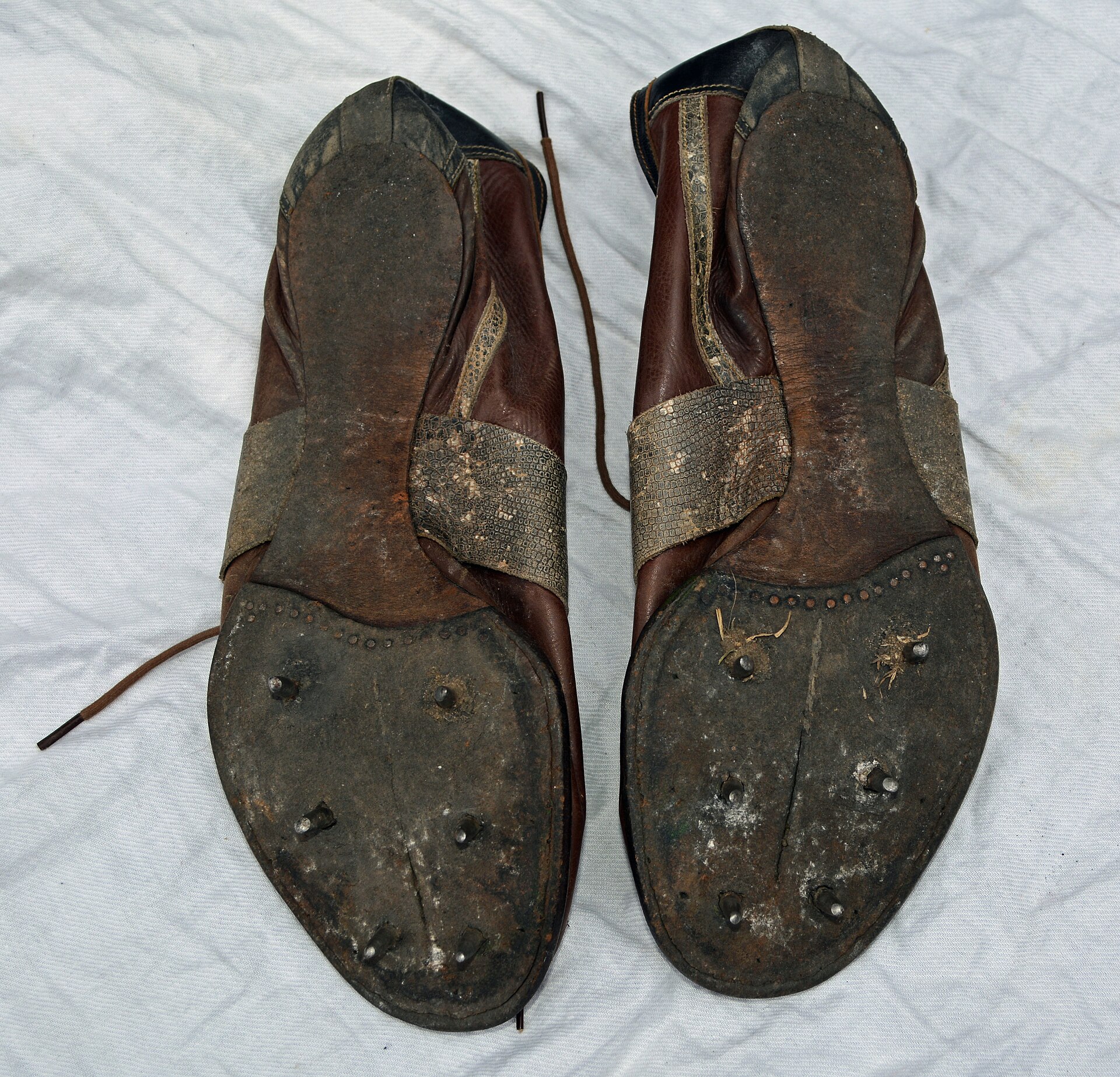
The shoe rule never mentions a spring
World Athletics' shoe regulations are read as a limit on how much energy a sole may return. Read the document and the limits are on something else entirely: a thickness at two specified points, the topology of a rigid structure, and whether anyone can buy the shoe.
More on swimming
Swimming defines three of its strokes by what you may not do, and one by nothing at all
Freestyle means any style. Backstroke is bounded by an angle, breaststroke by an order of movements, and all four by the same fifteen metres. Read together, the rules describe a sport that regulates the surface of the water more than the swimmer.