
The racquet that rewrote the backhand
Wood set the limits of a tennis frame more strictly than any rulebook did. When composites removed them, head size, stiffness and string-bed behaviour all moved at once — and the two-handed topspin backhand became the cheaper answer.
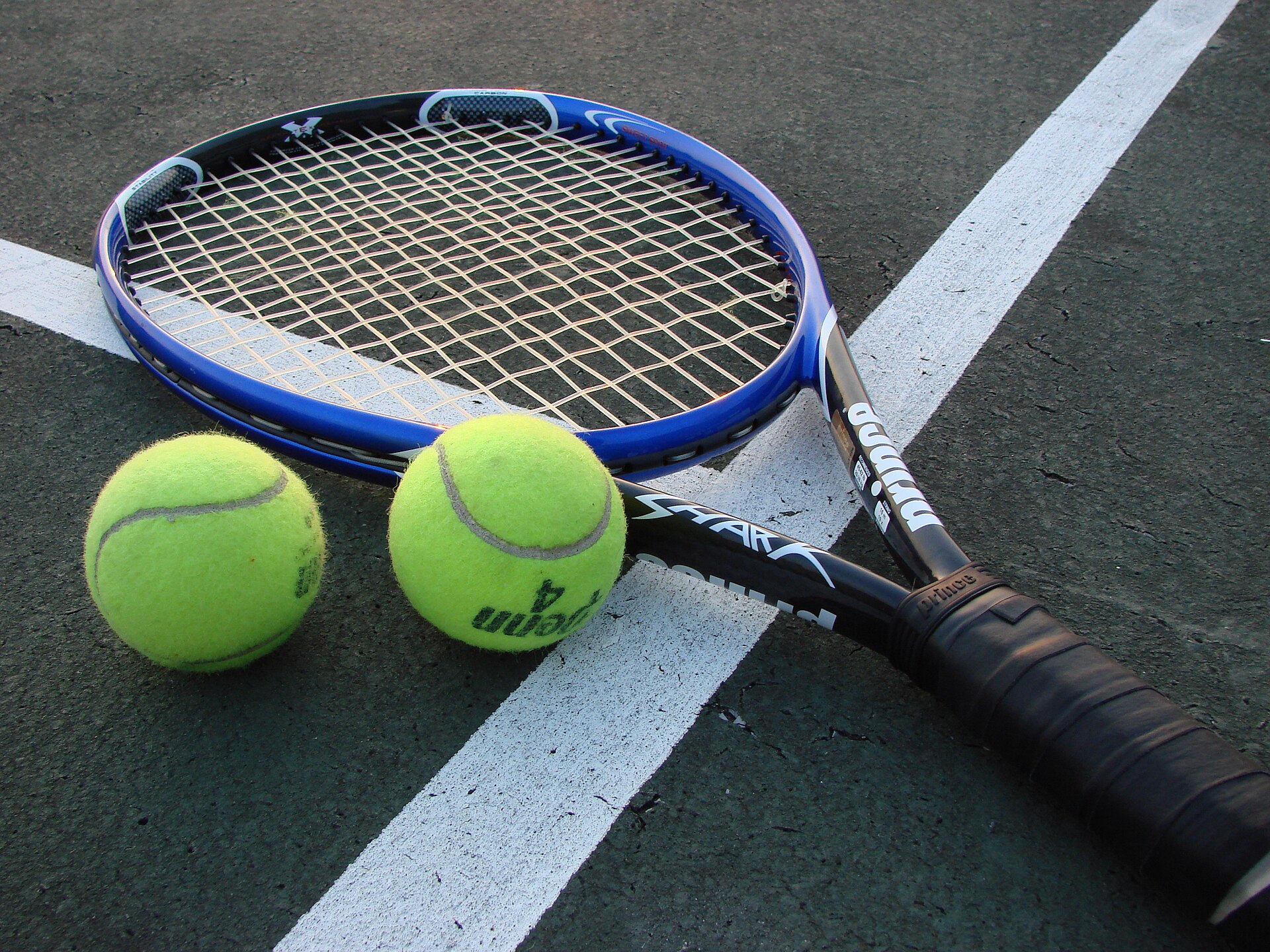
The International Tennis Federation did not put a size limit on a racket until 1979. Before that there was nothing much to write down. Frames were made of wood, and wood enforced its own limits more strictly than a committee ever could. New materials, not a change of mind about the sport, made a written specification necessary.
Reference The ITF records that limiting parameters for rackets were not specified by the governing body until 1979, when the introduction of new materials made this necessary, and that no head-size limit existed before then.
That administrative detail contains most of the story of the modern backhand. A wooden frame is a laminated structure bent into the familiar keyhole shape, built mainly from ash for its specific strength, toughness and willingness to bend, with maple, sycamore, hornbeam, hickory and lighter fillers used elsewhere in the frame.
Reference Ash as the principal frame wood, chosen for specific strength, toughness and bendability, with maple, sycamore, hornbeam, hickory, beech, mahogany and obeche used for particular parts of the frame.
Everything a designer might want more of had to be bought in wood, and wood is heavy. A wider head meant more material at the far end of the thing being swung — and between rackets of equal weight, the ITF notes, the one carrying more of its mass towards the handle is the easier to swing. Wood was near its ceiling in the other direction too: many older frames warped under the load of their own strings.
Reference That rackets of the same weight are easier to swing when more of the mass sits towards the handle, though possibly at the expense of ball speed, is stated in the ITF technical notes on rackets.
Reference The warping of many older wooden rackets under the load of their strings is recorded in the ITF technical notes on strings.
The escape took two separate inventions. Metal frames were held up by two things at once: tensioned strings and the sharp edges of holes drilled through tubing did not agree, and the alloys themselves were not yet good enough. The ITF dates the stringing fix — running the strings around metal wires looped to the frame — to 1953. Composite frames waited on carbon fibre and its manufacturing techniques in the 1960s — a material with several times the specific stiffness and strength of steel.
Reference The incompatibility of tensioned strings with drilled metal tubing, the need for improved metal alloys, the 1953 stringing method the ITF credits with solving it — footnoted there to a patent dated 1961 — and the dependence of composite frames on carbon fibre developed in the 1960s, a material with several times the specific stiffness and strength of steel.
Three variables moved at once
What followed was not one improvement but a simultaneous change in three properties that wood had kept locked together. The ITF puts a typical modern racket at 25 to 40 per cent lighter than the wooden frames it replaced, with a strung area around 50 to 75 per cent larger, because stronger materials need less material. Elsewhere its technical notes say a current composite racket can have a head some 40 per cent larger while being about three times stiffer and around 30 per cent lighter than the most highly developed wooden version. The two are not the same comparison: different baselines, and strung area is not head size.
Reference A typical modern racket at 25–40 per cent lighter than wooden frames with a strung area around 50–75 per cent larger, and the observation that modern rackets are much stiffer and vibrate faster.
Reference The comparison of a current composite racket with the most highly developed wooden version — a head around 40 per cent larger, about three times stiffer, roughly 30 per cent lighter — and the note that increased stiffness reduces the energy absorbed by the frame on ball contact.
Each has a separate mechanical consequence. A stiffer frame bends less on impact and absorbs less of the collision energy, so more of it returns to the ball. A lighter frame can generally be swung more easily. A larger head does two things at once: it resists twisting in the hand on off-centre contact, so the shot still leaves in roughly the intended direction, and it reduces the chance of missing the string bed at all.
Reference That larger heads resist twisting in the hand on off-centre impacts, so the ball still tends to go where the player intended, and that they reduce the chance of missing the ball, from the ITF technical notes on rackets.
The word sweet spot is used loosely; the physics is specific. The spot players mean is a vibration node near the centre of the strings, where so little of the impact reaches the hand that the collision is barely felt. It is not the point of maximum rebound speed, and it is not the centre of percussion, which shifts towards the throat once a hand of roughly half a kilogram is added to the handle. What a bigger head adds, according to the ITF, is a larger contact area in which higher ball velocity can be developed.
Reference The sweet spot as a vibration node, its distinction from the point of maximum rebound speed and from the centre of percussion, and the shift of the centre of percussion in a hand-held racket, from the University of Sydney School of Physics.
Reference That larger heads allow larger sweet spots, defined as a larger contact area in which higher ball velocity can be developed.
The spin comes off the strings
Used as intended, the frame never touches the ball. The strings do, and the spin is theirs. A stringing system patented in December 1977 abandoned interlacing: mains and crosses lay in separate planes and moved on tubular sleeves acting as bearings, so the strings could deflect within the plane of the hitting surface and rotate the ball as they recoiled. It produced close to twice the spin of a conventionally strung racket, for minimal effort. The rule requiring the hitting surface to be flat, with crossed strings alternately interlaced or bonded, was introduced the following year to stop it.
Reference The ‘spaghetti’ stringing system, its patent date, its spin advantage and the 1978 rule change that outlawed it, from the ITF technical notes on strings.
That prohibition survives in the Rules of Tennis, with the requirement that the pattern be generally uniform and not less dense in the centre than anywhere else. String movement makes spin, and the sport has decided how much to allow.
Reference Appendix II of the Rules of Tennis: the hitting surface shall be flat and consist of crossed strings, alternately interlaced or bonded where they cross, with a generally uniform pattern not less dense in the centre.
Enlarging the head changes the string bed as well as the frame. Longer strings and wider spacing both lower string-bed stiffness, which is why a bigger head and a looser feel arrive together. What that buys in raw pace is modest — the ITF puts a 25 per cent drop in string tension at roughly a 2 per cent gain in groundstroke speed, and about 1 per cent on the serve. The larger effects are elsewhere: a softer bed distorts more during impact, deforms the ball less, and holds it longer.
Reference String-bed stiffness as a function of string length and spacing, the tension-to-speed relationship, and the listed consequences of a less stiff string area, from the ITF technical notes on strings.
The head also grew wide enough to change what a swing could do. Racket heads went from roughly nine inches across in wood to about ten and a half in graphite, and that extra inch or two made heavy topspin available: brushing steeply up the back of the ball stops being a shot that clips the frame. Heavier topspin drags the ball down more sharply once it clears the net, so it can be hit harder, and hitting it harder generates more spin again. That loop, rather than extra power in frame or player, is what the University of Sydney’s physics account credits the modern game’s pace to.
Reference Head-width comparison between wood and graphite frames, and the argument that wider heads rather than greater power account for the pace of the modern game, from the University of Sydney School of Physics.
Why heavy topspin wants a second hand
Topspin has to be manufactured against the incoming ball. The racket must brush upwards relative to it, head tilted forward, and the spin the ball already carries has to be reversed. If the ball rises as fast as the racket, no topspin is generated at all. The whole transaction takes about five thousandths of a second.
Reference Brushing up at the ball with the head tilted forward, the reversal of spin direction required to return an incoming topspin ball with topspin, the absence of topspin when the ball rises as fast as the racket, and an impact duration of about five milliseconds.
Five milliseconds is short but not zero, and whatever a player loses control of inside it shows up in the result. The ITF lists, among the drawbacks of a less stiff string area, that the longer dwell time lets the racket rotate further while the ball is still on the strings. The rotation is unavoidable: the ball recoils the head, that recoil exerts a torque on the hand, and the hand turns about an axis running through the wrist.
Reference That an extended dwell time allows the racket to rotate further during impact, reducing the control the player has over it, is listed by the ITF among the effects of a less stiff string area.
Reference The rotational component of the impact — recoil of the head exerting a torque on the hand about an axis through the wrist, with opposite forces on the upper and lower parts of the hand.
A second hand on the handle answers that torque directly, and the reason is elementary statics rather than a measured finding: two hands hold the grip at two separated points, so the couple can be met by a pair of opposed forces instead of by one wrist resisting it alone. What has been measured is where each stroke gets its speed. Two-handed backhands lean on trunk rotation: through the forward swing a review of the literature reports mean pelvis angular velocities of 538.5 degrees per second against 280.7 for the one-hander — a difference it calls significant — with about 12 per cent more shoulder rotation during acceleration. One-handed backhands build comparable racket speed from segmental rotations of the upper limb instead, and reach their maximum pre-impact racket-tip acceleration significantly earlier relative to contact.
Reference Pelvis angular velocity of 538.5 ± 194.8 versus 280.7 ± 108.8 deg·s⁻¹ for the two-handed and one-handed backhand during the forward swing, 12 per cent greater shoulder rotation in the two-hander during the acceleration phase, the reliance of the one-hander on upper-limb segmental rotation for comparable racket speeds, and maximum pre-impact horizontal acceleration of the racket tip occurring significantly earlier in the one-handed stroke, from a review of performance factors in tennis backhand groundstrokes.
The same review lists the greater strength the one-handed stroke demands among the factors behind the preferential choice of the two-hander in the learning process, and records that studies of elite and national-level players find comparable racket velocities and post-impact ball speeds for both. It also states that no study has settled which technique is superior. Nothing there says the one-hander is slower.
Reference The greater strength required to perform the one-handed backhand, cited among the factors behind the preferential choice of the two-hander in the learning process; the statement that no study has provided a clear-cut answer on which technique is superior; and comparable horizontal racket velocities and post-impact ball velocities between elite and national-level players using either stroke.
Set that against what the equipment asks of the shot: brush steeply for spin, arrive with high racket-head speed, and stay stable through five milliseconds in which the head is trying to twist. Lighter, stiffer, wider frames put the first two within reach of almost anyone. The second hand is a cheap way of buying the third.
What the one-handed backhand is for
None of this makes the one-handed backhand obsolete. The same review finds the one-handed impact point significantly further forward, relative to the mid-point of the hips, than the two-handed one — though it warns that the hip mid-point differs between the strokes, so the gap may be less pronounced against another reference. Even discounted, it points one way: the one-hander meets the ball further in front of the body.
The slice is hit one-handed too, by two-handed players included, and that is not a minor sub-branch of the stroke. The coordination pattern differs enough from a topspin drive — shoulder extension and abduction rather than flexion and abduction — that the review treats it as a separate skill a two-handed player has to acquire in its own right rather than a variation on the stroke already owned. Every two-hander is a partial one-hander, and knows it on the approach.
Reference Impact of the one-handed backhand significantly further forward than the two-handed one relative to the mid-point of the hips, with the review’s own caveat that this mid-point differs between the strokes; the differing shoulder mechanics of the topspin drive and the slice; and the finding that high-level two-handed players commonly develop the one-handed slice as a distinct co-ordination pattern.
The direction of causation is the point. A review of tennis biomechanics credits lighter racquets, larger areas of percussion and new string designs with affecting modern technique, calling them the primary reason for a number of changes to stroke production — not merely for higher ball speeds. The rulebook ran the same way round: the ITF specified racket dimensions because materials had outgrown the old ceiling, and its own spin research fires balls at clamped rackets at 25 metres per second, at inbound spins from zero to 4,000 revolutions per minute, filmed at a thousand frames a second, to separate the contributions of tension, gauge, string type, head size and string pattern.
Reference The attribution of a number of changes to stroke production — not only of higher ball speed — to lighter racquets, larger areas of percussion and new string designs.
Reference ITF spin-measurement protocol, in association with the University of Sheffield: balls projected at 25 m/s onto a clamped racket, inbound spins from zero to 4,000 rpm, recorded at 1,000 frames per second.
Appendix II holds the frame to 73.7 centimetres in overall length and the hitting surface to no more than 39.4 by 29.2 centimetres, and forbids any attached device that materially changes the shape of the racket or its moment of inertia about any principal axis, along with any built-in energy source. Those are the walls of the design space tennis allows. Inside them a topspin game and the two-handed backhand that supports it became not the only good answer but the cheapest one — and the one-hander kept what the measurements still give it: an earlier contact point, and the slice.
Reference Maximum racket and hitting-surface dimensions, the prohibition on attached devices that change shape or moment of inertia, and the ban on built-in energy sources, from Appendix II of the Rules of Tennis.
Read the evergreen pages
This piece is an argument. These are the reference pages on SocialSportHub that document the same subjects.
References
- [1]International Tennis FederationGoverning body. History of Rackets and Strings (Tennis Tech technical notes). Accessed 2 September 2026.
- [2]International Tennis FederationGoverning body. Rackets (Tennis Tech technical notes). Accessed 2 September 2026.
- [3]International Tennis FederationGoverning body. Strings (Tennis Tech technical notes). Accessed 2 September 2026.
- [4]University of Sydney, School of PhysicsUniversity. Physics of Tennis. Accessed 2 September 2026.
- [5]International Tennis FederationGoverning body. 2021 Rules of Tennis, Appendix II – The Racket. Accessed 2 September 2026.
- [6]Journal of Sports Science and Medicine (via PubMed Central)Peer-reviewed. Performance Factors Related to the Different Tennis Backhand Groundstrokes: A Review. Accessed 2 September 2026.
- [7]British Journal of Sports Medicine (via PubMed Central)Peer-reviewed. Biomechanics and tennis. Accessed 2 September 2026.
- [8]International Tennis FederationGoverning body. Rackets and Strings Research (Tennis Tech technical notes). Accessed 2 September 2026.
Continue reading
More on tennis
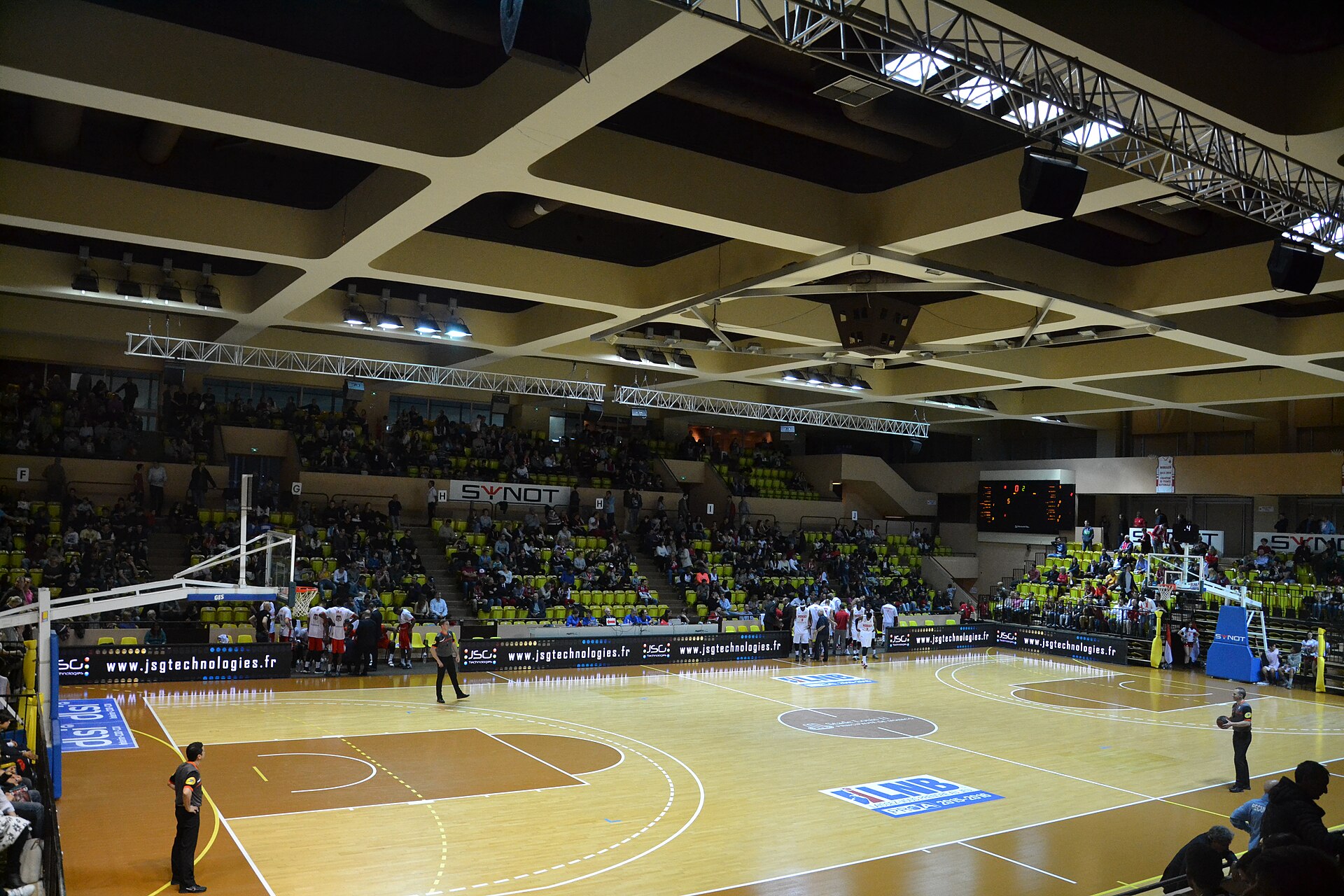
Five sports paint a line around the court. Only four of them agree it is part of it
A ball on the line is in, unless you are playing basketball, where the boundary line is not court at all. The disagreement is written into the rulebooks, and it decides which edge of the paint the tape measure is held against.
More on tennis
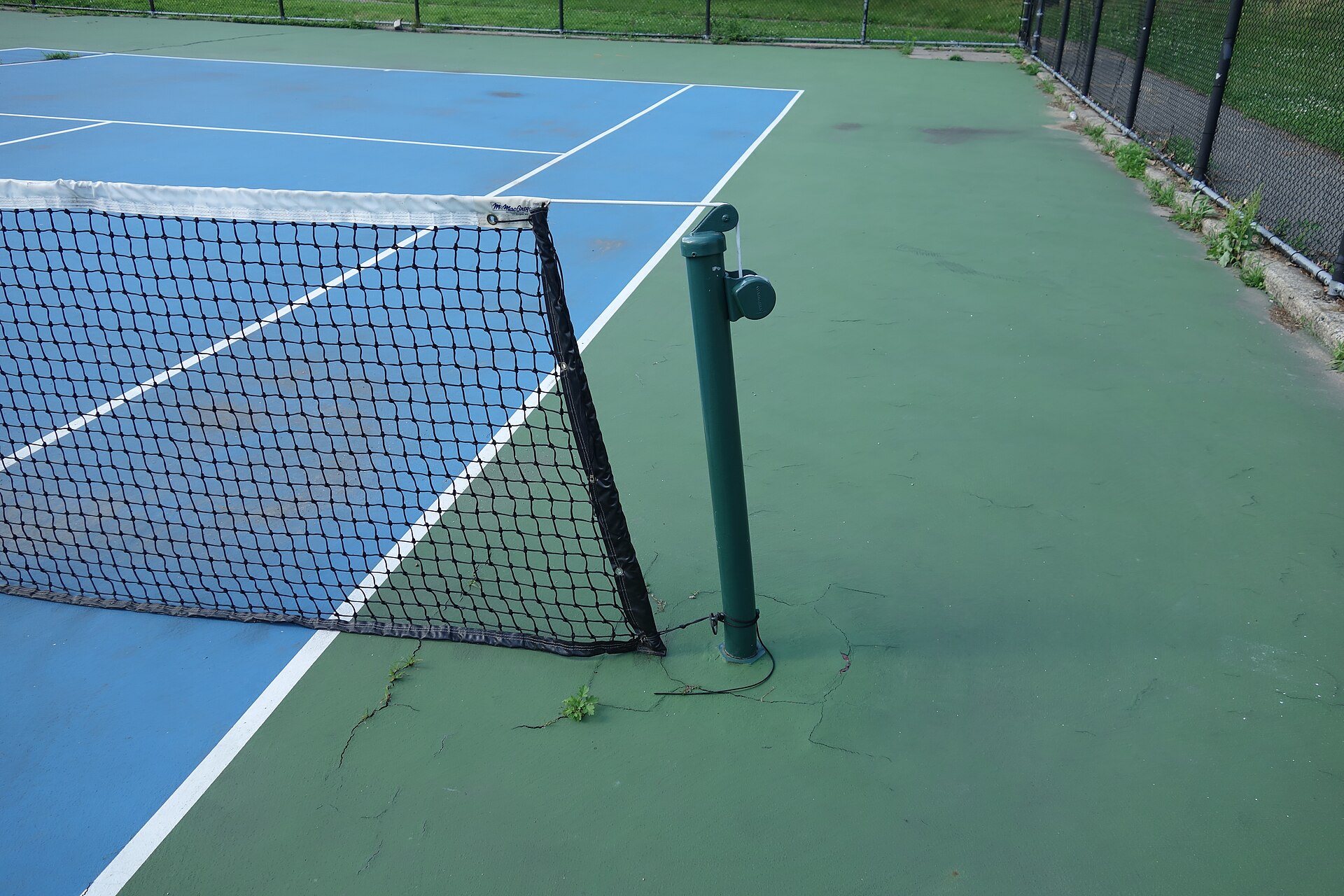
Three sports hang a cord between two posts, and all three answer the sag differently
A strung net always dips in the middle. Tennis decided to make the dip 156 millimetres and mandated a strap to produce it; badminton lets it be 26; volleyball forbids it and allows 20 millimetres of error. One physical fact, three regulatory answers.
More on tennis
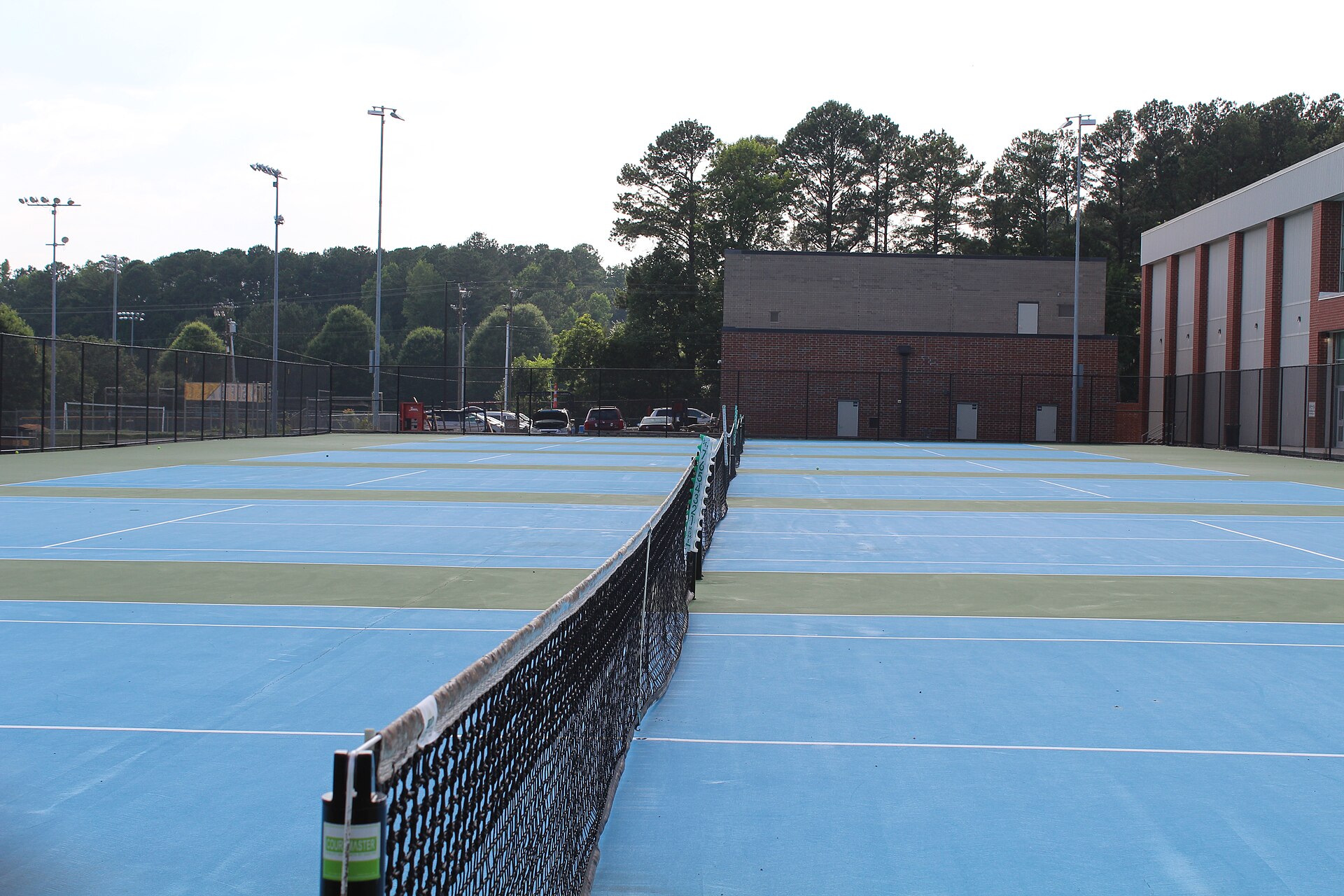
Tennis spent two years working out what its own courts were doing
Until 2000 the sport had no official way to say how fast a surface played. What it built afterwards was replaced within eight years, because the first measure did not match what players said they felt — and the replacement is still only valid for the day the test was run.