
Ice is not a neutral surface
A rink is manufactured to a specification — a temperature, a hardness, sometimes a deliberate texture. Every one of those settings is a decision, and each of them changes the sport played on top of it.
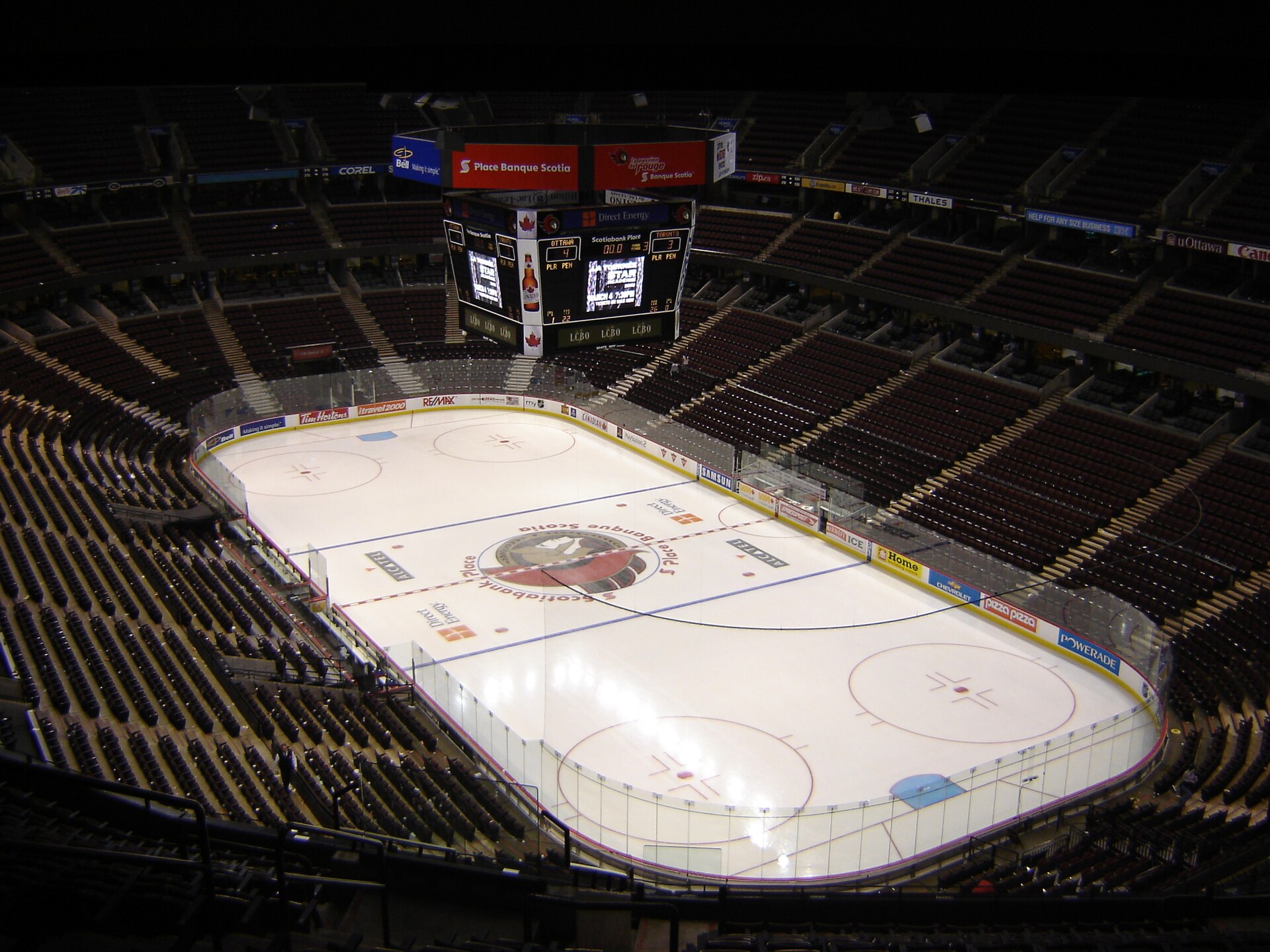
A sheet of arena ice is built a fraction of a millimetre at a time. In one controlled study of rink ice, each flood laid down roughly 0.7 mm of water and was allowed to freeze before the next went on; the finished sheet was held at 32 mm thick to match ice hockey specifications, with the hall air kept between 9 and 11 °C at 40 to 50 per cent relative humidity. Nothing about that surface is found. It is assembled, to a number.
Reference Layer thickness, sheet thickness and the hall air conditions are the rink-building parameters reported in a study of ice hardness and skate friction, which followed IIHF guidance for the last two.
Thickness is the least interesting of the numbers. The consequential one is the surface temperature, because it sets how slippery the ice is and how hard it is, and those two properties do not move together. An operator adjusting a brine loop by a degree is not tidying up the venue. They are changing what the athletes on it can do.
And the settings genuinely differ by discipline. A review of ice friction in Physics Today reports an optimum of −5.5 °C for figure skating and −9 °C for ice hockey. The International Skating Union puts fast short-track ice at around −7 °C, conditioned to resist a skater as little as it can, and says directly that the figure skating equivalent is run warmer and softer so that a blade can bite into it during jumps and spins.
Reference The −5.5 °C and −9 °C figures are given in a Physics Today review of why ice is slippery.
Reference The −7 °C target for fast short-track ice, and the description of figure skating ice as softer and warmer, come from the ISU.
Why it slides at all
The explanation most people carry around is that a blade concentrates a skater’s weight so severely that it melts the ice beneath it, and rides on the water it makes. That account is old, specific, and no longer considered adequate. It goes back to a nineteenth-century calculation of about 466 atmospheres under a skate, which depresses the melting point of ice to roughly −3.5 °C — and every rink temperature named above is colder than that. Pressure melting cannot produce a film on ice that is being held at −5.5 °C, let alone −9 °C. A later objection is worse for the theory: a film produced that way would be squeezed so thin that the friction it generated would resist the skater rather than help.
Reference The pressure-melting calculation, the melting-point figure it yields, and the objection that such a film would resist rather than assist sliding are all set out in the Physics Today review.
Two mechanisms have replaced it. The first is premelting: ice carries a thin, disordered, liquid-like layer on its free surface even well below freezing, with nothing pressing on it at all — an idea first floated by Michael Faraday and confirmed much later, with the layer thickness varying with temperature. The second is frictional heating, proposed in the late 1930s, in which the work done sliding a blade across ice warms the contact enough to soften or melt it locally. Neither is the whole answer on its own, and the pair of them, not pressure, is what a modern account rests on.
Reference Premelting, its history from Faraday onward, and the frictional-heating alternative are described in the same review.
A molecular picture sharpens it further. Spectroscopy paired with simulation finds two populations of water molecules at the ice surface: those anchored by three hydrogen bonds, and looser ones held by only two, which are free to roll across the surface under ordinary thermal agitation. Measured friction tracks the number of those mobile molecules rather than the presence of a bulk liquid film, and warming the ice makes more of them.
The consequence is the part that matters for sport. Friction does not simply keep falling as the ice approaches 0 °C. It reaches a minimum near −7 °C, and above that the ice has softened enough that a sliding object sinks further into it, so the energy saved on the sliding layer is spent again on pushing ice out of the way.
Reference The two molecular populations, the correlation between surface mobility and friction, and the friction minimum at −7 °C are reported by the Max Planck Institute for Polymer Research and the University of Amsterdam for their joint study.
Reference The same result, with the softening explanation for warmer ice, from the University of Amsterdam.
Hardness is a second dial
Slipperiness is not the only property being set. Colder ice is also harder, and that has been measured directly rather than assumed: indentation testing on rink ice found hardness falling by roughly 1.54 Shore D units for every degree Celsius the surface warmed. Hardness governs contact rather than glide. Harder ice behaves more brittly and the blade penetrates less; softer ice lets the blade sink, and the resistance stops being friction and starts being ploughing.
Reference The hardness-versus-temperature slope and the penetration/ploughing description come from the ice-hardness study.
There is a third control, and it is the one a spectator would never guess: the water. In the same study, hardness and friction did not answer to it in the same way. Ice made from 220 ppm total-dissolved-solids water and ice made from 80 ppm water came out about equally hard, their confidence intervals overlapping; only near-pure 5 ppm water produced measurably softer ice. Friction separated all three: the static friction index ran from about 0.0116 for the purest water through 0.0132 to about 0.0146 for the least treated. Cutting the water from 220 ppm to 80 ppm reduced friction by about as much as a degree of warming would, and did it without softening the ice — the same playing characteristic, reached from an entirely different direction.
Reference The study reports overlapping hardness for the 80 ppm and 220 ppm treatments with 5 ppm the least hard, gives a static friction index for all three, and equates the 220-to-80 ppm reduction with warming the ice by about 1 °C; it also records that NHL ice-makers tend to prefer 80–100 ppm while World Curling endorses reverse-osmosis water, typically under 10 ppm.
- Temperature — sets both the slipperiness, which bottoms out near −7 °C, and the hardness, which rises steadily as the ice gets colder.
- Water purity — moves friction across the whole tested range, and hardness only at the near-pure extreme, which is why ice-making specifications name a dissolved-solids range at all.
- Texture — whether the finished surface is left flat or is deliberately roughened, which is where curling parts company with every other ice sport.
What each discipline asks the ice to do
Speed skating wants the friction minimum and very little else. Its ice is conditioned toward least resistance, and resurfacing is treated as performance-critical rather than cosmetic: the ISU is explicit that divots and bumps slow short-track skaters, and that chips left by a crash are repaired by hand. That is a discipline for which the physics optimum and the sporting optimum coincide.
Reference The ISU describes resurfacing and manual repair of crash damage as necessary to keep short-track ice fast.
Figure skating deliberately gives some of that away. Warmer, softer ice is worse for glide and better for grip: an edge set into a yielding surface has something to push against, and a take-off or a landing has to be held by whatever purchase the blade finds in the instant it is loaded. A rink tuned for a racer would be, for a jumper, a surface that gives no answer back — which is why the two disciplines cannot share a setting even when they share a building.
Ice hockey is the interesting case, because the published targets do not agree. The Physics Today figure for hockey is −9 °C, two degrees below the friction minimum; IIHF guidance, as reported in the ice-hardness study, rates a surface between −4.5 °C and −5.5 °C as excellent — several degrees warmer again. Both cannot be a physical constant, and neither is claiming to be. Hockey is not a pure gliding sport: the surface has to survive skate cuts, bodies and a puck between resurfacings, so the setting reflects durability and local plant capability as much as friction, and different authorities land in different places.
Reference The −4.5 °C to −5.5 °C excellent band, and the −5.6 °C to −6 °C band rated good, are the IIHF guidance figures reported in the ice-hardness study.
The spread is the point. If the correct temperature for hockey ice were a fact about water, it would not be a range, and it would not differ between the bodies that publish it.
Curling changes the surface, not the setting
Curling is the one ice sport that does not stop at tuning. Its sheet is flooded flat like any other and then deliberately roughened: water is sprayed over it in fine droplets that freeze into small raised protrusions called pebbles. A surface every other discipline would treat as a defect is, here, the playing surface.
The stone is built to meet it. A granite stone weighing a little under 20 kg does not sit on its whole underside — it rides an annular running band about 6 mm wide on a diameter of about 120 mm, and that narrow band contacts only the tops of the pebbles. So the real contact is a scatter of small, high-pressure points that are being scratched and abraded as the stone passes over them, not a flat plate on a flat plane.
Reference Pebble formation, the running band dimensions and the stone mass are from a surface-topography study of the curl mechanism.
That geometry produces the behaviour the sport is named for. Over the length of a sheet — more than 45 metres, a maximum of five metres wide — a stone given three or four rotations drifts sideways by something on the order of one to one and a half metres. Sweeping in front of it can extend its travel by two or three metres and straighten its path, which is only possible because the surface being swept is a texture that can be altered on the fly.
Reference Sheet dimensions and the effect of sweeping on a stone’s distance and curl are published by World Curling.
Reference The typical rotation count and the metre-scale sideways displacement it produces are from the curl-mechanism study.
Why a stone curls in the direction it does is still contested, which is worth stating rather than smoothing over. The long-standing explanation — that the trailing half of the running band drags harder than the leading half, steering the stone — falls short arithmetically: even assigning all the friction to the trailing half accounts for only about half the sideways movement actually observed. A competing account has the leading part of the band scratching the ice, and those scratches then guiding the asperities of the trailing part, the way a bicycle wheel is deflected by tram tracks crossed at an angle. The surface-topography study scanned the ice before and after each slide, and reads its own measurements as favouring that second account.
Reference The shortfall in the friction-asymmetry account and the scratch-guiding alternative, including the tram-track analogy, are set out in the same study.
Grass grows, clay is rolled, a wooden floor is laid once and sanded occasionally. Ice is the only major sporting surface that is manufactured fresh for each session and can be moved several degrees in either direction between one event and the next in the same building. That is why it is worth being precise about: skating does not happen on ice in general. It happens on a particular ice, at a temperature somebody selected, at a hardness that follows from that temperature and from the water used, with or without a texture sprayed onto the top. Change any of those and you have not changed the conditions of the sport. You have changed the sport.
Read the evergreen pages
This piece is an argument. These are the reference pages on SocialSportHub that document the same subjects.
References
- [1]Sports EngineeringPeer-reviewed. Effect of water quality on ice hardness and skate-to-ice friction in ice rinks. Accessed 2 September 2026.
- [2]Physics TodayReference. Why Is Ice Slippery?. Accessed 2 September 2026.
- [3]International Skating UnionReference. Short Track: Cracking the ice code. Accessed 2 September 2026.
- [4]Max Planck Institute for Polymer ResearchReference. The Slipperiness of Ice Explained. Accessed 2 September 2026.
- [5]University of Amsterdam, Institute of PhysicsUniversity. The slipperiness of ice explained. Accessed 2 September 2026.
- [6]Scientific ReportsPeer-reviewed. A surface topography analysis of the curling stone curl mechanism. Accessed 2 September 2026.
- [7]World CurlingReference. What is curling?. Accessed 2 September 2026.
Continue reading
More in this section
Football spent a century leaving time to the referee. The 2026/27 Laws put numbers on it
Ten seconds to leave the field when substituted. A minute off after treatment. A five-second countdown, visibly signalled, on throw-ins and goal kicks. The changes are small individually and they add up to a different way of regulating delay.
More in this section
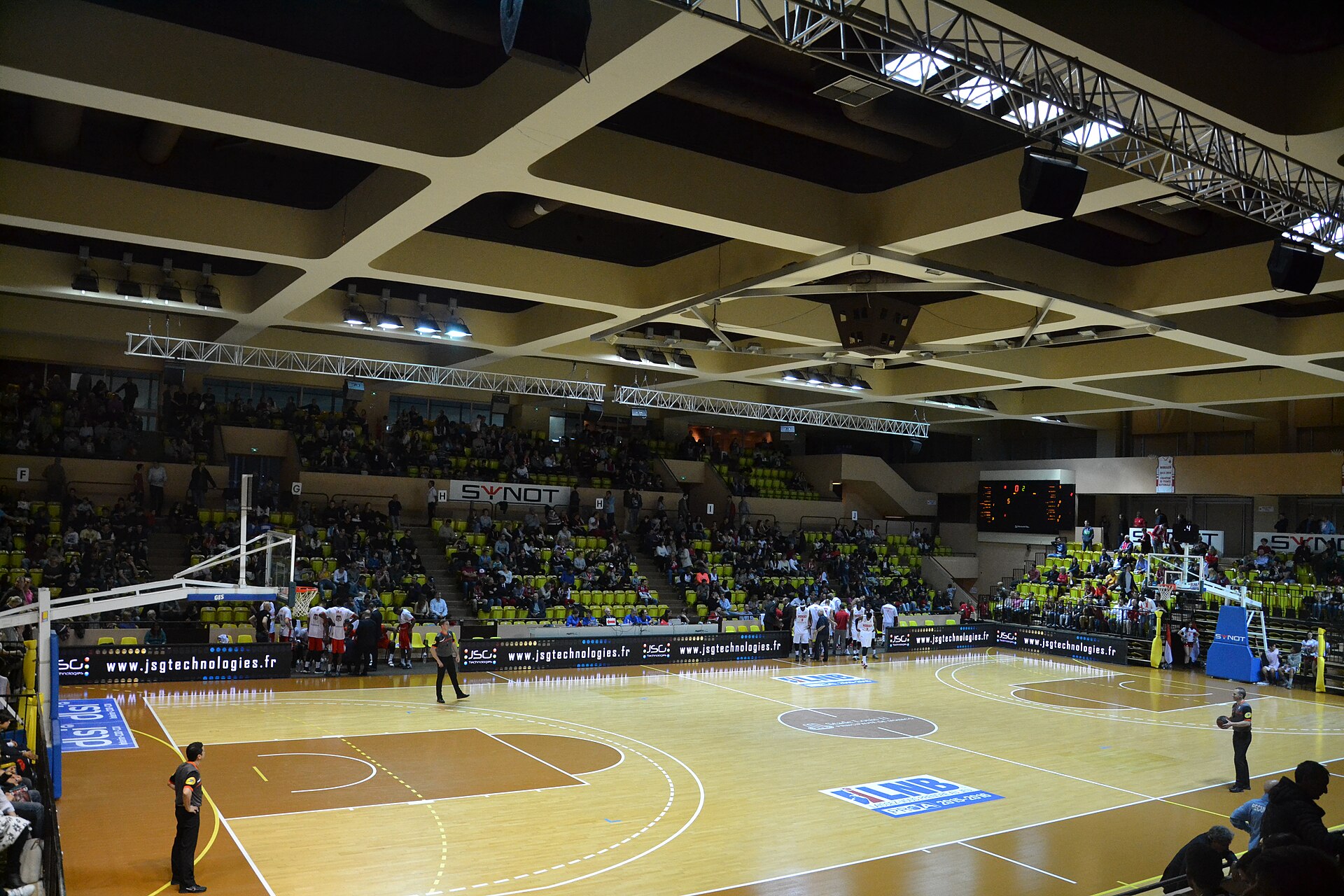
Five sports paint a line around the court. Only four of them agree it is part of it
A ball on the line is in, unless you are playing basketball, where the boundary line is not court at all. The disagreement is written into the rulebooks, and it decides which edge of the paint the tape measure is held against.
More in this section
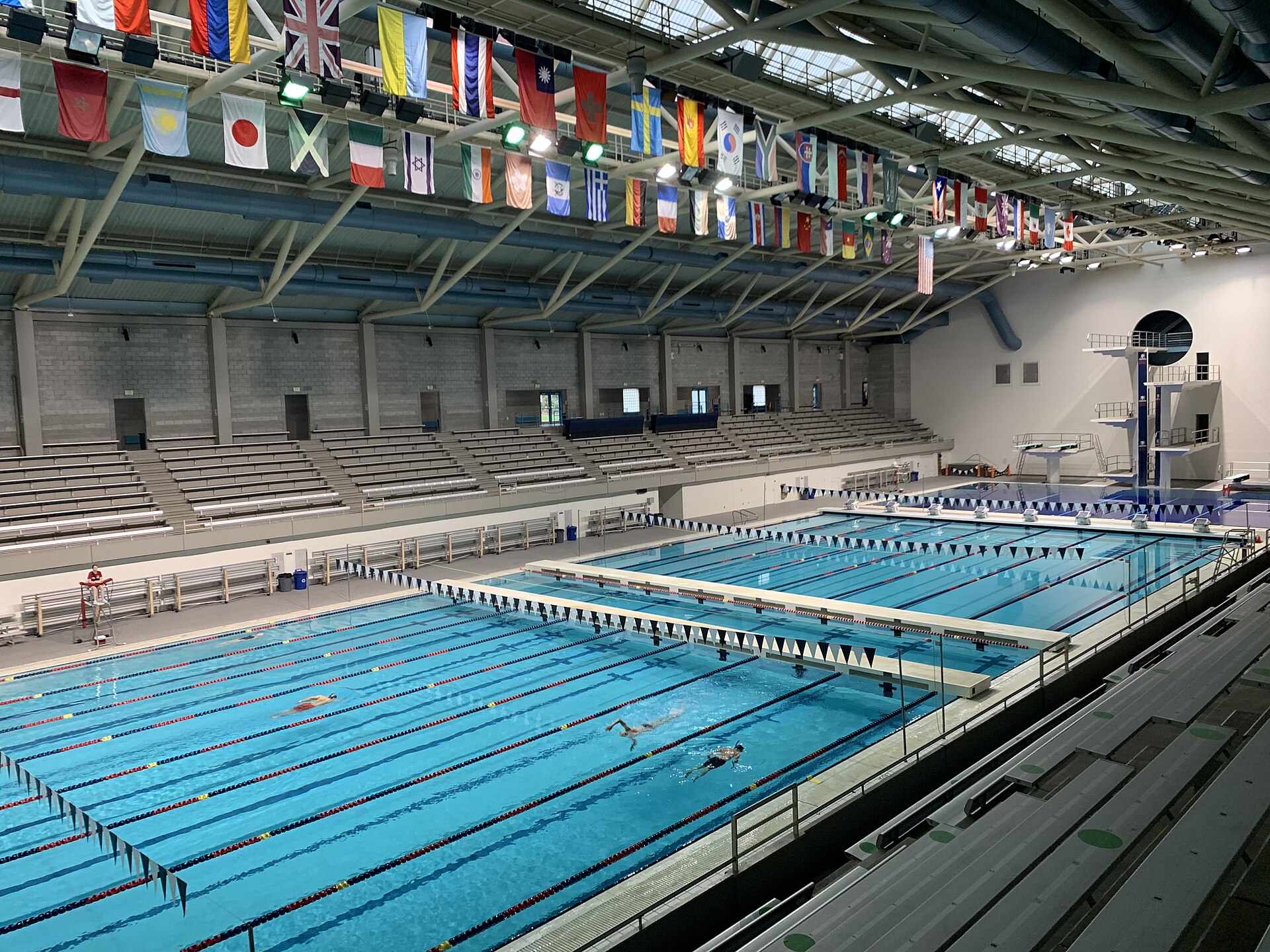
A racing pool may be a centimetre too long and not a millimetre too short
World Aquatics gives the 50-metre pool a tolerance of plus ten millimetres and minus nothing — and requires that length to hold from 300 millimetres above the water to 800 below it. The asymmetry is the same one athletics applies to a wind reading.