
Golf specifies its ball to a hundredth of a gram and its course not at all
Rule 2 of the Rules of Golf defines the field of play in about eighty words and contains no measurement of any kind. The Equipment Rules, meanwhile, fix the ball's mass to two decimal places and its diameter to three.
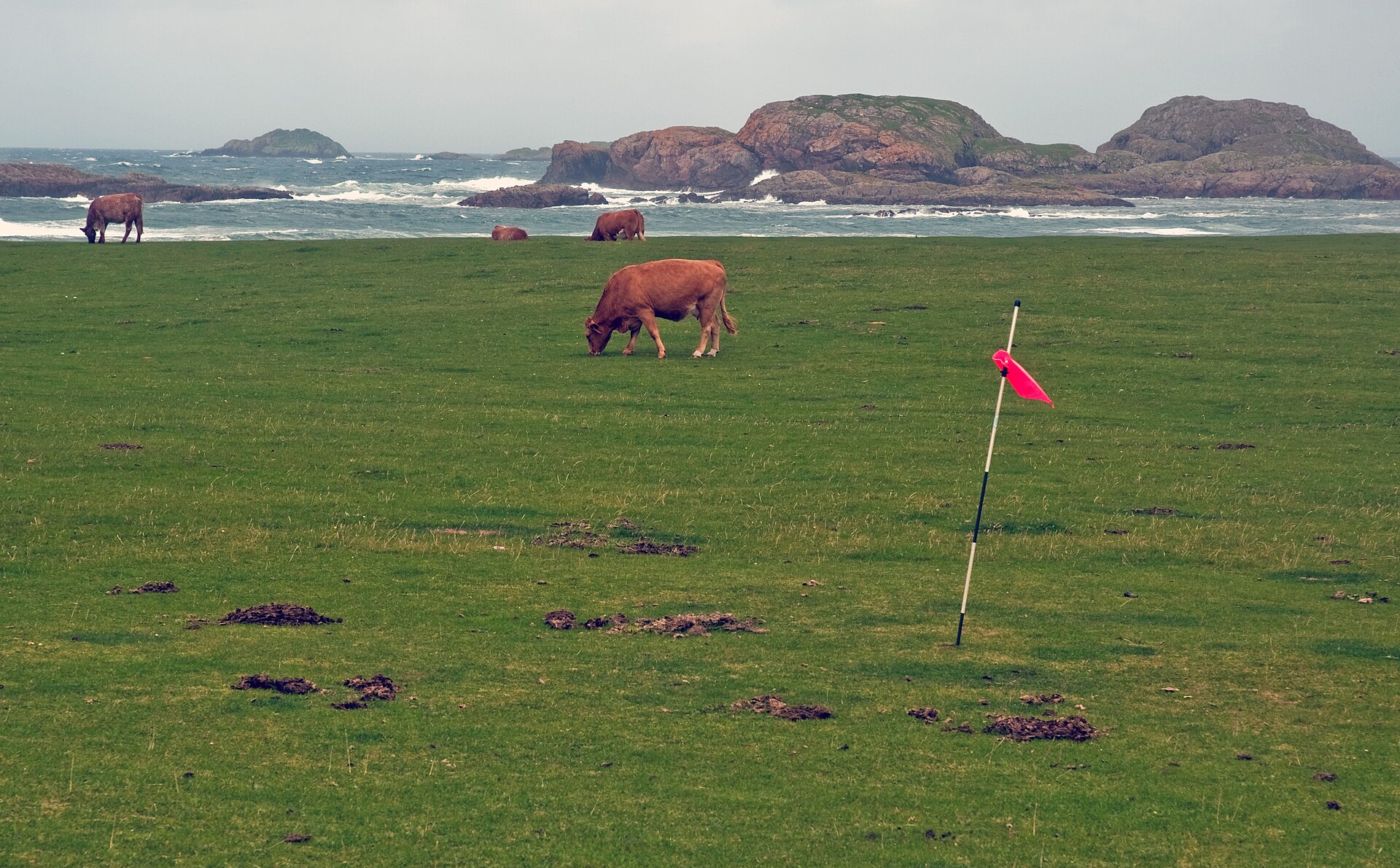
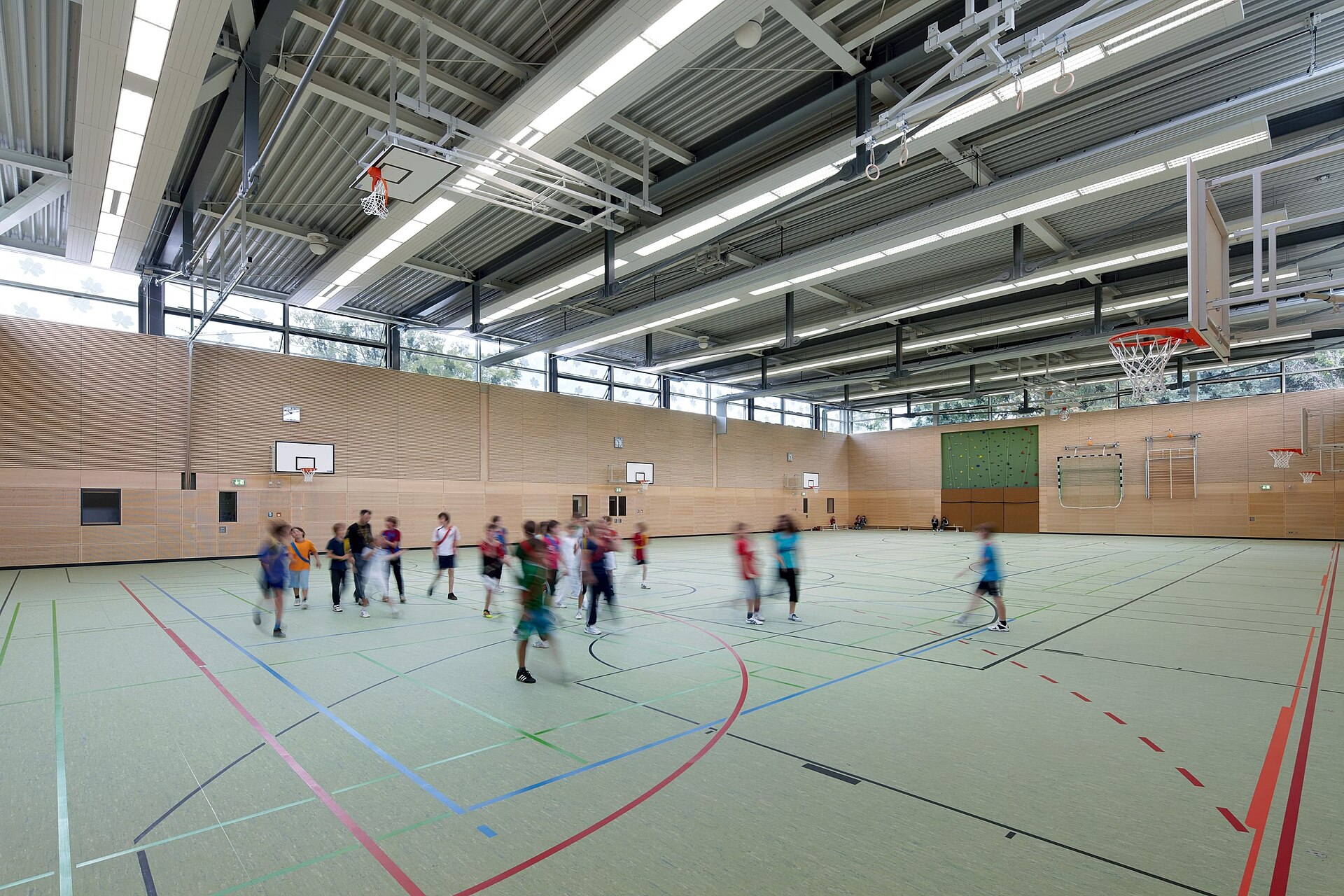
Every other sport this Journal has read specifies its field of play with numbers. Basketball gives 28 by 15 metres. Volleyball gives 18 by 9. Tennis gives 23.77 by 10.97. Football gives a range — 90 to 120 metres by 45 to 90 — and even that range is a set of numbers.
Golf gives nothing.
Rule 2, in full
Rule 2.1 is one sentence: golf is played on a course whose boundaries are set by the Committee, and areas not on the course are out of bounds.
Reference That golf is played on a course whose boundaries are set by the Committee, and that areas not on the course are out of bounds, from Rule 2.1.
Rule 2.2 divides it: there are five areas of the course. The general area covers the entire course except four specific areas, and includes every type of ground and growing or attached object found in it, such as fairway, rough and trees. The four specific areas are the teeing area, all penalty areas, all bunkers, and the putting green of the hole being played.
Reference That there are five areas of the course, that the general area covers everything except four specific areas and includes fairway, rough and trees, and the identification of those four areas, from Rule 2.2.
Rule 2.2c then settles overlaps: a ball is always treated as lying in only one area, with specific areas taking priority over the general area and a hierarchy among them — penalty area first, then bunker, then putting green.
Reference That a ball is always treated as lying in only one area of the course, with the priority of penalty area, then bunker, then putting green, from Rule 2.2c.
That is the whole of Rule 2. No length, no width, no area, no distance. The five regions are defined entirely by what they are — sand, water, mown ground with a hole in it — and by who drew the line around them.
What is specified instead
Turn to the Equipment Rules and the register changes completely.
The weight of the ball must not be greater than 1.620 ounces avoirdupois — 45.93 g. Its diameter must not be less than 1.680 inches, or 42.67 mm. And it must not be designed, manufactured or intentionally modified to have properties which differ from those of a spherically symmetrical ball.
Reference The ball’s maximum weight of 45.93 g, minimum diameter of 42.67 mm, and the spherical-symmetry requirement, from the Equipment Rules Part 4, sections 4.2, 4.3 and 4.4.
Two decimal places on the mass, two on the millimetres. And the tee — a piece of wood or plastic that holds the ball off the ground for one stroke per hole — is defined as an object used to raise a ball above the ground to play it from the teeing area, which must be no longer than four inches, or 101.6 mm, and conform with the Equipment Rules.
Reference The definition of a tee as an object used to raise a ball above the ground to play it from the teeing area, no longer than four inches (101.6 mm), and required to conform with the Equipment Rules, from the Definitions.
A hundred and one point six millimetres for the peg. Nothing at all for the hundreds of metres it is hit across.
Why the asymmetry is not an oversight
It would be easy to read this as an accident of history — golf is old, its rules grew up around courses that already existed, and nobody ever went back to standardise the land. That is true, and it is not the whole explanation, because the rules do not merely omit dimensions. They actively construct a system that works without them.
Three features make it work.
The Committee is a party to the rules. “Boundaries are set by the Committee” is not a gap in the regulation; it is a delegation written into it. Golf’s rulebook has a permanent role for a local authority that defines the field before play, and much of the Rules of Golf concerns what that authority may and may not decide.
The areas are defined by content, not extent. A bunker is a bunker because of what is in it. A penalty area is one because the Committee has marked it. This makes the definitions portable across landscapes that share no dimensions at all — a links course beside the North Sea and a parkland course in a valley are the same five areas.
Scoring is relative. A hole is scored in strokes taken, and a round in strokes over a field of players who all played the same course on the same day. Nothing in the score depends on a distance, so nothing in the rules needs to fix one. Compare a running track, where the entire result is a time over a certified distance — and where World Athletics certifies that distance to the millimetre.
What is lost, and what is bought
The cost is that golf cannot compare performances across venues in the way a measured sport can. A round of 68 means something different on every course, and the sport has had to build an entire apparatus of handicapping and course rating to say anything at all about how two rounds compare. A 10.00-second hundred metres needs no such machinery, because the hundred metres is the same hundred metres everywhere.
What golf buys is a game that can be played anywhere without ceasing to be itself. The five areas exist on a Scottish links grazed by cattle and on a desert course watered into being; the rules apply identically to both, because they never claimed either would look like anything in particular.
That is the trade, and it is worth seeing it as a trade. Nearly every other sport standardised its field and gained a comparable result. Golf standardised its ball, delegated its field, and gained a game that fits whatever ground is available.
Rule 2 is eighty words with no measurements in it. That is not the rulebook being vague. It is the rulebook declining, deliberately, to have an opinion about the one thing every other sport regulates first.
Read the evergreen pages
This piece is an argument. These are the reference pages on SocialSportHub that document the same subjects.
References
- [1]The R&AGoverning body. Rules of Golf — Rule 2, The Course. Accessed 6 September 2026.
- [2]The R&AGoverning body. The Equipment Rules — Part 4, Conformance of Balls. Accessed 6 September 2026.
- [3]The R&AGoverning body. Rules of Golf — Definitions. Accessed 6 September 2026.
Continue reading

Editor’s pick
The golf ball is the only projectile in sport with no permitted range
Every other rulebook gives its ball a band — so much to so much. The Equipment Rules give golf a maximum weight and a minimum diameter and nothing else, which is a specification written entirely against one direction of travel.
Editor’s pick
Some sports fix the size of the field. Football is not one of them
Read four rulebooks side by side and a division appears that nobody argues about: three of the four give the playing area a single number, and the fourth gives it a range wide enough to swallow two-and-a-half of its own smallest legal pitch.
More on golf
Five rulebooks, five projectiles, and no agreement on how exact a ball has to be
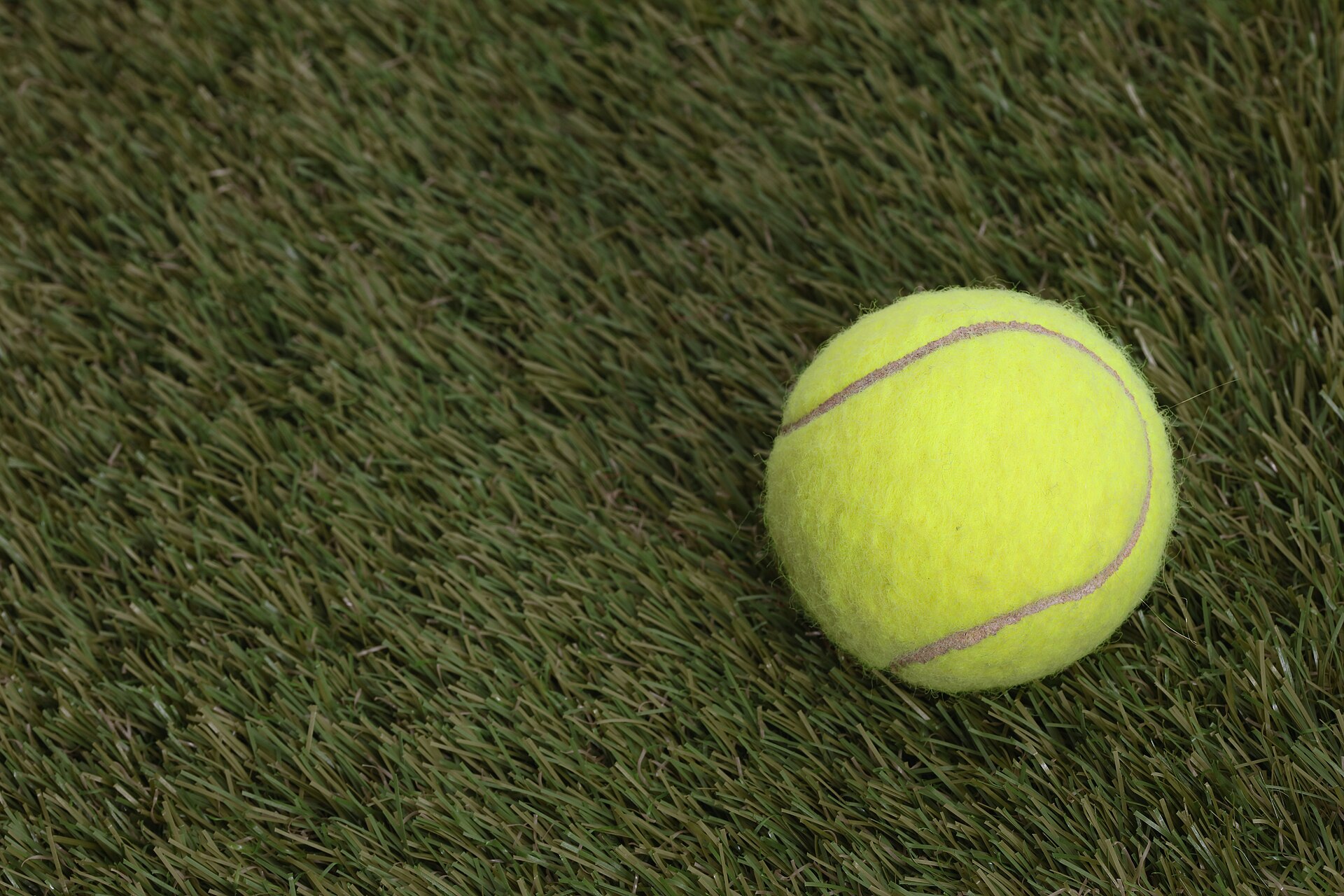
A legal shuttlecock may vary in mass by 16 per cent and a legal tennis ball by 6. A football's inflation pressure may nearly double. And the golf ball has no permitted range at all — its rule bounds it in one direction only.