
The false-start rule rests on a number the research disputes
World Athletics treats a reaction time under 0.100 seconds as evidence that a sprinter moved before the gun. That threshold is a claim about human physiology, and a study on instrumented blocks found five of nine athletes averaging under it.

The false-start rule looks like a rule about behaviour. An athlete must not commence their start until after receiving the report of the gun; if in the Starter’s judgement they do so earlier, it is a false start.
Reference The requirement that an athlete not commence their start until after the report of the gun, and that doing so earlier is a false start in the Starter’s judgement, from the Technical Rules.
But that is not how a false start is detected in a race that matters. When a World Athletics certified Start Information System is in use, the Starter and any assigned Recaller wear headphones in order to hear an acoustic signal the system emits when it indicates a possible false start — that is, when the reaction time is less than 0.100 second. On hearing it, and if the gun was fired, there is a recall, and the Starter examines the reaction times and other available information to confirm which athlete or athletes were responsible.
Reference The Start Information System procedure, including the headphones, the acoustic signal at a reaction time of less than 0.100 second, and the recall-and-examine sequence, from the Technical Rules.
The number is doing the work. And a number like that is not a legal fact. It is an empirical claim about the shortest interval in which a human being can hear a sound and begin to push.
Where 0.100 came from, and what has been measured against it
The claim is a reasonable one, and it has a lineage. Simple auditory reaction time is among the fastest reaction times humans have, and is generally thought rarely to fall below 100 ms.
A 2007 study set out to test whether “rarely” means “never” in the particular case that matters — a trained sprinter in blocks, reacting to a starting signal.
Nine athletes performed sprint starts in four conditions. Reaction time was measured using starting blocks instrumented with piezoelectric force transducers in each footplate, synchronised with the starting signal; three of the four conditions were used to calculate reaction times. For two of the athletes, pre-motor and pseudo-motor times were also measured across thirteen muscles using surface electromyography, synchronised with the rest of the system.
Reference The nine athletes, the four conditions of which three were used for reaction times, the piezoelectric-instrumented footplates synchronised with the starting signal, and the surface EMG across thirteen muscles for two athletes, from the study’s abstract.
The results: five of the athletes had mean reaction times of less than 100 ms in at least one condition, and 20 per cent of all starts in the first two conditions had a reaction time under 100 ms. The authors conclude that the neuromuscular-physiological component of simple auditory reaction times can be under 85 ms, and that EMG latencies can be under 60 ms.
Reference The finding that five athletes had mean reaction times under 100 ms in at least one condition, that 20 per cent of starts in the first two conditions were under 100 ms, and the conclusions on the neuromuscular-physiological component under 85 ms and EMG latencies under 60 ms, from the study’s abstract.
The paper is explicit about what it is arguing against: the current false-start criterion used by the sport’s governing body is based on an assumed auditory reaction time of 100 ms, and there is evidence — anecdotal and from reflex research — that simple auditory reaction times below that can be achieved.
Reference The paper’s statement that the false-start criterion is based on an assumed auditory reaction time of 100 ms, and that there is anecdotal and reflex-research evidence for shorter times, from its abstract.
What the study does not show
Being precise here matters more than usual, because the finding is easy to overstate in either direction.
Nine athletes is a small sample, and one of the four conditions was excluded from the reaction-time calculation, so the 20 per cent figure describes starts within a subset of an already small study. It is evidence that sub-100 ms starts occur; it is not an estimate of how often they occur in competition.
The measurement is also not the same measurement. A study reads force onset at an instrumented footplate; a Start Information System in a stadium reads a certified device against its own criteria. Two systems can both be measuring “reaction time” and not be measuring the same instant, and nothing in the paper establishes what a given athlete’s reading would have been on competition equipment.
And the headline sub-85 ms figure is narrower than it first appears. The authors attach it to the neuromuscular-physiological component of reaction time, not to a whole reaction. It is a statement about how quickly the machinery can act once it has been triggered, which is the quantity the 100 ms assumption is really about — but it is not the same thing as an athlete producing a legal race start in 85 ms.
What survives is the shape of the problem. The rule’s threshold sits at a value that at least some trained athletes, on at least some measurement systems, appear able to beat.
The rule is better designed than its number
Here the reading gets more sympathetic to World Athletics, because the surrounding procedure does not treat 0.100 as final.
The acoustic signal triggers a recall, not a disqualification. The Starter then examines the reaction times and other available information to confirm which athletes, if any, were responsible for it. And the rules state that where a certified Start Information System is in operation, its evidence shall be used as a resource by the relevant officials to assist in making a correct decision.
Reference The Note providing that Start Information System evidence shall be used as a resource to assist officials in making a correct decision, from the Technical Rules.
A resource to assist a decision is a considerably weaker status than a verdict. The jurisdictional rules make the same point from the other side: the Start Referee has jurisdiction over facts related to the start except where an apparent false start is indicated by a certified Start Information System — unless the Referee determines that the information the system provided is obviously inaccurate.
Reference The Start Referee’s jurisdiction over the start, the carve-out for an apparent false start indicated by a certified Start Information System, and the exception where the Referee determines the system’s information is obviously inaccurate, from the Competition Rules.
So the sport has built an override. The machine’s reading normally binds, and a human may set it aside on a finding that the reading is obviously wrong. That is the correct architecture for a rule whose threshold is a scientific assumption: it lets the assumption operate at scale while leaving room for the case where it fails.
There is an operational safeguard too. The Start Coordinator must keep all papers produced during the start procedure, including documents showing reaction times and false-start waveform images where available.
Reference The requirement that the Start Coordinator keep all papers produced during the start procedure, including reaction times and false-start waveform images where available, from the Competition Rules.
A waveform is the underlying evidence rather than the derived verdict, and requiring it to be kept is what makes the override reviewable rather than merely permitted.
What a threshold is for
It would be possible to read all this as an argument for lowering the number, and that would be the wrong conclusion.
Any threshold has two failure modes. Set too high, it catches athletes who reacted legally and unusually fast. Set too low, it lets through athletes who anticipated the gun and were merely not fast enough about it to be caught. There is no value that avoids both, because the two populations overlap: an exceptionally quick legal reaction and a well-timed anticipation produce the same trace.
The threshold is not, therefore, trying to identify cheating. It is trying to place the boundary where the cost of each kind of error is tolerable, and it needs a physiological estimate to do that. The estimate that 100 ms is a floor was a reasonable one; the research suggests it is a little generous to the rule and a little harsh on the fastest reactors.
That is a narrow criticism, and it is the right size of criticism. A sport that measures a start to the millisecond has to pick a millisecond, and the number it picks will always be a hypothesis. What matters is whether it is treated like one — and in this case, unusually, the rulebook contains the machinery to say so.
Read the evergreen pages
This piece is an argument. These are the reference pages on SocialSportHub that document the same subjects.
References
- [1]World AthleticsGoverning body. Book C — C1.1 & C2.1 Competition Rules & Technical Rules: false starts, the Start Information System and the Starter's jurisdiction (World Athletics Book of Rules). Accessed 6 September 2026.
- [2]PubMed, US National Library of MedicinePeer-reviewed. Sprint starts and the minimum auditory reaction time — Pain and Hibbs, Journal of Sports Sciences 25(1), 2007, pages 79–86. Accessed 6 September 2026.
Continue reading
Editor’s pick
The wind limit rounds against the sprinter, and the rule says how
A record stands or falls on a wind reading averaged over ten seconds at one point beside lane one. The rule that converts that reading into a number is not symmetrical, and the asymmetry always runs the same way.
Editor’s pick
The shoe rule never mentions a spring
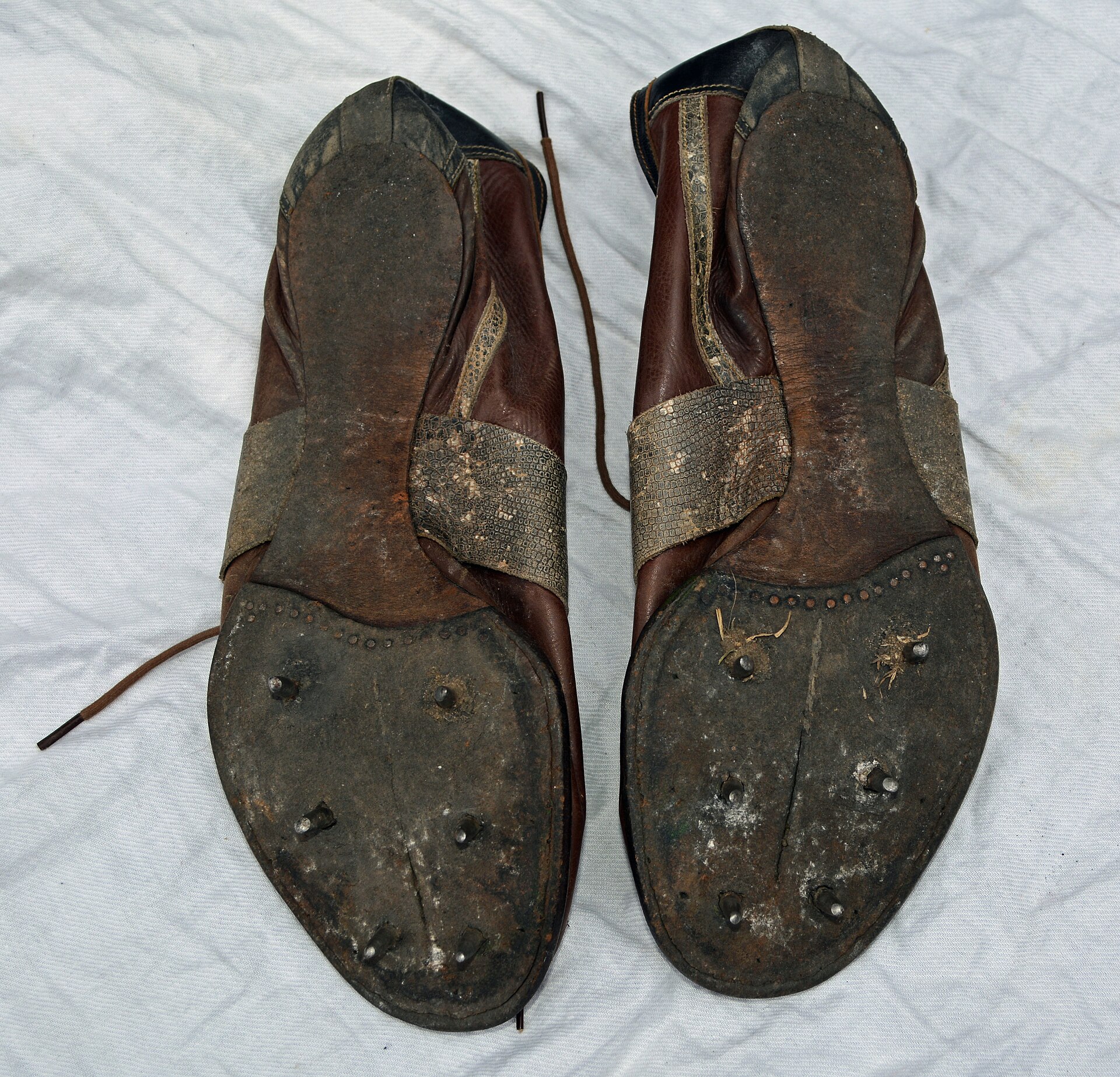
World Athletics' shoe regulations are read as a limit on how much energy a sole may return. Read the document and the limits are on something else entirely: a thickness at two specified points, the topology of a rigid structure, and whether anyone can buy the shoe.
More on running
Athletics wrote its recent history into the definition of a shoe
The Athletic Shoe Regulations define an approved shoe in four clauses, and each clause names a different date. Read as a chronology rather than a definition, it is the record of a governing body absorbing a technology it did not anticipate.